Three years of war have devastated much of Sudan. The impact has been pressed into the skin of survivors, and their memories. Thousands of people are dead. Millions are displaced. Associated Press journalists spent more than a week in and around the capital after the army retook Khartoum last year. It continues to fight elsewhere against the paramilitary Rapid Support Forces. This was reported by Qazaqyia.kz citing Associated Press.
Here are some of the war's survivors and their stories. A member of the military media accompanied the AP during the visit, including during interviews. The AP retains full editorial control of its content.
Omer al-Toum
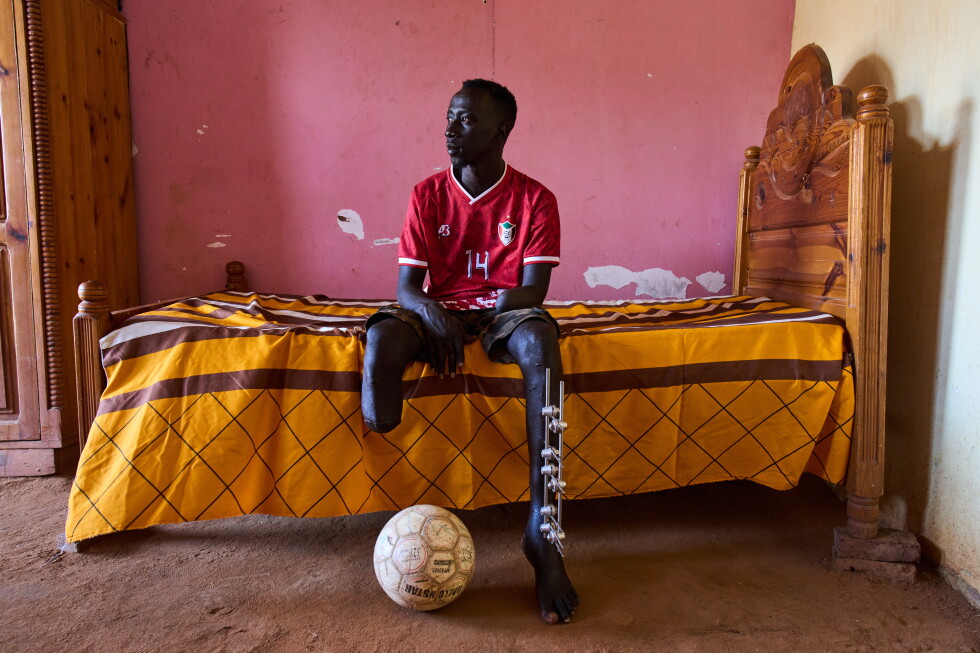
Omer al-Toum, 33, who lost his leg and arm by the explosion of unexploded ordnance, sits in his bedroom in Bahri, on the outskirts of Khartoum. Omer al-Toum had dreamed of playing for Sudan's national soccer team. But everything changed in October, when an unexploded weapon went off in his house as he tried to use it to loosen a nail. He lost part of his right leg and left arm. His remaining leg was shattered. Calm and good-natured, the 33-year-old swoons these days over his 8-month old daughter, trying to stay positive.
"When I knew that my leg had been amputated, my family expected more of a reaction from me but I didn't show them how affected I was," he said.
Now al-Toum can't bathe or get out of bed alone, and some doorways in the house aren't wide enough for his wheelchair. He wants prosthetics but must travel abroad for good ones. He's found solace in coaching soccer, and tells young players to stay in school to keep other options alive.
"As long as you are still breathing, you are still capable of doing many things. And when God takes something away from you, he will surely compensate you with other things," he said.
Zeinab Mujhed
Zeinab Mujhed, 8, who was injured in a shelling attack, poses for a portrait inside Al Nao Hospital in Omdurman. When her house was struck in February 2025, Fatma Ageb's husband was asleep. Her older daughters had just discussed what to get their baby sister for her birthday. That was the last thing the 38-year-old remembers of that day. The shelling killed her husband and their older daughters, 10 and 12. It pierced her body with shrapnel and badly injured their 8-year-old.
"If it wasn't for Zeinab I wouldn't want to live. She's always calling for her sisters and father," Ageb said, wiping tears from her cheeks.
The attack scarred her daughter's face and she lost her right eye. She wears a glass one in its place.
Noon Madani
Noon Omer Madani, 18, who was injured in a shelling attack, sits in a wheelchair on the patio of her family home in Khartoum. Noon Madani didn't want to leave the house that day in August nearly three years ago, but her older sister insisted. Paramilitary forces controlled her neighborhood outside Khartoum, but an overdue bill needed to be paid. On the way home, a missile killed her 18-year-old sister and crushed the 16-year-old Madani's legs.
Soft-spoken in her wheelchair, her legs in casts, she recalled looking at missile fragments in her sister's head as she lay beside her, unable to move.
"You can't imagine when someone suddenly tells you that your daughters were hit by an artillery shell. You enter a phase of breakdown," said their father, Omer Bakar.
Madani remained in a hospital for six months for surgeries, battling infections and sometimes waiting for a doctor to be found after others fled. Doctors say she should be able to walk again. Her younger brothers wheel her to school every day. She studies science and dreams of becoming a doctor.
"We are trying to forget the war," her father said, "the nightmare we finally woke up from."