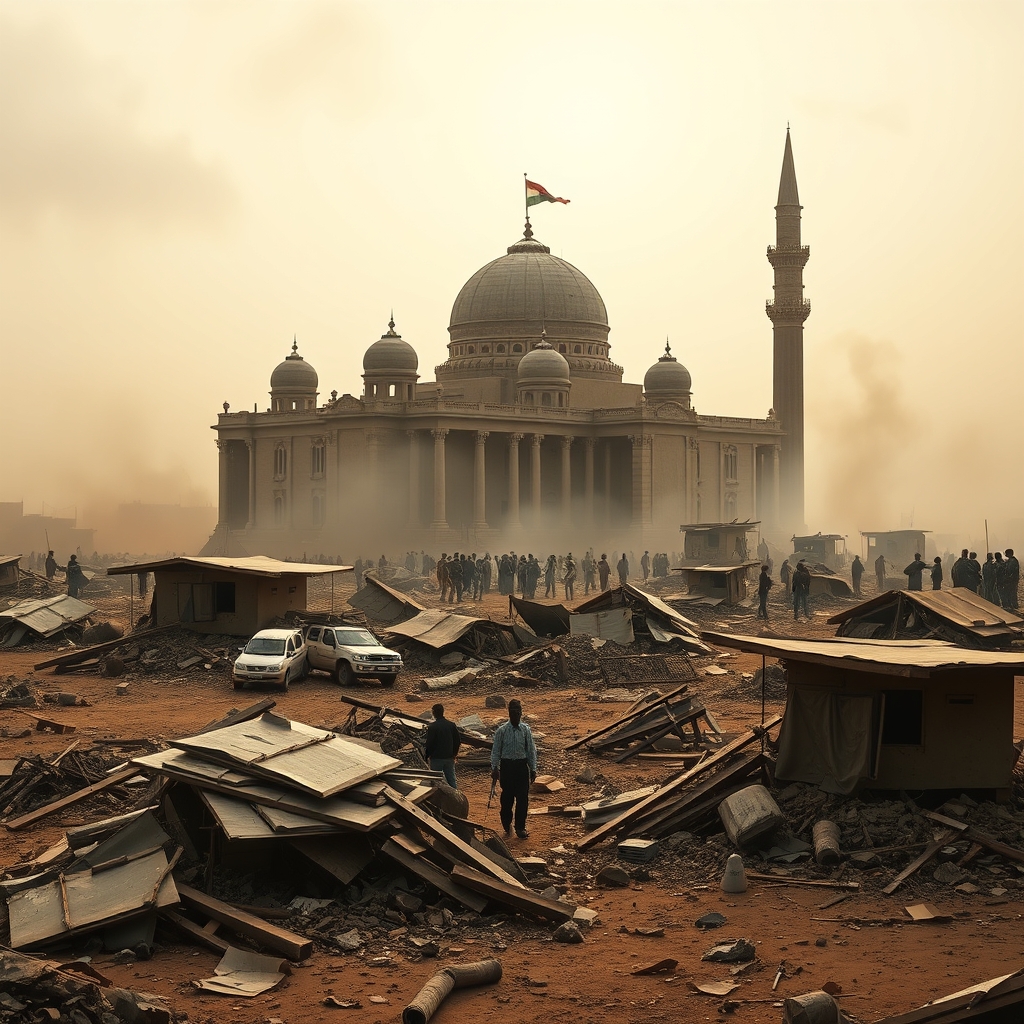
A battle for supremacy has laid Sudan and its capital to waste. This was reported by Qazaqyia.kz citing The Economist.
The country's future depends on events beyond its borders, as well as within them. The capital has suffered greatly from the war, with infrastructure destroyed and a humanitarian crisis among the population.
According to The Economist's analysis, the conflict in Sudan is not just a power struggle between internal forces, but also involves the interests of regional and international powers. The country's stability and future depend on the positions of neighboring states and the international community.
The Economist notes that the situation in Sudan could lead to geopolitical changes in the region. The conflict may alter the balance of power and affect neighboring countries. Experts believe that Sudan's future depends not only on internal political negotiations but also on the intervention of the international community.
The Economist highlights the scale of human casualties and material damage from the conflict. Much of the capital is destroyed, and millions have been forced to flee their homes. The number of people in need of humanitarian aid is growing.
Experts say that resolving the situation in Sudan requires concerted efforts by the international community. The country's future depends not only on internal political agreements but also on the influence of external forces.