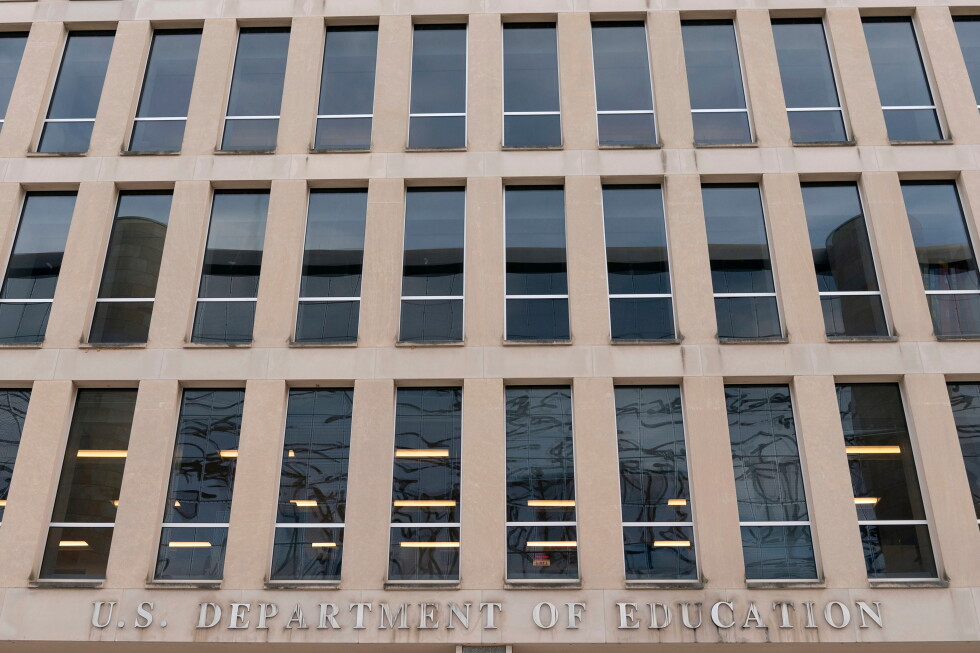
Changes to U.S. federal student loans that will affect millions of borrowers take effect July 1. This was reported by Qazaqyia.kz citing Associated Press.
Part of President Donald Trump's "Big Beautiful Bill," these changes mean the end of the Biden-era SAVE plan and new limits for graduate loans. The changes are expected to raise the cost of payments for millions of borrowers.
"The main concern is the affordability of monthly payments. I think a lot of people are simply going to see their payment increase significantly and they're either going to have to stretch pretty significantly to make that payment work or they're not going to be able to make the payment," said Michele Zampini, an associate vice president at The Institute for College Access & Success.
Around 9 million Americans are in default on their federal student loans as of June, according to the Education Department. Hundreds of thousands more are behind on loan payments and at risk of default this year.
Earlier this month, Education Department officials said borrowers who are enrolled in auto pay will be eligible for a 1% rate reduction beginning July 1. However, borrowers who currently use auto pay already receive an interest-rate discount of 0.25%, so the new reduction takes off just 0.75%. For all borrowers, the rate reduction will be temporary, lasting through June 2028.
SAVE plan comes to an end
The SAVE plan was a repayment option with some of the most lenient terms ever offered by the government. Soon after its launch it was challenged in court, leaving millions of student loan borrowers in limbo. Earlier this year, the U.S. Court of Appeals for the 8th Circuit struck down the SAVE plan, which ended Wednesday.
There are about seven and a half million borrowers in the SAVE plan and servicers will begin sending them official notices Wednesday, said Lindsay Vail Clark, chief borrower advocate at Savi, a student loan debt assistance platform.
Borrowers enrolled in the SAVE plan will be notified that they have 90 days to enroll in another income-driven repayment plan. Vail Clark recommends borrowers start checking their options as soon as possible because processing delays are likely. If borrowers don't enroll in another plan before the 90-day deadline, they will be auto-enrolled in one of the standard options by the Education Department.
However, there's no specific deadline for all borrowers enrolled in the SAVE plan to find another plan. This is because notices will be going out on a rolling basis, said Zampini.
Graduate loan limits
Trump's "Big Beautiful Bill" changed the amounts graduate students can borrow for various programs, but his administration revised that plan this week in line with a judge's order.
Under the new rule, programs designated as professional degrees face federal student loan caps of $200,000, while other graduate programs are capped at $100,000. Previously, graduate students had been able to take out federal loans up to the full cost of their degree.
For now, the administration's revised plan restores eligibility for students pursuing graduate degrees in nursing, physical therapy and several other fields to take out higher federal student loan amounts. The initial rule had held them to lower limits.
Parent PLUS loans
Parent PLUS loans have had fewer repayment options but now, the options are being reduced further, said Zampini. New limits on Parent PLUS loans cap them at $20,000 per student, and $65,000 per family.
Additionally, Parent PLUS borrowers who take out new loans on or after July 1 will not have access to any income-driven repayment plans, only a new tiered standard payment plan.