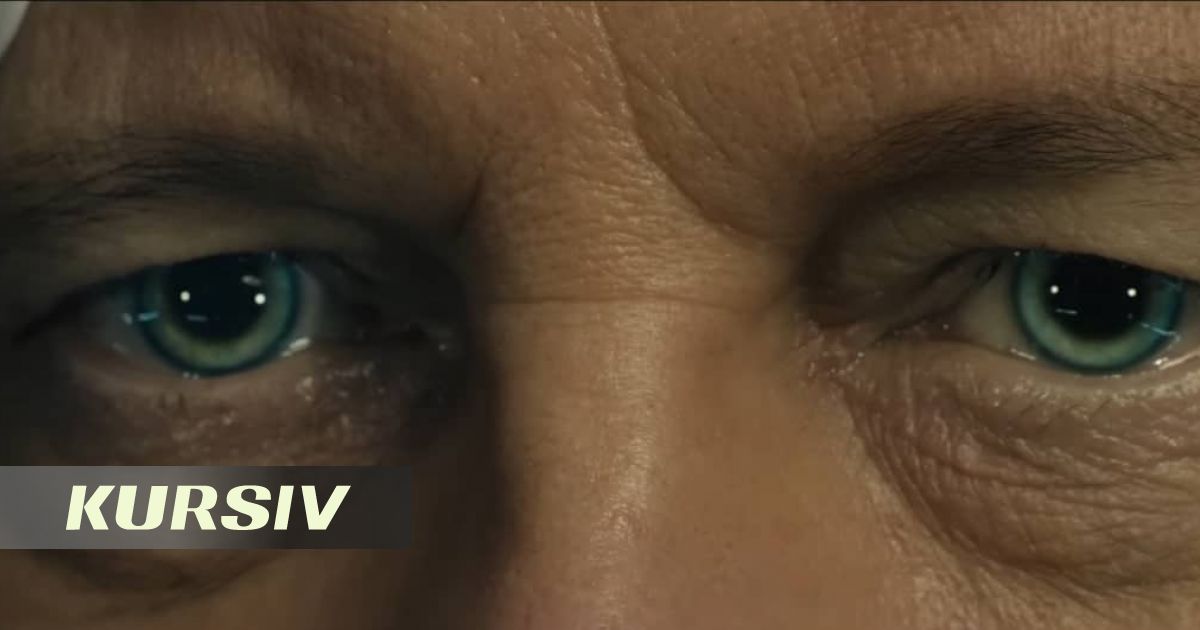
Every new film directed by Steven Spielberg naturally becomes an event. And although one of the greatest living filmmakers now seems like a mastodon compared to YouTube stars dominating the box office, his 'Disclosure Day' still topped the US box office rankings. It is a straightforward and even somewhat naive movie. This was reported by Qazaqyia.kz citing Kursiv Media.
Spielberg will turn 80 in December; he sits in the director's chair less often, and his films become more personal and sentimental each time. First came the autobiographical 'The Fabelmans' – a touching and tender film about a budding filmmaker and the influence of childhood emotions on future creativity. Now comes 'Disclosure Day', where Spielberg both reflects on modern dangers to the world and partially revises his own filmography.
The result has impressed few so far, though it is a quintessentially Spielbergian film. This includes the crew: cinematographer Janusz Kamiński, composer John Williams (both have collaborated with the director over thirty times), and screenwriter David Koepp, who worked on 'Jurassic Park'.
Since 'The Fabelmans', Spielberg has produced about twenty projects, including another 'Indiana Jones' installment and Oscar nominees like 'Maestro', 'The Color Purple', and 'Hamnet: The Story That Inspired Hamlet'. His next directorial project has been announced, featuring legendary San Francisco police officer Frank Bullitt, canonically played by Steve McQueen in the late 1960s, but its release and nature are unclear. Thus, 'Disclosure Day' (especially after 'The Fabelmans') looks like Spielberg's swan song. It contains everything that has become his trademark: aliens, adventure, and faith in goodness.
The film is set in the present day. Dr. Daniel Kellner (Josh O'Connor, star of the recent 'Knives Out' sequel 'Wake of the Dead'), an employee of the semi-secret, semi-defense, semi-state corporation Wardex, goes on the run with a top-secret extraterrestrial artifact. However, Wardex management, led by Noah Scanlon (an unexpected Colin Firth), relentlessly pursues him, as Kellner's goal is to globally reveal that the US government has not only hidden contact with aliens for years but actively used their technology for military purposes. Meanwhile, provincial journalist Margaret Fairchild (Emily Blunt, coming to the fore after 'The Devil Wears Prada 2') suddenly discovers she can speak any language, read minds, and establish telepathic contact with Kellner.
'Disclosure Day' begins as a mysterious adventure thriller and remains so for a long time. The film itself is long by Spielberg standards – nearly two and a half hours. Kellner and his girlfriend flee, Scanlon pursues them both literally and metaphysically, and Margaret tries to understand what is happening to her. It all looks brisk, though sometimes implausible. Naivety finds its continuation, transforming into predominance when the film shifts to its second phase – a fairy tale for children, with the note that the children have grown up.
Spielberg mixes a moral-social ingredient into the action-thriller cocktail, where the main dilemma is: 'Are people ready to know the whole truth? Would it destroy the world? Does the government have the right to 'protect' citizens from shocking news?' The question is not new, and unsurprisingly, the film offers no new answer.
A religious component emerges: Scanlon's name is Noah, Kellner's girlfriend Jane is a novice, and the fugitives initially find refuge in a monastery. Here, too, unoriginal questions are posed (e.g., if aliens exist, does God exist?) with equally straightforward correct answers.
Spielberg does not make (and never has made) philosophical films for deep reflection. This internal simplicity contains a premise for a transition to a fairy tale, which occurs when Margaret gradually realizes who she is. Continuing to skim the surface, 'Disclosure Day' proclaims like a poster manifesto: the world will be saved by kindness, love, and mutual understanding. The last aspect is introduced via a semi-comedic hook at the very beginning, for which Emily Blunt spent months learning Russian and Korean.
From this remark, it is easy to guess that the main sources of potential nuclear war and threats to a fragile world are Russia and North Korea, and this is even shown visually when footage of Russian army positions in Ukraine and the 38th parallel dividing line appears.
Will questions arise from those who think other pain points on the planet are more important and dangerous? Certainly. Does Spielberg care? Unlikely. And perhaps now is indeed the time for poster manifestos.
In 'Disclosure Day', it is hard not to see references to Spielberg's 'E.T.', 'Close Encounters of the Third Kind', 'Indiana Jones', and 'Catch Me If You Can' – the first two films seem to receive additional development. The entire structure, especially the climax, appears taken from James Bridges' famous 1979 film 'The China Syndrome' starring Jane Fonda, Michael Douglas, and Jack Lemmon. There, everything ended with a period; Spielberg's finale is more like an exclamation mark followed by an ellipsis.