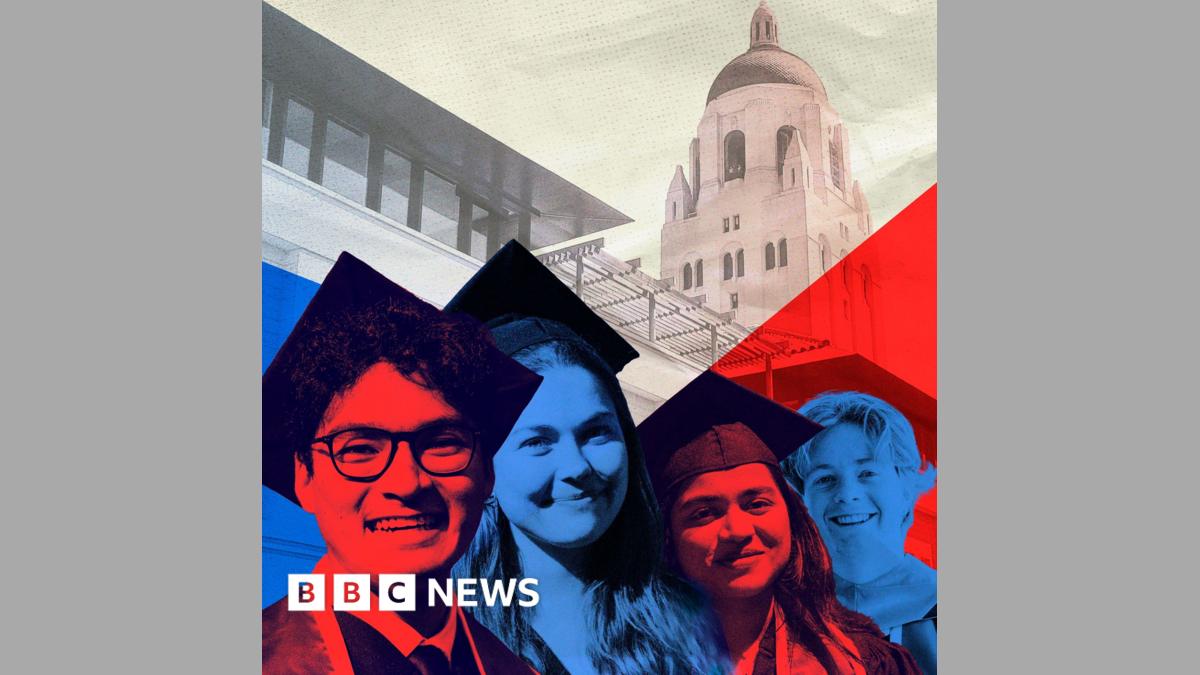
Stanford University graduates expressed mixed views on artificial intelligence (AI). This was reported by Qazaqyia.kz citing BBC News.
American college graduates have made one thing clear to this year's batch of commencement speakers - beware of bringing up artificial intelligence (AI). Some of the biggest names in tech, including former Google boss Eric Schmidt, have been booed when they mention the technology.
At Stanford University recently, in the heart of the American tech hub of Silicon Valley, Sundar Pichai - the CEO of Google, a major AI developer - joked about having been told to avoid the topic. A group of graduates nevertheless walked out during his remarks. Some students carried signs with them as they left - one sign read "ICE spies with Google AI", while others were seen waving Palestinian flags.
Stanford occupies a unique position in the American tech ecosystem. It's regarded as a hotbed of innovation and resides in the shadow of some of the most influential Big Tech companies on the planet, including many pioneers in the AI field. Its elite students enter the job market with an undeniable edge. Yet even there, the backlash was inescapable.
The BBC spoke to Stanford graduates shortly after Pichai finished his address and they expressed a wide range of views on AI. Some are scared. Some are excited. But nearly everyone agrees that AI is already changing the world around them, whether they like it or not.
Ifdita Hasan is among the hopeful. And she knows a thing or two about the technology - it's her degree subject. "I feel optimistic about AI," said the graduating computer science and AI major. "I think AI gives us the opportunity to learn more about the universe. It's a tool that people should try to use and try to adapt to." But, she added, she's not surprised by the backlash, noting that early pessimism is common with emerging technologies.
Some Stanford graduates are less sanguine about AI's arrival. They are, after all, entering the corporate world just as AI is transforming it. What frightens Atash Heil is the uncertainty of what an AI-dominated future might look like - and the speed of the transformation graduates have witnessed during their college years. "It's already had such a big impact in such a small time," Heil added. Heil said he had just visited an exhibit featuring art made by artificial intelligence - an experience which he described as jarring. "I thought it was scary, especially on my graduation day, to see that. The future is… that? I want art to be made by humans. That's what makes it art, right?" said the major in Earth Systems.
AI is also threatening some students' future prospects. Analysis from the Federal Reserve Bank of New York found recent college graduates are struggling to find work. And employment for early-career workers in the US has substantially fallen in fields considered most exposed to AI, according to a Stanford study published in November. These include software development. Unsubstantiated rumours have swirled on social media claiming that students in Stanford's coveted computer science programme have had trouble finding jobs.
Stanford told the BBC it did not have statistics to share about the job placement rate for students. But most graduates interviewed by the BBC either had a job lined up or planned to continue their studies. When most of them entered Stanford as undergraduates in 2021, AI chatbots were still a year away from being a reality for most Americans. The arrival of OpenAI's ChatGPT changed everything, for better or worse. Students expressed concern about the rise of so-called "cognitive offloading," the practice of relying on AI to carry out problem solving and other mental tasks.