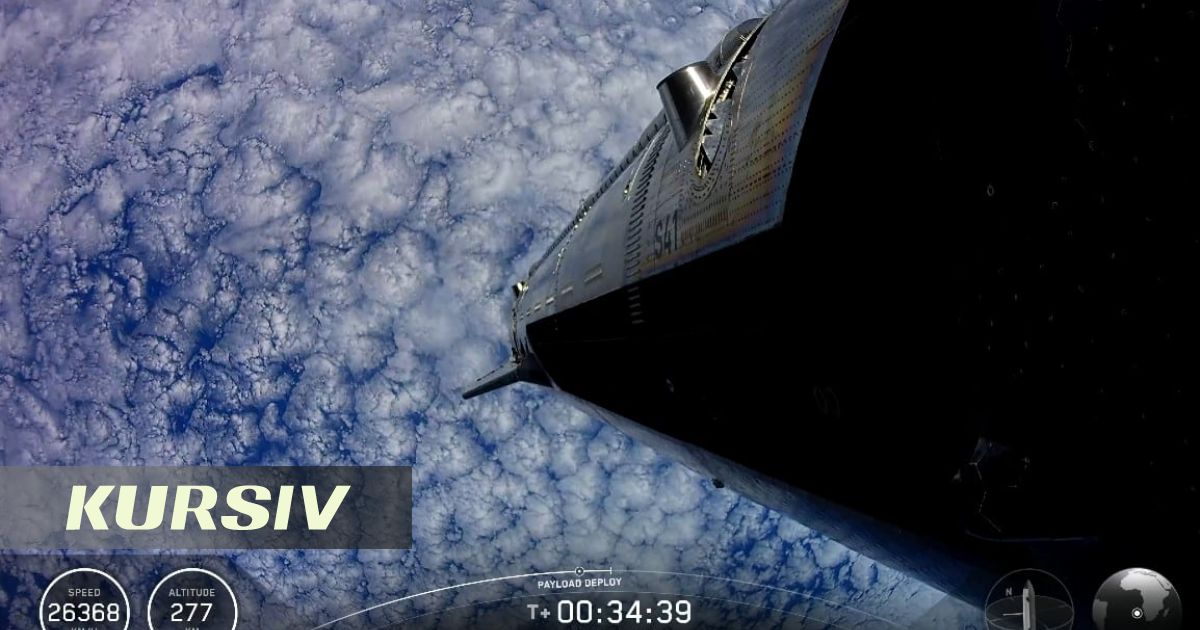
American space company SpaceX, owned by Elon Musk, launched its Starship rocket from Texas. The vehicle is being developed to deliver cargo and people into space. Despite the premature shutdown of one engine, the ship reached orbit and began deploying 26 satellites of the Starlink satellite internet network. This was reported by Qazaqyia.kz citing Kursiv Media.
Launch sequence
When Starship reached space, one of its three main engines shut down earlier than planned. SpaceX representative Dan Huot said during the broadcast that the company would abandon the planned maneuver.
"The team decided not to go to orbit," he said.
A few minutes later, engineers recalculated the trajectory and allowed the flight to continue. The ship fired its engine, reached orbit and began deploying Starlink V3 satellites at an altitude of about 269 km.
Starlink V3 satellites
According to SpaceX, V3 satellites can transmit ten times more data than the previous V2 Mini version.
This is the 14th test launch of Starship and the first during which it delivered a payload to orbit. All previous flights followed a suborbital trajectory.
Continuation of the flight
SpaceX expects the current test to last about ten hours. During this time, the ship should orbit the Earth six times and then splash down in the Pacific Ocean west of Chile.
The company plans to use Starship for more frequent launches of Starlink satellites. The vehicle is also assigned an important role in NASA's Artemis lunar program.
Earlier, Kursiv reported that SpaceX unveiled a new Starlink with speeds above 375 Mbps. And the day before, it became known which trains in Kazakhstan already have Starlink internet working.