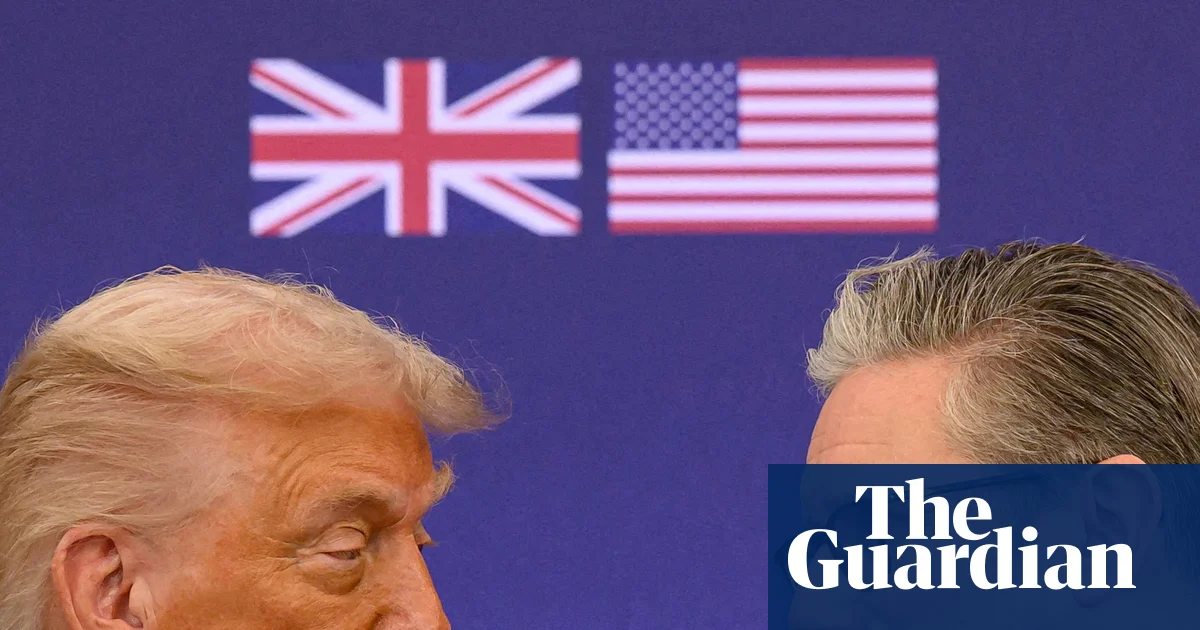
Keir Starmer inherited two wars and a country disconnected from the EU when he arrived in Downing Street – and that was before Donald Trump crash-landed at the White House and undermined the foundations of the UK's most important alliance. This was reported by Qazaqyia.kz citing The Guardian.
It was a context that would have tested any prime minister, though in many respects Starmer negotiated it carefully. But longer-term questions of Britain's security remain unresolved, and the UK's place in the world is less certain.
"I wouldn't be the first person to say that Starmer would be a great diplomat," said Olivia O'Sullivan, a foreign policy expert at Chatham House. "But what we've seen is that the US is not prepared to play such a decisive role in European defence and security – and it's not clear if enough action has been taken in the light of that."
Though the ageing Joe Biden and Starmer overlapped for six months, it was the relationship with Trump that was dominant. At first, the Labour prime minister appeared to have struck an unlikely rapport with the Republican.
It was helped by Starmer publicly handing over an invitation to Trump from King Charles for a second state visit when he came to the Oval Office in February 2025. "This is unprecedented," Starmer gushed, and Trump accepted there and then.
During the ensuing state visit last September, with Trump kept tactfully out of London, the US president muted a disagreement with Starmer over Palestinian statehood – and the two seemed largely in agreement in condemning Russia over Ukraine.
It was a moment of relative harmony. Trump began his presidency dramatically favouring Russia and lambasting Ukraine's president, Volodymyr Zelenskyy, in the Oval Office. European leaders were left aghast at the possibility of Kyiv being abandoned.
On his way back from that bruising visit to Washington, Zelenskyy was due in London for a European summit. But he was also flown by helicopter to visit the king at Sandringham in Norfolk. The short trip, approved by Starmer at Ukraine's request, visibly demonstrated British support for Kyiv at a critical moment.
When Zelenskyy visited the Oval Office again, in August, Starmer was one of several European leaders who flew in alongside him. It was just days after Trump had met Russia's Vladimir Putin in Alaska, and the US president had appeared convinced that Ukraine needed to be told to give up territory to end the war quickly.
Strength in numbers worked: the Russian demand briefly favoured by Trump drifted from the agenda, and has not been revived since. Peace in Ukraine would have to be lasting, fair and just, Starmer said as he headed into the meeting.
Russian intransigence prevented further progress on Ukraine, so Trump moved on to Venezuela and then Iran, at which point the goodwill evaporated. The UK was not informed in advance of the almost certainly illegal US-Israeli attack on Iran in February, which began with the killing of the supreme leader, Ali Khamenei.
Within days, Trump was complaining about an initial refusal by Starmer to allow the use of RAF bases for bombing Iran. "This is not Winston Churchill that we're dealing with," Trump said in early March, beginning a month of jibes, as the bombing of Iran continued to a limited purpose for 38 days while oil prices soared.
Starmer refused to rise to the petty bait, avoiding a deeper split with the US – while refusing to join in with the war Trump had started, other than to allow attacks on Iranian missile launch sites from RAF Fairford in Gloucestershire.
"President Trump has expressed his disagreement with our decision not to get involved in the initial strikes, but it is my duty to judge what is in Britain's national interest," Starmer told MPs in characteristically wordy fashion.
Sir Peter Westmacott, a former UK ambassador to the US, argued that "foreign policy has been an area of relative strength" for Starmer, and that the prime minister had got off a strong start with Trump, "though the president's failure to consult with allies or justify his war with Iran left him with little choice but to stand aside".
Keeping out of the Iran war was also popular with a British public alarmed by Trump's reckless behaviour, though it did nothing to help Labour's overall poll ratings. Relations with the US leader were eventually smoothed over by approving the king's visit to Washington, New York and Virginia in April.
"As a Labour prime minister he would never naturally have been on side with Trump, but he hasn't let it knock him off key positions on issues like Iran," said Peter Ricketts, a former UK national security adviser. "Plus, he's avoided outright rows with Trump – as well as carefully deploying the king."
Britain approved the building of a large new Chinese embassy, despite a series of spying rows, allowing Starmer to visit Beijing in January. Not much was gained from the trip, beyond an agreement to allow Britons 30 days of visa-free travel, and the obligatory cut on whisky tariffs. Nevertheless, the UK hoped for "a more sophisticated relationship" with Beijing, Starmer said.
Starmer tried to pursue a reset with the EU, describing Britain as "very much a part of Europe" at a Blenheim speech.