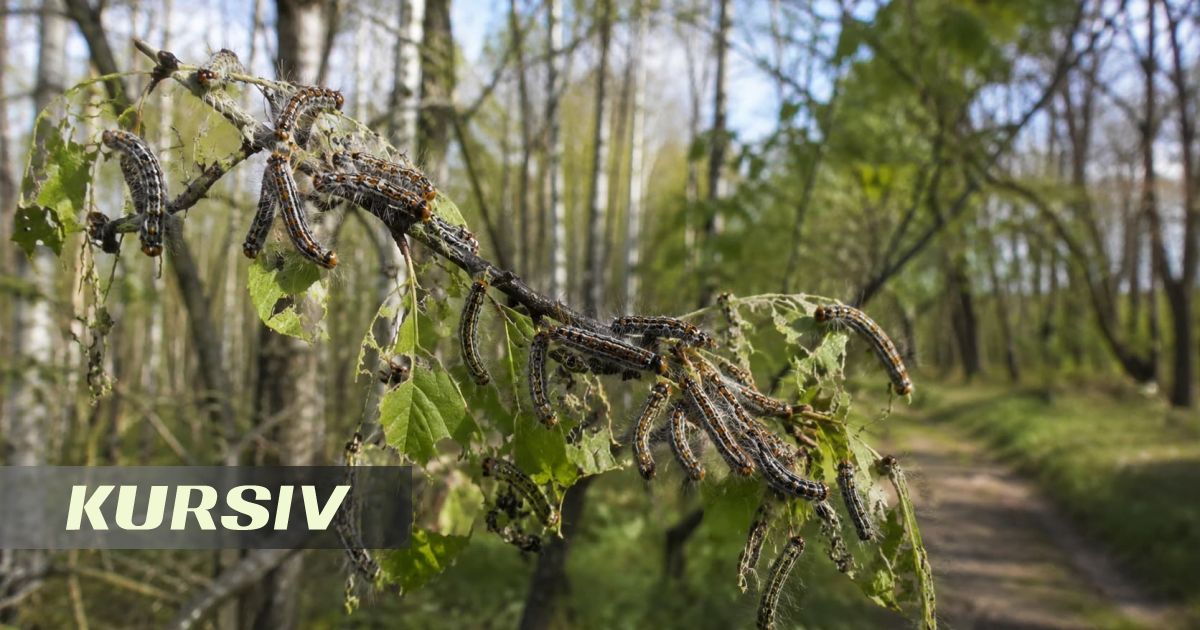
A massive outbreak of the gypsy moth has been recorded in the North Kazakhstan region. The dangerous pest has been detected in six districts, damaging more than 22,000 hectares of forest. This was reported by Qazaqyia.kz citing Kursiv Media.
According to the TV channel, the insects have damaged over 22,000 hectares of forest. To curb the spread, specialists have begun treating the affected areas. The local budget allocated 50 million tenge for the work.
Vasily Labanchuk, head of the department of natural resources management, said residents were warned in advance about the treatment. According to him, the preparations used are not dangerous to humans.
"We posted a corresponding warning where the treatment is taking place, and it is not dangerous for humans. Within 3–4 days, in principle, after that you can pick mushrooms, berries, and so on. A similar situation occurred in 2014, in 2007–2008, in 1999, and in 1994, when significant areas, over one hundred thousand hectares, were affected," said Vasily Labanchuk.
According to experts, birch and poplar trees suffer the most from the gypsy moth invasion. The caterpillars can completely destroy tree foliage, and due to the toxic substances they contain, even birds avoid them.
Experts note that hot and dry weather promotes active reproduction of the pest. After turning into a butterfly, one female gypsy moth can lay up to 400 eggs, significantly accelerating the spread of the insect.