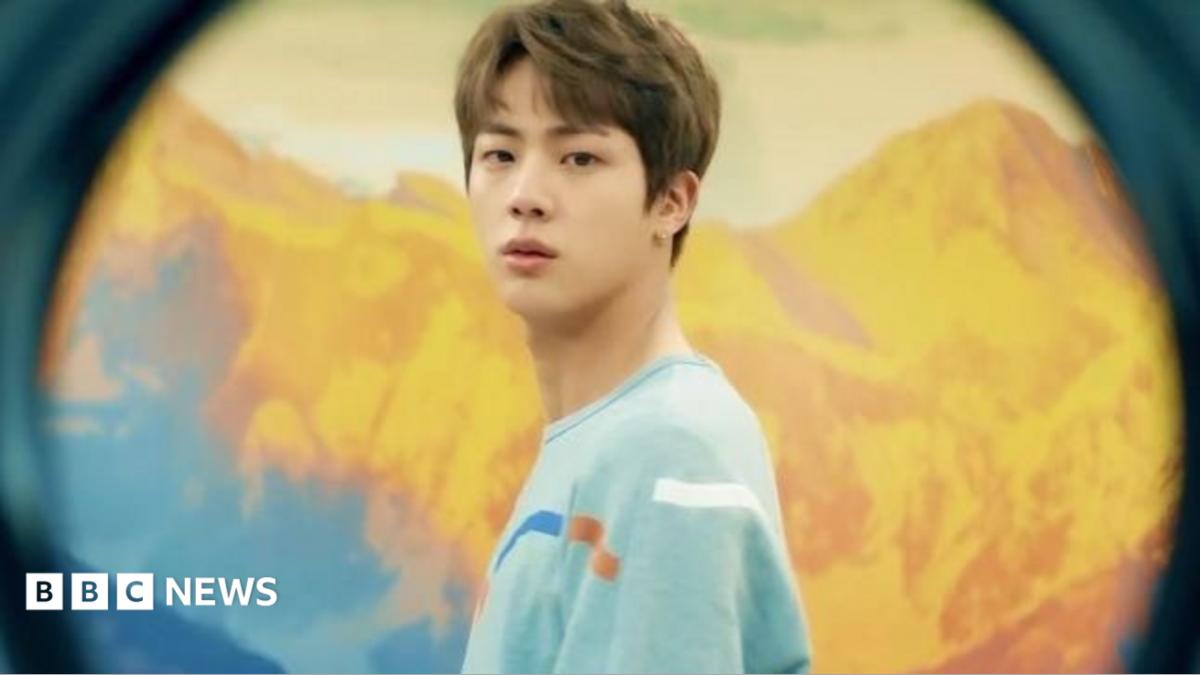
On a sunny Saturday in June, Lee Yeon-su took the day off work and hopped on a train from Seoul to Busan for yet another concert by pop supergroup BTS. It was her third time in as many months. She had been in the crowds that poured into central Seoul in March, when the septet launched their comeback - but the stage was too far away. In April, on the first day of their world tour, the rain poured down, drowning out the singers' voices. But this time in Busan, it was "incredible". This was reported by Qazaqyia.kz citing BBC News.
"Every time I come to a BTS concert, I realise how happy I am that I can like and support someone of my own free will," Yeon-su, which is not her real name, says. "That would have been unimaginable in North Korea."
That's where she was born, in the so-called Hermit Kingdom, just north of the heavily fortified border with South Korea. The outside world was out of reach, cut off by a regime built on fear, surveillance and loyalty. "You had to be selected to attend events and if you weren't, you had to stay home with your curtains closed."
Now in South Korea, she can decide who to cheer for and how. In Busan, alongside a vast fandom, she screamed, jumped and sang at the top of her lungs, especially for her old favourites, the high-octane Fire and hip-hop hit Mic Drop.
Growing up in a military family, Yeon-su was taught the South was the enemy. When she escaped, she tried to keep her distance from South Korean culture. But music found its way into her life. She made it out in 2011, before BTS debuted, before K-pop became a global sensation. Now, even listening to it, or watching shows from the South, is a crime in North Korea that can land people in jail or worse.
Some like Yeon-su say they had never heard South Korean music until they crossed the border. When they did, it opened up a whole world of freedom and fun, helping them adjust to a strange, new life that was now completely their own.
But other defectors tell the BBC that despite the restrictions, K-pop has cut through in Kim Jong Un's stifling dictatorship. They say they used to listen to songs in secret, often not knowing who they were listening to, but clinging to the mysterious and hopeful lyrics. Some even managed to watch K-pop performances, shocked by the blue-haired idols wearing make-up: "Why do men look like that?"
"North Korea is a place where the whole system is set up so that there can only be one celebrity, one idol - Kim Jong Un," says Hannah Oh, a 25-year-old defector. But as it turns out, North Koreans have discovered other idols, like BTS and Blackpink, and before them, Girls' Generation, Teen Top and 2PM.
BTS's Korean name Bangtan Sonyeondan has even become a part of everyday slang in the North, one defector says: "People say things like, 'Have you tried on a Bangtan vest?' or 'Have you worn a Bangtan backpack?'"
For Kang Gyu-ri, who fled North Korea in 2023, there is one BTS hit that stands out: Dynamite. BTS blew up streaming records when it dropped Dynamite in 2020 - a disco-flecked track to cheer up a Covid-weary world, the band said. It caught North Korea's ear despite being the group's first fully English single.
"I didn't understand the lyrics, but the melody was so good, it made you feel excited. Everyone followed along," Gyu-ri, 26, says. At that time, she was living in Kyongsong, a coastal county in the North, where families could pick up TV signals across the water with an antenna. When reception was good, they watched weekend shows in which K-pop idols competed, all colourful hair and slick moves.
"Everything was shocking. I thought they were Korean like us, but they looked very different." The rap was a novelty. "At first, I thought, 'Is this even a song?' But they looked so cool dancing while they rapped that boys started copying them."
Learning a song's signature dance move became a trend among teens, she says. Those who liked dancing looked to BTS and, before them, Teen Top, popular in the 2010s for its electro-pop dance tracks. As she talks, Gyu-ri reaches for her phone and pulls up an old YouTube clip of Teen Top performing No More Perfume on You. "Like this," she says, laughing as she mimes the song's signature perfume-spraying move. "Soon, all the boys around me were doing it. Pssht, pssht. It was so much fun. Once you saw it, you couldn't forget it."
Because they listened to so many songs secretly, she cannot recall titles. She heard Girls' Generation, South Korea's biggest and most iconic girl group, and later became a fan of Blackpink star Jennie: "It's hard to explain, but there's something very driven and powerful about her music."
She says she cannot compare it to North Korean songs, which "felt like they were hitting my ears. Most of the songs I heard growing up were about revolution or politics. We had to keep the state broadcasts on, even inside the house."
Gyu-ri found out about popular songs quickly as she often caught them on TV. But many North Koreans used MP3 players or tiny SD cards. Music was spreading more easily than dramas but slowly.
This was reported by Qazaqyia.kz citing BBC News.