Over the 35 years of the CIS's existence, not only have the political and economic conditions in the post-Soviet space changed, but so has the very understanding of international integration. If in the early 1990s the Commonwealth primarily addressed issues of transition to independent statehood, today its prospects increasingly depend on the ability of participants to implement joint economic, infrastructure and technological projects. This was reported by Qazaqyia.kz citing Kursiv Media.
It was precisely on these areas that President Kassym-Jomart Tokayev focused attention at the meeting of the CIS Council of Heads of State in Turkmenistan. The head of state proposed drafting a Strategy for the Development of the Commonwealth through 2035, forming a Portfolio of flagship industrial and technological projects for 2027–2030, strengthening transport connectivity and creating new cooperation mechanisms in the field of artificial intelligence.
The economic component is acquiring particular importance. The CIS states account for more than a quarter of Kazakhstan's foreign trade turnover. However, further development of cooperation presupposes not only an increase in trade, but also the formation of new production chains, expansion of sales markets and enhancement of technological competitiveness. At the same time, Astana proposes expanding the Commonwealth's international engagement through the "CIS Plus" format, while preserving the existing principles of interstate cooperation.
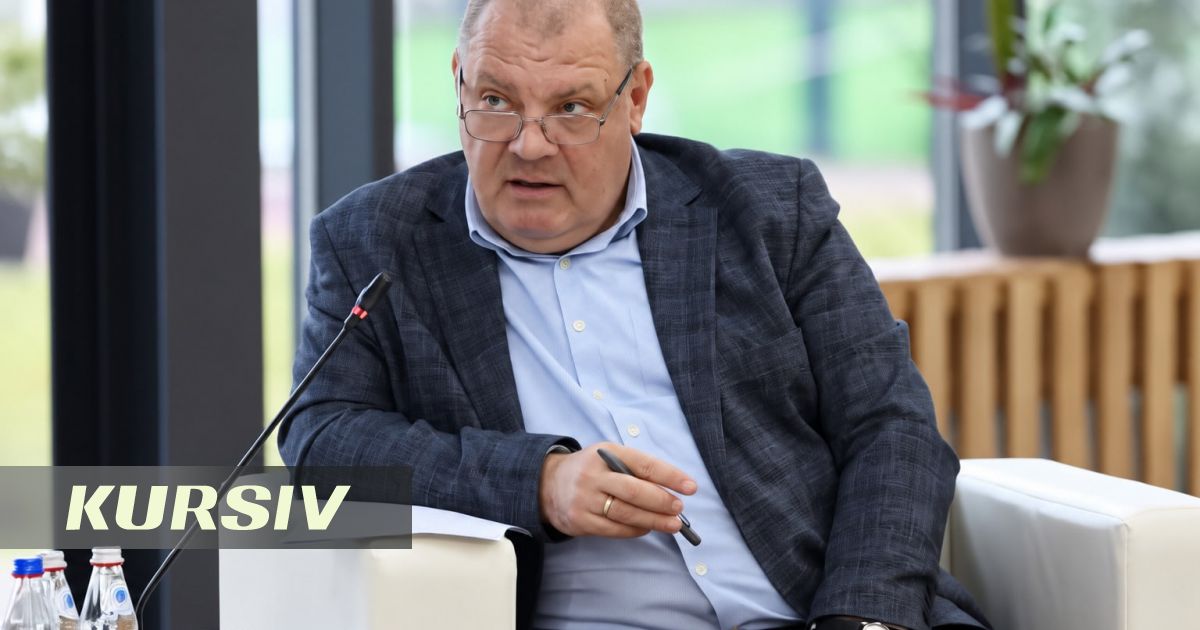
How much do these initiatives correspond to current geopolitical realities, what opportunities do they open for Kazakhstan and why does the CIS remain in demand after three and a half decades? This was discussed by political scientist, editor-in-chief of the journal "Mir Yevrazii" (World of Eurasia) Eduard Poletaev.
– President Kassym-Jomart Tokayev proposed drafting a Strategy for the Development of the CIS through 2035, recalling the historical significance of the 1991 Alma-Ata Declaration. To what extent has the Commonwealth preserved its original role and why has the need to revise strategic priorities arisen precisely now? What mechanisms could ensure the practical implementation of the approach proposed by Kazakhstan?
– The Alma-Ata Declaration indeed has great historical significance, especially in the year of the CIS's 35th anniversary. At the time, the Commonwealth was predicted to have a short existence, yet the organization proved quite viable. Despite certain difficulties, it continues to function and to build plans for the future. The creation of the CIS addressed several fundamental tasks. First of all, it gave the collapse of the Soviet Union the character of a relatively civilized transition to new interstate relations. In addition, to a certain extent it was possible to prevent potential conflicts between former union republics, although it was, of course, impossible to fully eliminate contradictions. We see, for example, that in the territory of the former Yugoslavia the situation turned out to be significantly more complex, since no such structure existed there.
The Commonwealth formed the organizational and legal basis for interaction among the new independent states, making it possible to resolve issues of delimitation of powers, preservation of economic ties and further cooperation on mutually beneficial terms. As for Kassym-Jomart Tokayev's proposal to draft a Strategy for the Development of the CIS through 2035, it fully corresponds to current trends. Currently, the Strategy for the Economic Development of the Commonwealth through 2030, adopted in 2020, is in effect. However, in the time since, the international situation has changed substantially. The world has faced a pandemic, geopolitical turbulence, and a restructuring of economic and logistical ties. We are observing new processes in the South Caucasus, a change in transport prospects toward the Persian Gulf and a strengthening of economic cooperation among the states of Central Asia.
All of this indicates that the configuration of international economic relations continues to change. Therefore, the approaches formed back in 2020 no longer fully correspond to current conditions. Here, President Tokayev's proposal to form a coordinated system of priorities is of fundamental importance. Kazakhstan is actively bringing issues of digitalization, artificial intelligence and high technology onto the international agenda. Not all CIS countries pay equal attention to these areas, yet the needs of the states are largely similar. It is impossible to ensure the competitiveness of an economy while remaining on the sidelines of modern technological processes.
As an example of long-term planning, one can cite the Eurasian Economic Union, where a declaration on the development of economic processes through 2030 and for the perspective through 2045 is in effect. It envisages the formation of a self-sufficient, harmoniously developed and attractive macro-region. For the CIS, such a task is also relevant, but the specifics of the organization must be taken into account. The states of the Commonwealth have different economic interests, levels of integration and foreign policy priorities. Therefore, the creation of rigid supranational mechanisms here is hardly possible. Decisions are taken on the basis of consensus, and interaction itself largely develops through bilateral and sub-regional formats.
But it is precisely such flexibility that allows the organization to remain in demand. The example of Turkmenistan is telling: it holds the status of an associated participant of the CIS in connection with its neutrality. Nevertheless, the state actively participates in the activities of the Commonwealth and hosts major international events. An additional role is played by informal meetings of CIS leaders, traditionally held at the end of the year in St. Petersburg. At such venues, it is often possible to discuss issues that are considerably more difficult to resolve in an official bilateral format.
However, to enhance the effectiveness of cooperation, it is necessary to move from general agreements to more concrete mechanisms. In this regard, the approach that Tokayev proposed at the Consultative Meeting of the Heads of State of Central Asia and Azerbaijan, when he spoke, is of interest.