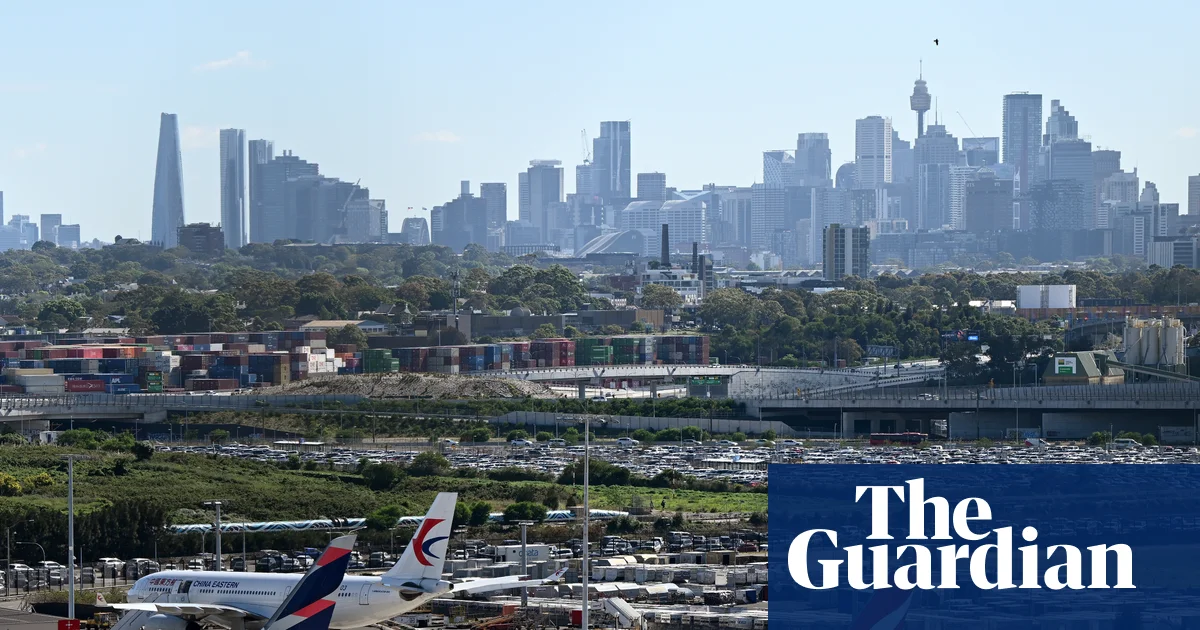
A near-miss incident at Sydney airport has highlighted severe staff shortages among air traffic controllers. This was reported by Qazaqyia.kz citing The Guardian.
On Sunday morning, a Jetstar plane narrowly avoided colliding with a Qatar Airways aircraft on the tarmac. The day before, more than 150 flights through Sydney were delayed as the airport faced a lack of controllers, underscoring the fragility of rostering.
While Sunday's incident is under investigation – an air traffic controller and a tug driver were temporarily stood down for mandatory drug and alcohol testing – the issue has spotlighted the critical shortage of those managing air traffic.
Scott Nugent, president of the air traffic controllers' union Civil Air, says the issue is that "we do not have enough controllers just to fill the base roster before we have any sick leave at all." "In practice, the only way you fill the roster is with overtime, and it relies on overtime just to do business as usual," Nugent said.
The experienced controller says workers are exhausted from excessive overtime, with some working 10 days on and one day off. "The reason you've seen these delays in the last week is because we increased the spacing between aircraft to maintain safety when we have less people," he says. "If you're doing the work of two people, you can only take half as many planes."
Much of the problem stems from a pandemic-era program that incentivized experienced staff to leave Airservices Australia in 2021. With most planes grounded, 140 employees aged 56 or older accepted redundancy.
Soon after, the organization launched a large recruitment drive, but hiring has failed to keep up with demand. Despite a starting salary of $116,990 per year for a qualified controller post-training – experienced supervisors can earn nearly $300,000 – Airservices has struggled with recruitment since the pandemic.
In February 2024, two controllers who didn't show up for work at Sydney airport caused cascading delays and cancellations across the country. Airservices narrowly avoided a similar incident in September last year.
Meanwhile, Airservices is preparing for a once-in-a-generation transition to a new flight-tracking computer system and managing past allegations of workplace bullying. A review by Elizabeth Broderick's firm found 27% of staff in 2023 had experienced bullying in the past 12 months, up from 23% in 2020.
From July 2022 to 2026, Airservices endorsed 245 controllers, most qualifying in 2025-2026. Over the same period, 86 controllers left.
Airservices says it now has a record number of controllers across Australia: 985 in December 2020 and 1,073 as of July this year. However, demands have grown significantly, citing the new Western Sydney airport and the takeover of airspace at Ballina.
Sydney, Australia's busiest airport, still lacks enough controllers. A newly qualified controller can't simply fill the gap left by a retiring veteran. After 18 months of training, a new controller may work in one position at Sydney tower, such as helping organize taxiways around the domestic airport. They wouldn't be qualified for international airport taxiways or runways, requiring additional training, making newer employees less able to fill urgent vacancies.
Airservices acknowledges the problem, calling training experienced controllers for Sydney its "top priority," but can't say when it will recruit enough. Training takes about two years, and only if someone passes initial screening, including a difficult online aptitude test.
"Only a very, very small number of people get through the application process," says Nugent. "We're usually talking about 2,000 people who might apply, and you hire 15 of them."
Additionally, applicants must move to Melbourne for mandatory training. Offering training only at one location is seen as an impediment, as some applicants don't want to relocate given the risk of not passing.