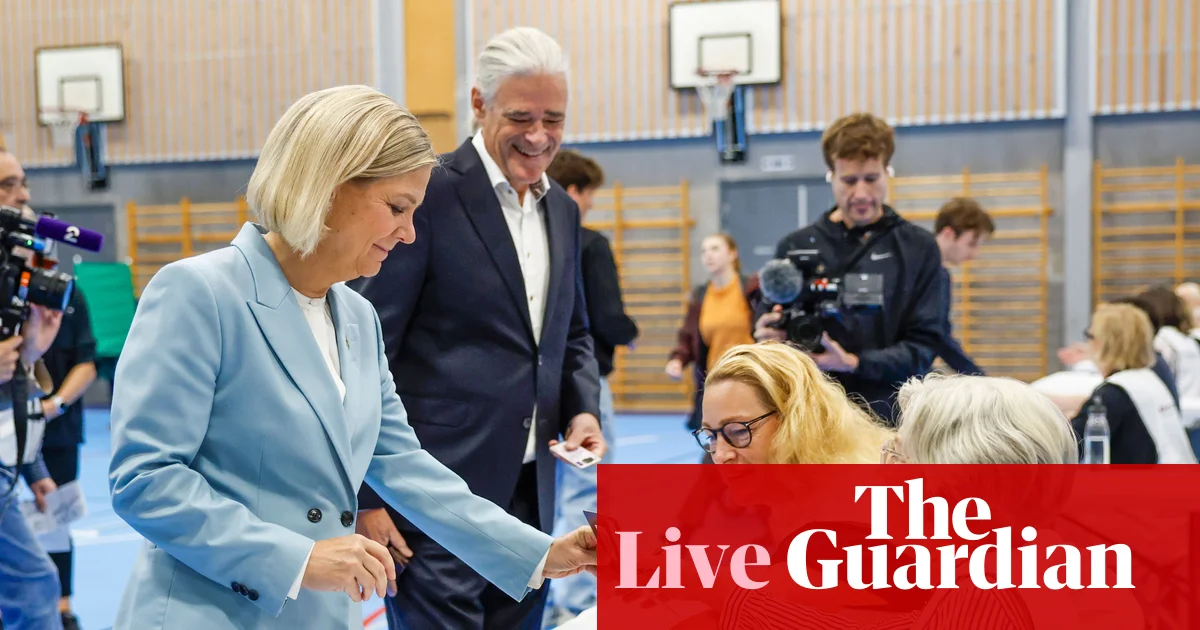
Voting is under way in Sweden in a high-stakes election that could lead to the far-right Sweden Democrats (SD) entering government for the first time. This was reported by Qazaqyia.kz citing The Guardian.
It comes after an unusually heated and polarised campaign punctuated by personal attacks between leaders, accusations of misinformation and Maga-inspired ads.
Polls suggest an extremely tight race, with one showing just 0.3 percentage points between the left and right blocs.
The right-leaning bloc, made up of what are known as the Tidö parties, has been in power for four years. It is formed of the Moderates, the Christian Democrats and the Liberals with a supporting role for SD, Sweden’s second biggest party.
The opposition left-leaning bloc is formed of Sweden’s biggest party, the Social Democrats, the Centre party, the Green party and the Left party.
The rightwing coalition broke a longstanding taboo in 2022 by going into partnership with SD, which has neo-Nazi roots.
SD has attempted to make itself more palatable to the mainstream by toning down its overtly racist rhetoric, while arguing that immigration is responsible for Sweden’s crime problems.
After four years in a supporting role for the Moderates-run coalition government, however, during which it has shifted much of the Swedish establishment to the right, SD’s approach to the election has been more brazen. If the right-leaning coalition wins, the party has been promised a prominent role in the government, including key ministerial positions.
The prime minister and leader of the Moderates, Ulf Kristersson, has put considerable focus in the final days of campaigning on the penalty discount applied to criminals convicted of various offences. He accused opposition leader Magdalena Andersson of not standing up for female rape victims. In response, she accused him of weaponising men’s violence against women.
Voters say the most important election issues are healthcare, law and order, immigration and the economy. But much of the election debate has been focused on personal finance, said Radio Sweden’s senior political correspondent, Fredrik Furtenbach.
“The parties have tried to outdo each other with promises of more money. It has been a sort of auction.”