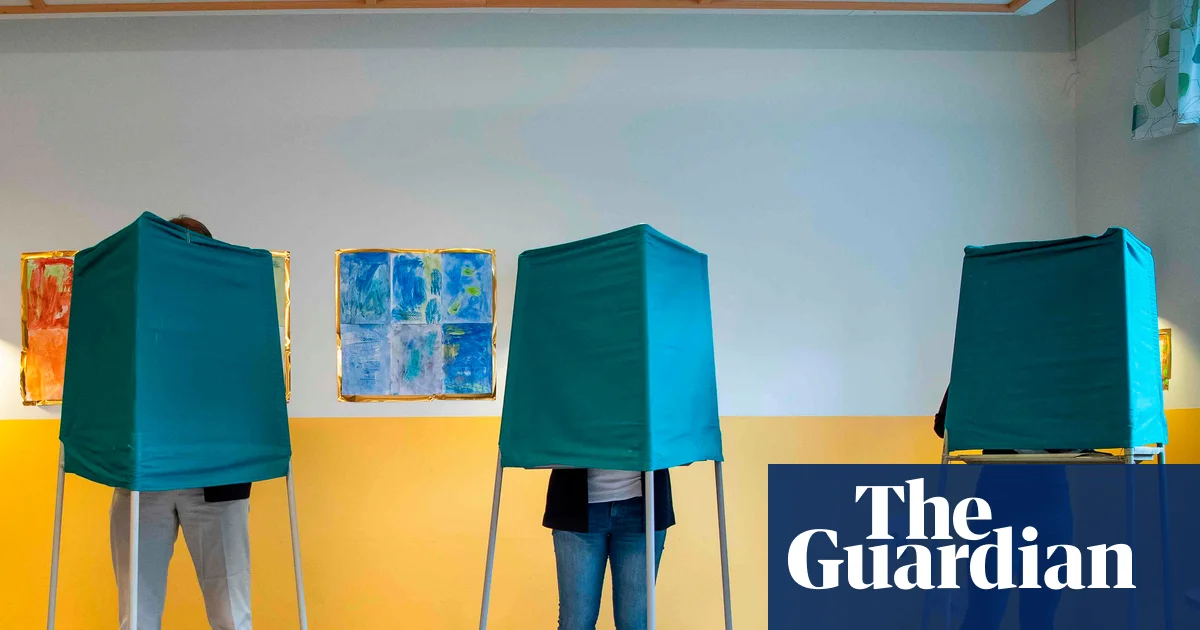
One is led by Sweden's first female prime minister, Magdalena Andersson, and has promised smaller school-class sizes, more housing and free dental care for young people. The other, led by Jimmie Åkesson, has neo-Nazi roots and has pledged to lower taxes, improve public safety and treat "anti-Swedishness" as a hate crime. This was reported by Qazaqyia.kz citing The Guardian.
In the run-up to Sweden's general election in September, the Social Democrats and the Sweden Democrats are placed first and second respectively in the polls, and between them are expected to scoop up more than 50% of the vote. But which party Swedes are most likely to back could depend in part on their gender, amid a widening gap between male and female voters.
The 2022 election brought a record-breaking gender gap between men and women, and the latest statistics show that in September the gulf is likely to be even wider: a recent survey by Statistics Sweden found that twice as many men as women support the far-right Sweden Democrats, while female support for the Social Democrats is 10 percentage points higher than its male equivalent.
If only women voted, the left-leaning bloc, led by Andersson's party, would gain 64% of the vote, the survey found. If only men voted, the right-leaning parties, with the current prime minister, Ulf Kristersson, of the Moderates at the helm, would get 51%. Why, in Europe's supposedly most gender-equal country, does gender play such a big role?
Lena Wängnerud, a political science professor at the University of Gothenburg, said the move leftward of women and rightward of men had been happening since the 1970s, but that in recent years the Sweden Democrats had replaced the centre-right Moderates as the main choice for men. Her research showed that men in the private sector were most inclined to vote rightwing, driven by support for lower taxes, a smaller public sector and less immigration, she said. "The fact that women have not shifted to the right to the same extent, regardless of whether they work in the public or private sector, stems from their greater reliance on a well-functioning welfare state, given that they still bear the primary responsibility for caregiving in the private sphere."
Nelly Ailo, 41, a pharmacy assistant who was having her lunch just off the main shopping street in Södertälje, a city near Stockholm, had a similar take on what motivates male voters. "First it is economics – what is better for them," she said. "They vote about economics. Not 'is it good for people? Is it good for children? Is it good for …?', No, no, no. For them it is high salaries, low tax on petrol."
Ermias Balcha, 23, who works in assisted housing, would dispute that theory. He says that under the current government, conditions, particularly for the unemployed and homeless, have declined. "It gets worse and worse actually. There are people who are pensioners who hardly get any pension or pay." Balcha sees the best option in the next election as a vote for the Social Democrats- but acknowledges the party could do more to appeal to men.
If the election had been held in May, the Statistics Sweden annual party sympathy survey published in June found that 39% of women said they would vote for the Social Democrats compared with 29% of men. A quarter of men and 12% of women said they would vote for the Sweden Democrats. Both parties had slight overall gains in support. Kristersson's Moderates do not have the same gender gap, but with just 17% of total support, they came in third.
The Social Democrats are Sweden's biggest political party but have been in opposition for the last four years after the rightwing bloc formed a governing minority-run coalition led by Kristersson and supported by the Sweden Democrats. If the centre-right coalition, known as the Tidö parties, win the next general election, Kristersson has pledged to allow the far-right Sweden Democrats into government for the first time, promising them "big political influence and important ministerial posts within immigration and integration".
The party's entry into government would be a landmark moment for Swedish politics, but in many ways, observers say, their influence has already had a lasting impact – both on daily life, particularly for immigrants, and the rightward shift of politics. This is particularly stark in some of the policies of the supposedly centre-left Social Democrats, who are, like Åkesson's far right, hardline on immigration, integration and crime.