Skeletal remains of 572 people, including children and infants, have been found in a mass grave in Sri Lanka's northern Chemmani area. This was reported by Qazaqyia.kz citing BBC News.
When a mass grave was unearthed in northern Sri Lanka last February, it was not by design. Workers were digging to extend a cremation ground in the Chemmani area of the Jaffna region when they suddenly discovered human remains, prompting an investigation. By August, archaeologists had completed the third phase of the excavation at the site, during which they found the skeletal remains of 572 people.
Among the dead were artefacts from their lives – bangles, a school bag, a milk bottle. It is believed to be the largest mass grave site ever uncovered in Sri Lanka.
There had been whispers of its existence before – a soldier on trial for the rape and murder of a young woman during the country's devastating civil war had spoken about a mass grave which contained hundreds of bodies. Rights groups said they were disappeared civilians.
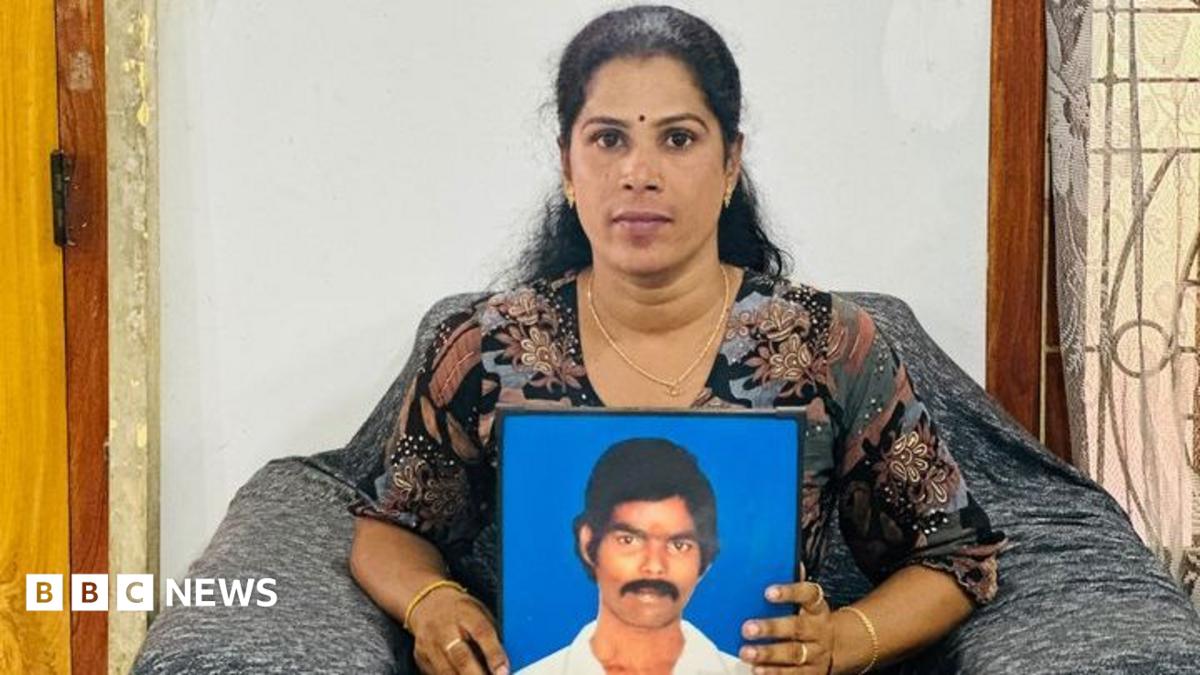
And while the discovery is devastating, it has offered hope to people like Jeyaruby Jeyabalan, whose father was among thousands of people who disappeared during the decades-long war. Jeyabalan and families like his hope that answers about what happened to their loved ones lie among the bodies.
Many Tamils believe the grave holds the victims of extrajudicial killings carried out during the civil war. They are calling for an investigation – and for justice.
But the excavation process at Chemmani has moved slowly, testing the patience of families searching for answers about their disappeared loved ones. The discovery of hundreds of remains near a previously identified mass grave has fuelled anger among the Tamils, who have long-demanded a thorough inquiry into disappearances.
Many fear the mass grave will eventually fade from public attention because of a lack of political will to pursue the truth – and so the grave has become a rallying point for renewed protests in Sri Lanka's north.
Sri Lanka, particularly the Tamil-dominated north and east, suffered decades of conflict. The war, which lasted from 1983 to 2009, divided the island-nation along ethnic lines. Tamil Tiger rebels fought for an independent state in the north-east of the country due to what they called systematic discrimination by the Sinhalese-dominated government.
The conflict lasted 26 years and the fighting killed an estimated 100,000 people. It also left about 23,000 – mostly Tamils – missing. Both the security forces and Tamil Tigers are accused of atrocities and crimes.
In 1995, after a bloody conflict, the Sri Lankan army wrested control of the Jaffna Peninsula from the Liberation Tigers of Tamil Eelam (LTTE). It was seen as a key turning point in the war, which ended with the defeat of the Tigers in 2009.
As they extended control in the late 1990s, the entire Chemmani region became part of a high-security zone and was dotted with army camps, check points and security posts. There was an army camp in Chemmani close to the cemetery as well.
Some at that time described the Jaffna region as an "open prison" – and the security forces were accused of causing the disappearance of thousands of civilians, something Sri Lankan governments have always denied.
"I was 12 years old when my father was picked up by the Sri Lankan army at a checkpoint close to Chemmani area in September 1996. We still don't know what happened to him," Jeyaruby Jayapalan, who now lives in Jaffna, tells the BBC.
She recalls how, after learning of his disappearance, the family panicked and visited military camps and police stations across Jaffna in a desperate search for information without any luck. He never came back.
Her father, Kandaiah Jayapalan, was a government employee who also ran a roadside café not far from Chemmani.
"I went to Chemmani mass grave with many others hoping that I will find some answers. But we didn't find any material evidence. We want a detailed forensic analysis of the human remains," says Jeyaruby.
Two weeks before Kandaiah Jayapalan vanished, an 18-year-old Tamil school girl, Krishanthi Kumaraswamy, disappeared in the same area.
In 1998, a court in Colombo sentenced five soldiers to death for the rape and murder of Kumaraswamy and for killing three of her family members. The case drew global attention at that time. Their bodies were later found buried in Chemmani area.
It is among the most infamous cases from the conflict – and the grave currently under investigation is within 100 metres of the remains of Kumaraswamy and others were found.
In a startling court testimony, one of the convicted soldiers, Somaratne Rajapakse, alleged that between 300 and 400 people who had been killed in the mid-1990s were buried in Chemmani.
His claim led to the first excavation at Chemmani a year later, during which investigators unearthed more than 10 human skeletons. Human rights activists believed those remains were linked to people who had disappeared during the civil war, but there was little judicial follow-up.
Activists say that because the war with the Tamil rebels was ongoing, the then government didn't pursue the investigation and did not explain why.
The discovery of another mass grave in the same area has revived calls for accountability.