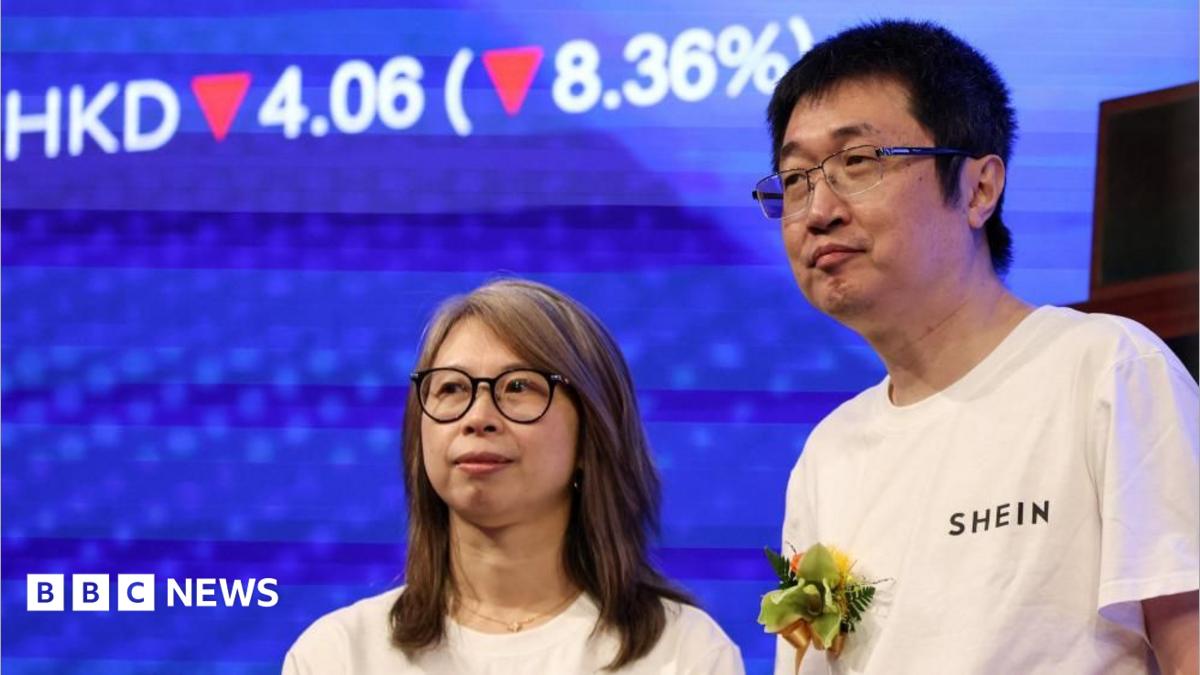
Shares in fast-fashion giant Shein fell sharply in their highly anticipated stock market debut on Tuesday as the firm listed in Hong Kong after a long quest to go public. This was reported by Qazaqyia.kz citing BBC News.
It comes after failed attempts to list in the US and UK, as concerns were raised over issues including Shein's labour practices and its environmental impact.
Once estimated to be worth nearly $100bn (£74bn), Shein is now valued at around a quarter of that figure, as the firm faces other challenges like heated competition and trade tensions.
Shein became hugely popular, especially among younger people, due to its ability to source the very latest fashions at ultra-low prices through a vast network of factories in China.
At a ceremony to celebrate the listing, chief financial officer Leigh Gui said the company's model of selling large numbers of small orders with rapid payment options now reaches about 160 markets worldwide.
"Let global consumers enjoy the sound of fashion," he said.
On Monday, Shein priced its shares at HK$48.56 each, raising 13.6 billion Hong Kong dollars ($1.7bn; £1.3bn) from the listing.
That gave the company a stock market valuation of $26.3bn.
Shein's shares were trading 8.7% lower at 44.4 Hong Kong dollars each on Tuesday morning.
The disappointing debut suggests the market is not convinced that Shein's growth can make a "comeback", said Charu Chanana, chief investment strategist at investment bank Saxo.
Shein has more than 273 million active customers who placed a total of more than a billion orders in the year to the end of March 2026, the firm said in a filing ahead of the listing.
But Shein now faces higher costs, regulatory scrutiny and more competition, while investors are increasingly drawn towards technology companies, Chanana said.
For customers, the slump in Shein's shares is a sign that the firm's cheap prices are "becoming harder to sustain", which may lead to higher prices, she added.
The listing marks the largest new share sale in Hong Kong so far this year, which is being seen as a test of investor appetite for the fast fashion industry.
It is a rare "standalone" e-commerce firm that can be assessed on its own merits, fashion industry analyst Louise Deglise-Favre from research firm GlobalData.
Shares in rivals Asos and Boohoo have been battered in recent years as they face regulatory scrutiny and fierce competition.
"Investors have learned to be sceptical," while concerns over sustainability and ethical issues add to the complexity of Shein's share sale, Deglise-Favre said.
Shein was founded in China in 2008 and is now headquartered in Singapore.
The firm's long road to the stock market highlights the geopolitical pressures and regulatory scrutiny faced by Chinese companies with global ambitions.
The company once looked set for one of the largest stock market debuts ever by a Chinese firm, with Wall Street in its sights.
Its business had surged during the Covid-19 pandemic as people, stuck at home, turned to online retailers.
Shoppers shared clips of themselves trying on large numbers of its garments, a trend called Shein Hauls, boosting the company's online presence.
An initial public offering (IPO) in the US - by far Shein's largest market - would have offered it a chance to further increase its global profile and tap into Western financing.
But the firm faced resistance from US lawmakers, who objected to the planned listing over concerns of forced labour in Shein's factories. In response to such allegations, the company has said it takes a "zero-tolerance policy for forced labour".
It has also been accused of copying other designers' ideas. Shein has said "it takes all claims of infringement seriously" and that it respects the rights of all designers.
Shein also explored the possibility of making its stock market debut in London but faced similar opposition.
The BBC has contacted Shein for further comment.