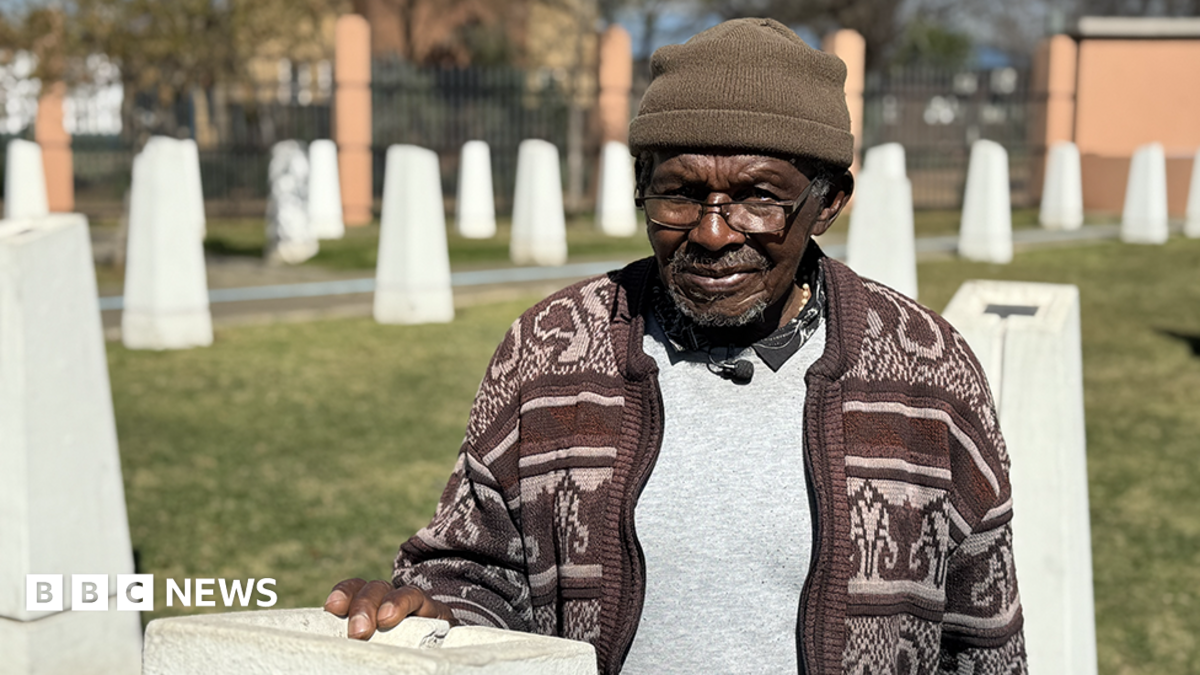
Abraham Mofokeng still carries the wounds of the bloody suppression of a protest in South Africa 66 years ago. This was reported by Qazaqyia.kz citing BBC News.
In what became known as the Sharpeville massacre, police infamously opened fire on thousands of peaceful demonstrators. A bullet is still lodged in Mofokeng's spine, and he has a gentle limp from a gunshot to the leg.
"We weren't seen as people," the 86-year-old tells the BBC as he explains the reasons he joined the demonstration on 21 March 1960 against the repressive laws of the white-minority government.
"All you were good for was working. You couldn't question them, you were supposed to just do as you're told."
The massacre at Sharpeville, which he survived, exposed to the world the violence of the racist apartheid system - yet thanks to an indemnity law passed a year after the killings, none of the perpetrators were ever prosecuted.
Mofokeng is now part of a legal case set to be announced on Thursday that will seek to overturn this law.
At least 69 protesters were shot dead by police on that day in 1960, becoming a pivotal event in the history of the anti-apartheid movement.
Though Sharpeville may be a place name rich in historical resonance, it scarcely looks like a site that symbolises the struggle: the township is slowly crumbling.
The once tarred roads of this area south of Johannesburg are returning to dirt. Many of the houses are still the small, brown-faced brick homes built under the apartheid-era government. The earth is dry and barren - heaps of rubbish are piling up throughout the neighbourhood.
While the legalised system of racism was buried in 1994 when the country held its first democratic election and elected Nelson Mandela as president, its scars remain.
There have been attempts at redress - not least through the Truth and Reconciliation Commission (TRC) - set up by Mandela's government to investigate crimes committed during the apartheid era.
But the Sharpeville survivors feel they have not seen justice.
Sharpeville's local memorial park, the Human Rights Precinct, tells the story of how the streets of township became the scene of a bloodbath. Inside the park stand 69 white pillars, one for each life lost.
The victims were killed while demonstrating against the racist pass laws. At the time, black people were forced to carry a document known as a passbook, known as "dompas" in Afrikaans, which restricted their freedom to move around the country.
A person could be beaten and jailed if found without it - or if found in a "whites-only" area without permission.
Many heeded the call from the leaders of the Pan Africanist Congress in March 1960 to march in protest against the dompas, including then-20-year-old Mofokeng.
"The life we were living under apartheid was a life of oppression. We could not move around freely. We ended up planning to march to the police station against these passbooks that were being used to oppress us," he says.
Thousands turned up to what they thought would be a peaceful protest.
"[The police] had rifles, machetes, even shields. We explained to the police that we didn't want the passes anymore and we were prepared to go to prison. There was a commotion, then all hell broke loose when the police started shooting."
Mofokeng was among the more than 200 people injured and recent estimates by South African researchers have revised upwards the number who died to as many as 91.
Another survivor, Larazus Magotsi - now 90 - walks along the long row of graves in the cemetery where most of those who died are buried. Among them is a headstone marking where a 12-year-old was laid to rest.
Magotsi's eyes are filled with tears as he struggles to compose himself.
"We heard gunshots and ran and hid inside a store, peeping to see what was happening outside," he says.
"People were lying on the ground. When we looked out again, we saw that some were trying to get up, but the police were just shooting at them."
"Others were using machetes to strike the heads of people who were still moving."