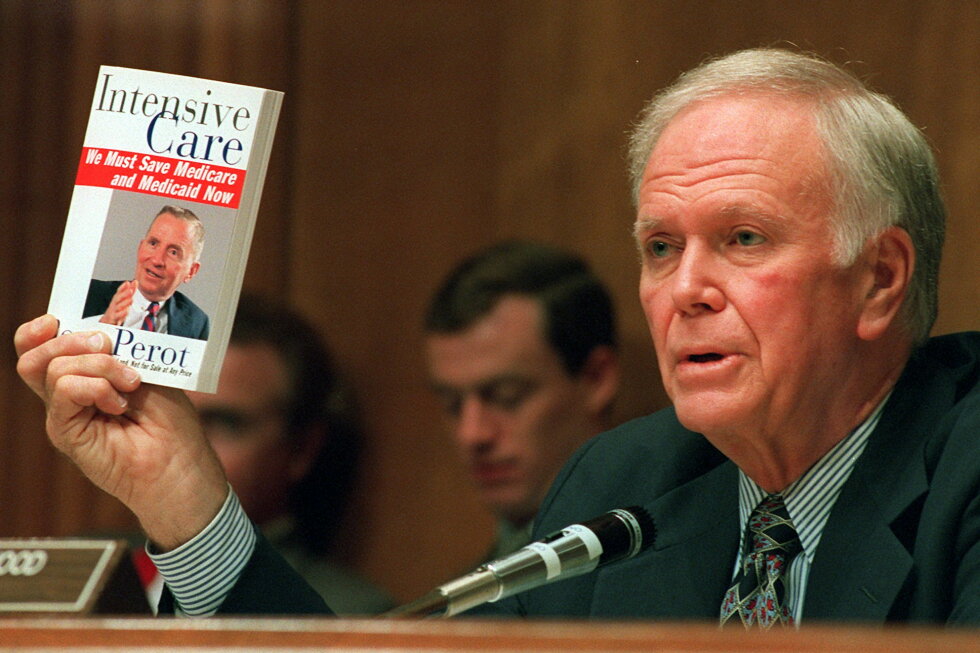
Senator Bob Packwood dies at age 93
Former Oregon Senator Bob Packwood, a centrist Republican whose reputation as a champion of women's rights was undone by sexual misconduct allegations, has died at age 93. This was reported by Qazaqyia.kz citing Associated Press.
Packwood's death was announced in an obituary released by his family. No further details were provided.
Packwood was a political fighter who initially refused to leave the Senate, where he served for 27 years, saying he did not want to be remembered only for the scandal. Before the #MeToo era, Packwood was an example of how private behavior undermines a person's public image.
The great-grandson of a member of Oregon's 1857 constitutional convention, Packwood established himself as a social moderate and fiscal conservative, often voting against party lines. He considered running for president in 1980.
Elected to the Senate in 1968, Packwood was known as a leading Republican supporting abortion rights and was widely respected by women's organizations nationwide until 1993, when the Senate Ethics Committee began investigating allegations of sexual and official misconduct.
More than two dozen women, former staffers and acquaintances, accused him of unwanted or unwelcome sexual advances. The allegations remained under investigation, which expanded to include other alleged official misconduct. He resigned in September 1995, after which he entered the lucrative lobbying business in Washington.
Democratic Senator Ron Wyden, who succeeded Packwood in 1996, said that while he should be praised for his stance on abortion and tax reform, his treatment of women overshadows all that.
"His terrible history, documented in his own diaries, will forever overshadow that public record. Simply put, historians' first line about Bob Packwood must include the women he abused and assaulted for years," Wyden said in a statement.
As chairman and later ranking Republican on the Senate Finance Committee, Packwood was a master of deal-making and compromise needed to pass tax legislation through Congress. He was most proud of his leading role in the landmark tax reform of 1986, which lowered the top income tax rate and eliminated many itemized deductions.
Over his career, he was described as straightforward, independent, outspoken, a maverick, a troublemaker, a loose cannon, a skilled partisan, and above all, a political survivor.
"I think all those definitions are probably correct," Packwood told the Associated Press in December 1992.
"I'd like to think I'm nobody's lackey. I try to come to conclusions on my own, and then I'm willing to fight for those conclusions; if necessary, even against my own party or a president of my own party," he said.
Packwood won his first Senate election at age 36, narrowly defeating Democratic Senator Wayne Morse, an Oregon legend who had held the seat for 23 years. He quickly attracted attention as a rising star of the Republican Party. By 1980, he was elected chairman of the National Republican Senatorial Committee.
But he lost the position when the White House backed a competitor after Packwood publicly accused President Ronald Reagan of alienating women, African Americans, and Jews.
Just two weeks after Packwood's re-election in 1992, The Washington Post published allegations from former staffers and acquaintances that the senator had subjected them to unwanted sexual advances.
The Senate Ethics Committee also investigated allegations that Packwood had asked lobbyists for jobs for his ex-wife, used his staff to intimidate female accusers into silence, and obstructed the investigation by altering his personal diaries.
The Senate held two days of unusual debate in 1993 over whether Packwood should comply with the ethics committee's subpoena for his diaries, in which he was reported to have made notes relevant to the investigation.