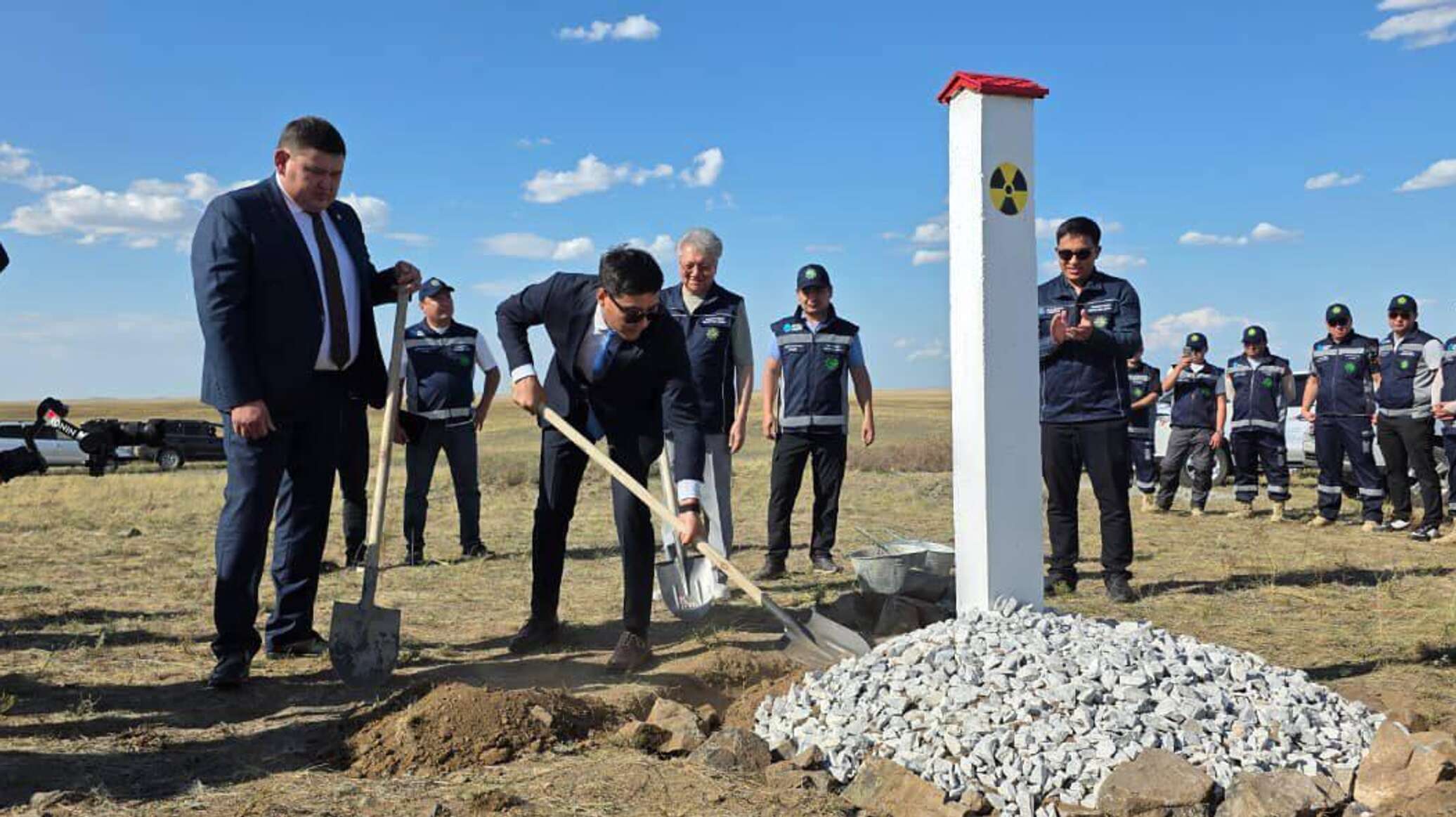
The work to mark the boundaries of the Semipalatinsk nuclear safety zone on the ground has been completed. On August 28, the last boundary marker was installed on the territory of the former test site. This was reported by Qazaqyia.kz citing Sputnik Kazakhstan.
According to Kazakhstan's Atomic Energy Agency, a memorial sign was also unveiled at the site of the last boundary marker, dedicated to Kazakhstan's many years of work to eliminate the consequences of nuclear tests and ensure the safety of the former test site territory.
Deputy Chairman's comment
Deputy Chairman of the Agency Gumar Sergazin noted that the formation of the Semipalatinsk nuclear safety zone is a fundamentally new stage of state policy regarding the territory of the former test site.
Sergazin emphasized that in Kazakhstan, a clear division of territories by risk level is an important task.
«"Hazardous areas must remain under state control, while territories whose safety is confirmed by scientific research should be gradually returned to economic use," said Gumar Sergazin.»
—
Work to make the test site territory safe
After the closure of the Semipalatinsk nuclear test site, Kazakhstan carried out a large-scale set of works to bring its territory to a safe state. The test infrastructure was eliminated or brought to a safe condition, and major projects in the field of nuclear non-proliferation were implemented.
In addition, radiation surveys and comprehensive radioecological studies of an area exceeding 18 thousand square kilometers were conducted. The scientific and technical basis for this work was provided by the National Nuclear Center of the Republic of Kazakhstan.
As a result of many years of research, objective data on the current radioecological state of the territory were obtained, which made it possible to determine approaches to its further use.
Legislative framework
One of the important milestones was the adoption in 2023 of the law "On the Semipalatinsk Nuclear Safety Zone". This law formed the legal basis for a new approach to managing the territory of the former test site.