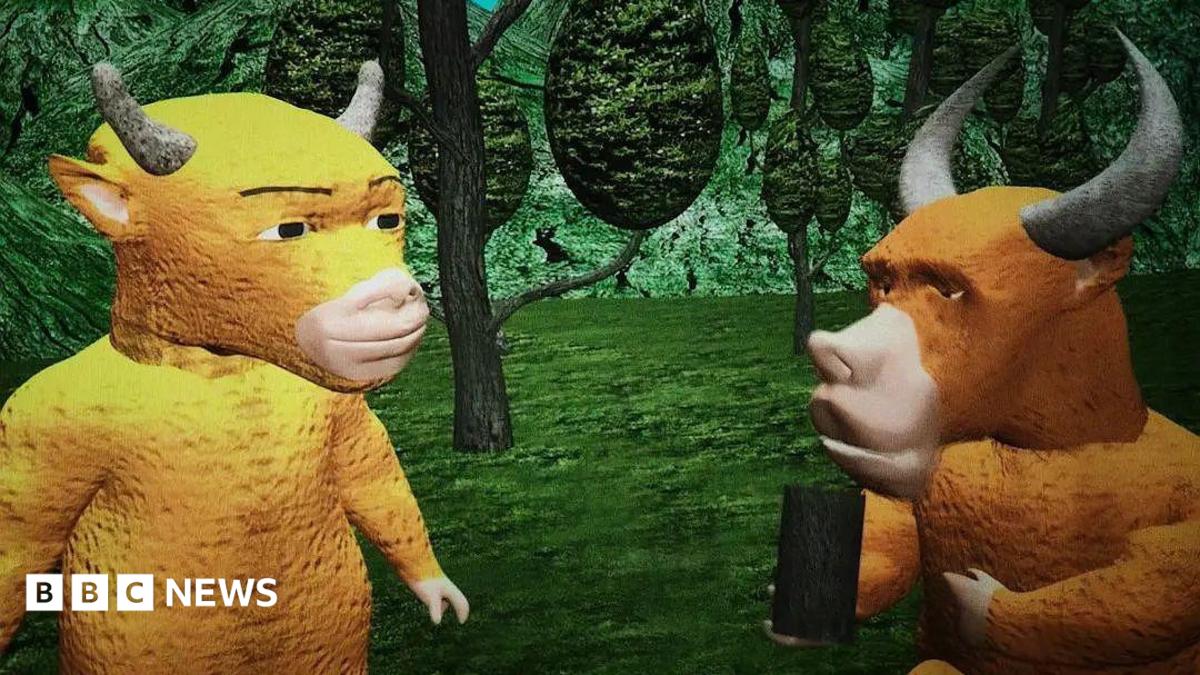
A low-budget Chinese animation film, "Niu Lai," has become a box office hit after going viral for its poor animation and confusing plot. This was reported by Qazaqyia.kz citing BBC News.
The film, about a cow in a dream sequence, grossed just 7,705 yuan ($1,140; £843) in the first 10 days after its release. However, it has now made more than 11.4 million yuan, according to movie tracking site Mao Yan. This puts it in competition with Hollywood blockbusters like "The Odyssey" and "Spider Man: Brand New Day."
Social media posts about the film have gone viral. One popular post said: "You may regret for 80 minutes if you watch it, but if you don't, you'll regret it for life." Other users have hailed the movie as an antidote to the AI slop that is taking over social media algorithms. They are sharing clips praising Niu Lai's "hand-crafted" method — a reference to the poor animation quality — as "proof" that its creators did not use AI.
"That's some serious craftsmanship," wrote a Weibo user. Another called it "pure handmade" and the biggest "dark horse" of the summer movie season. Some users are rooting for the movie because they hope for a "bullish" stock market. "If the index reaches 4,000 tomorrow I will go to the cinema to support this movie," wrote one Weibo user. Another comment said: "It is a terrible movie but has a great name."
Niu Lai was a low-budget, lowkey production from the outset, and had received almost no publicity before its release earlier this month. But now it has proved so popular that cinemas have added screenings in response to soaring demand. "This record is unprecedented and will likely remain so," noted a Weibo account dedicated to tracking movies.
However, not everyone is celebrating its unexpected success. Over the weekend, a commentary by state-owned Beijing News warned that cinemas risk "losing the trust" of viewers if they "continue to lower their standard" with additional screenings of Niu Lai. Mentioning previous movies that had been mocked for poor quality, Niu Lai has "once again lowered the bar for audiences' expectations of poorly made films," reads the commentary. It urged cinemas to "act as gatekeepers for the audience, and clearly reject films that are obviously not up to standard instead of letting films like Niu Lai run rampant."