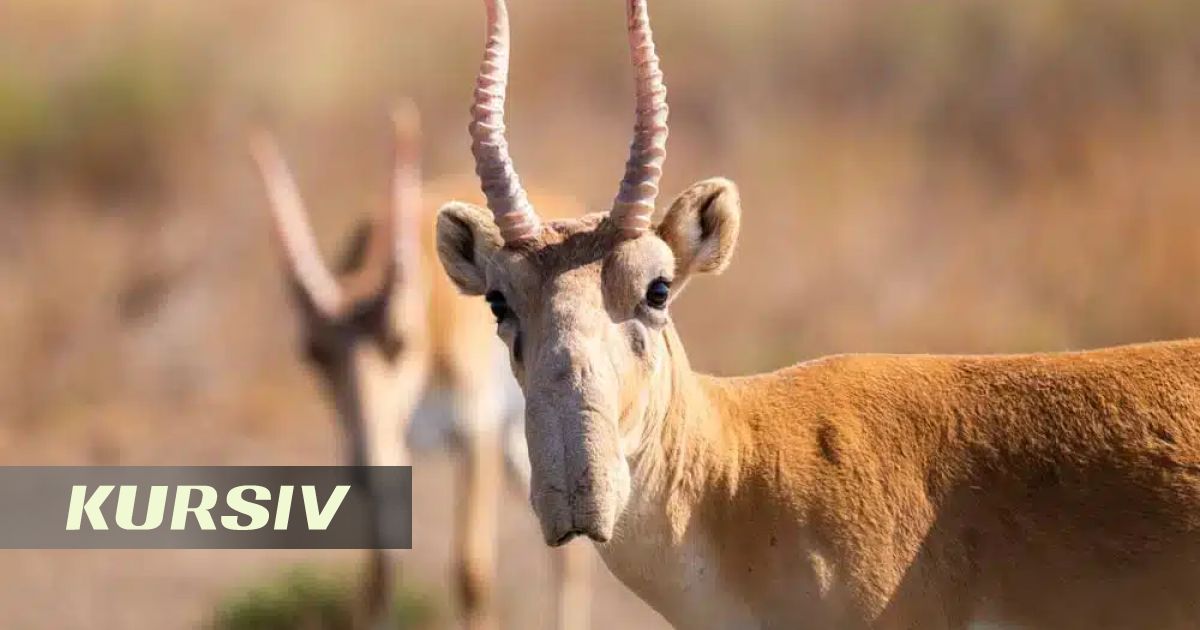
Saiga meat may be used for food supply in the Ministry of Defense, Ministry of Internal Affairs and Ministry of Emergency Situations. This was stated in the response of Prime Minister Olzhas Bektenov to a parliamentary inquiry. This was reported by Qazaqyia.kz citing Kursiv Media.
The document notes that the government is taking measures to reduce the negative impact of saiga population growth on agriculture, preserve biodiversity and fulfill Kazakhstan's international obligations in the field of wildlife.
According to the government, in regions where saigas are widespread, operational headquarters have been created, action algorithms for cases of trampling of agricultural land have been approved, land patrolling by inspectors has been organized, and shift duty on a rotational basis has been introduced.
The response says that last year these measures reduced the scale of trampling of crop and hayfields. This year, work continues throughout the republic. It involves 396 people and 239 units of equipment.
In 2025, during the removal of saigas from the natural environment, contracts were concluded with 30 meat processing enterprises. They were given saiga meat for further processing and sale.
At the same time, the government noted that the volume of saiga removal is currently limited. Given warehouse stocks, there is a risk of further market oversaturation with products. This could lead to an increase in unsold products, an increase in the financial burden on processing enterprises and a decrease in their interest in further processing.
In this regard, the government is working to involve saiga meat products in economic circulation.
"In particular, the ministries of defense, internal affairs and emergency situations are working out the use of these products in the food supply system and the state material reserve," Bektenov's response says.
In addition, together with Samruk-Kazyna JSC, the list of products from saiga meat has been expanded in the Unified Nomenclature Directory of Goods. This should allow domestic producers to participate in procurement.
Also, the state enterprise "Enbek" of the Ministry of Internal Affairs confirmed its readiness to annually purchase up to 1,000 tons of canned products from saiga meat.
The response also says that the Ministry of Agriculture has adopted regulatory legal acts regulating the procedure for slaughtering saigas and disposing of biological waste, and has developed national standards for saiga meat. In addition, veterinary control of the population and constant epizootological monitoring are ensured.
Bektenov also said that this year it is planned to continue measures to remove saigas in accordance with scientifically based recommendations that are currently being developed.
Issues of regulating saiga numbers, preventing and minimizing damage to agricultural producers, monitoring animal migration and developing water infrastructure are under constant control of the government, the response says.
Earlier, Kursiv reported that in 2026, demand for saiga meat decreased significantly. If last year there was a hype around this product, buyers stood in lines, and meat was quickly sold out due to low prices, now processing plants are experiencing overstocking.