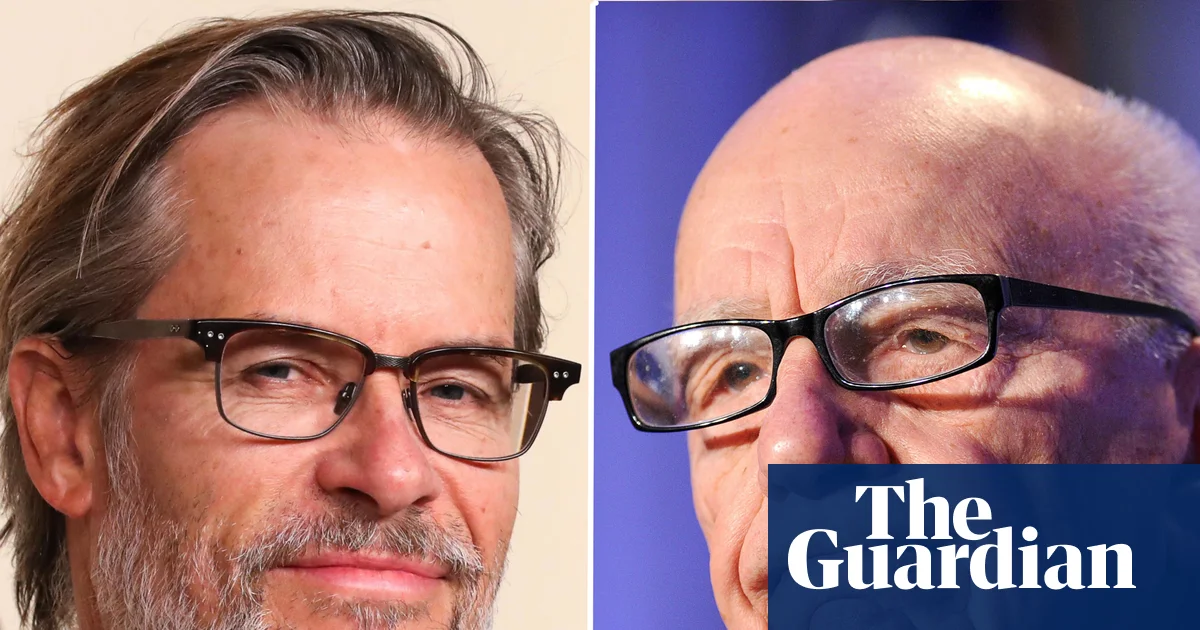
Rupert Murdoch is "very happy" that he's being portrayed by Guy Pearce in a new film about the origins of British tabloid the Sun, the Australian actor has said. This was reported by Qazaqyia.kz citing The Guardian.
Speaking at the Venice film festival ahead of the premiere of 28 Days Later director Danny Boyle's Ink, Pearce said he had been messaging with the media tycoon's daughter Elisabeth "and she did say 'Dad's very happy that you're playing him'."
"But he hadn't seen the film at that point, so we'll see," Pearce added, who had his breakout role in 1994's The Adventures of Priscilla, Queen of the Desert.
Ink is set in 1969, the year Murdoch took over the ailing newspaper and installed Larry Lamb (Jack O'Connell) with a mission to outsell the Daily Mirror, then Britain's leading tabloid.
Playwright James Graham, on whose script the film is based, said Murdoch senior twice visited performances of the stage version in the West End and on Broadway.
"I remember he was very good at sort of not really giving anything away," Graham said of the News Corp founder's reaction. But he said Murdoch "really enjoyed" a particular sequence that showed the workings of the printing process – "the dirt and the steam and the filth that used to go into making a paper on a daily basis."
"He was really charmed by that, which I thought was interesting, because the end of the story is that he's the first to go digital, and Fleet Street is no longer what it was due to his decisions."
The Murdoch clan's business travails and familial battles in the US are widely thought to have been portrayed in HBO series Succession, in spite of the programme-makers' denials.
Boyle's film, by contrast, focuses solely on Rupert Murdoch's early years in Britain, and finds his role in the battle with Fleet Street's old guard to be not without appeal.
In Venice, Boyle said Murdoch "represented at the time a breath of fresh air in what was a very, very rigid British society".
"He was dealing with a lot of prejudice because he was Australian, which I can certainly understand – I can empathise with that," said the director, whose 28 Years Later: The Bone Temple, was released this year. "He particularly had a loathing for the British establishment, what's called the British establishment, which I personally share as well."
Graham said he also wanted his script to show the long-term knock-on effect that the Sun's disruption of the newspaper industry had on contemporary media.
"The tradition of news and journalism in the UK was very much based on the BBC, which is meant to educate and inform, and then these guys just smashed through with an aggressive attempt at entertainment and fun," said Graham.
"The origins of this story, and the news philosophy that was about engagement, entertainment and destruction, that's never been more embedded in our discourse, with social media and now AI. It's all about power of engagement."