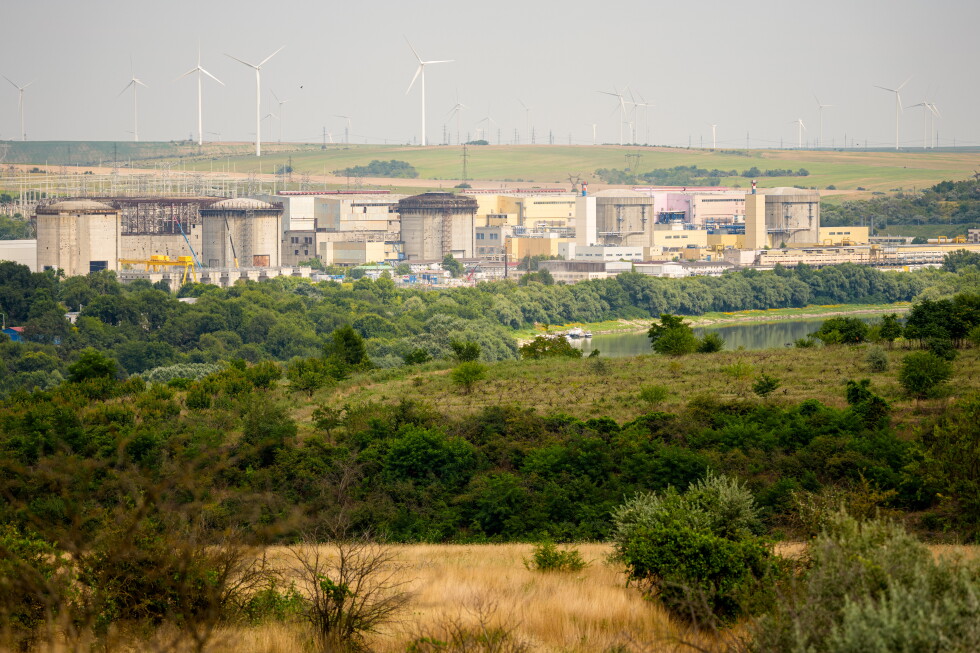
Romania has begun shutting down the second reactor of the Cernavoda nuclear power plant due to low water levels in the Danube River. This was reported by Qazaqyia.kz citing Associated Press.
The Cernavoda Nuclear Power Plant is located in southeastern Romania, on the banks of the Danube. Due to the drop in water levels, one of the plant's reactors had already been shut down earlier. Now, a decision has been made to shut down the second reactor.
In response to the low water levels, the Romanian Navy conducted underwater demolition operations. These measures were taken to improve water flow to the Cernavoda plant. Controlled explosions carried out in the Izvoarele area were aimed at removing submerged rocks.
The low water levels in the Danube are also affecting the ecological situation in the region. In the Rasova area, sandbanks that are usually submerged have become exposed. This poses a threat to the river's ecosystem.
The Cernavoda plant plays a crucial role in ensuring Romania's energy security. The plant's two reactors provide a significant portion of the country's electricity needs. However, the low water levels are hindering the plant's operation.
According to experts, the drop in water levels in the Danube is linked to climate change. Extreme heat and low precipitation during the summer months have led to a decrease in the river's water volume. This situation affects not only Romania but the entire region.
The Romanian government is taking urgent measures in response to the low water levels. Additional water pumping systems are being installed to ensure the plant's operation. Dredging works are also being carried out to deepen the riverbed.
The shutdown of the second reactor at Cernavoda may put additional strain on the country's energy system. However, authorities state that this measure is temporary, and the reactor will be restarted once water levels recover.
The shallowing of the Danube is also affecting navigation in the region. The low water levels are hampering cargo transport and leading to economic losses. This problem is also observed in other European countries.
Romania's Ministry of Energy is monitoring the situation and taking necessary measures. All efforts are being made to restore the plant's operation. The recovery of water levels will depend on weather conditions.
The shutdown of the Cernavoda plant may impact Romania's energy sector. As the country's demand for electricity grows, authorities are seeking alternative energy sources. Programs for developing solar and wind energy are being considered.
The low water levels in the Danube are a significant issue for the whole of Europe. This river is a source of water for several countries. Experts warn that such phenomena may become more frequent due to climate change.
The Romanian government, together with international organizations, is considering ways to restore water levels in the Danube. The European Union is also paying attention to this issue. Joint measures are being taken to improve the ecological situation in the river.
The shutdown of the Cernavoda plant is causing concern among local residents. However, authorities state that alternative measures are being taken to provide the population with electricity. Confidence is expressed that the reactor will be restarted after the situation stabilizes.
The low water levels in the Danube are assessed as a natural disaster. This situation is also affecting agriculture in the region. There is a shortage of water for irrigating fields. Farmers are suffering losses and seeking help from authorities.
Romania's Hydrometeorological Service warns that water levels may drop further in the coming weeks. This could pose an additional threat to the plant's operation. Authorities state they are ready to take all necessary measures.
The shutdown of the Cernavoda plant may affect Romania's energy independence. The country may have to import part of its electricity. However, authorities state that this situation is temporary and will be resolved in the near future.
The shallowing of the Danube is attracting global attention. This problem is assessed as a real consequence of climate change. Experts say that global measures are needed to prevent such phenomena.
The Romanian government is making every effort to restore the plant's operation. It is expected that the reactor will be restarted after water levels recover. In the meantime, the country's energy system is being supplied by alternative sources.