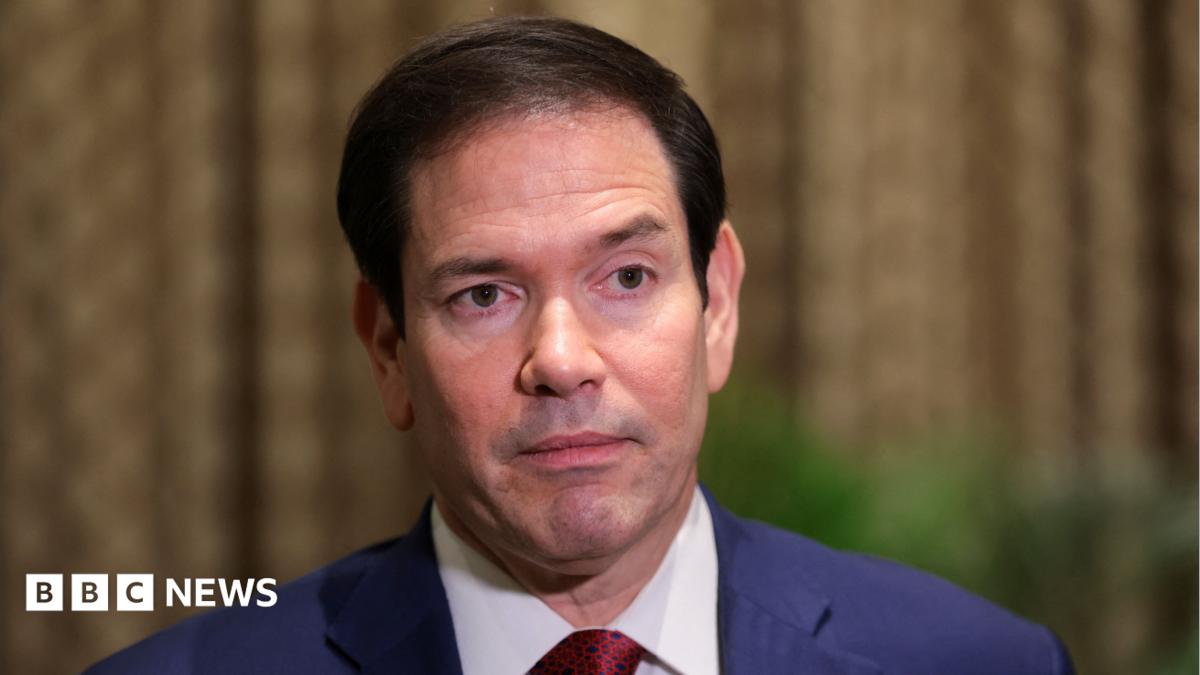
US Secretary of State Marco Rubio visited the western Indian port town of Jamnagar in Gujarat during his recent trip to India. This was reported by Qazaqyia.kz citing BBC News.
Jamnagar is not a usual stop for foreign leaders, yet it featured prominently in Rubio's visit. Rubio skipped the Indian capital, Delhi, which raised questions. Analysts say the choice was strategic.
Rubio arrived in the financial capital Mumbai on Tuesday, where he met Indian Foreign Minister S Jaishankar and some of the country's top business leaders. He officially ended his trip in Jamnagar, home to the giant oil refinery owned by one of Asia's richest men, Mukesh Ambani.
It was his second trip to the country this year, and experts say what is significant this time is the timing of the visit as well as his choice of destinations. The Trump administration is under pressure to keep fuel prices in check ahead of November's US midterm elections, while rising tensions in the Middle East threaten global energy supplies.
With little new refining capacity expected in the immediate future in the US, India's ability to process large volumes of crude oil offers Washington a potential way to ease pressure on the fuel markets. That puts Reliance's Jamnagar refinery at the centre of the equation.
The visit, however, comes at a tricky moment in India-US relations. Trump has imposed tariffs on Indian goods, there are sanctions against Delhi for buying Russian energy (though currently paused) and there is a trade deal between the two countries that has remained elusive for around 20 months now.
Announcing the visit, the US State Department had earlier said that it would focus on energy cooperation, commercial investment and economic ties. The official itinerary also did not include Delhi, which raised some questions, especially from Indian opposition politicians. But analysts say the choice was strategic.
"Delhi is where the trust gap is largest. Officials there are unhappy with a number of decisions and policies from Trump's administration," Michael Kugelman, a senior fellow at the Atlantic Council, told the BBC.
But former Indian ambassador to the US, Meera Shankar, cautions against reading too much into him skipping the capital. "This was primarily an energy-focused visit," she says. "And after all, Rubio did meet the foreign minister in Mumbai."
The meeting between the two foreign ministers at the Taj Hotel covered trade, investment, energy security and defence cooperation, according to official statements. India's foreign ministry also said both sides welcomed progress in trade negotiations and reaffirmed their commitment to concluding a deal, which has long been in the works.
But once the diplomatic meetings were over, Rubio headed to Jamnagar, where the crown jewel of the Ambani business empire is located. This came to define the trip. Shankar says the refinery visit "showed how much importance the US is attaching to getting more refined fuel into the market before the November midterms".
Reliance's Jamnagar complex can process about 1.4 million barrels of crude oil a day, roughly 1.5% of global refining capacity, according to the company website. It is also a major exporter of diesel and other petroleum products, giving it a crucial role in global fuel markets.
During a tightly controlled visit on Wednesday, with limited media access, Rubio toured the facility and met members of the Ambani family, including Mukesh Ambani. The company later released a statement, saying, "the visit included wide-ranging discussions on the global energy landscape and opportunities for commercial partnerships across conventional and new energy". It, however, did not specifically address any commitments to buy crude oil or supply refined products.
Just a day earlier, while speaking to the press, Rubio had called India a "refining superpower" and said the US wanted Reliance to process more Venezuelan oil. "They have the capability to refine heavy crude. They've done so in the past, and I think as more and more Venezuelan oil comes online, that's something they could do," he told reporters.
Rubio added that oil from Venezuela "can certainly provide relief" in the short term and can possibly help ease supply pressures amid tensions in the Middle East.
Reliance was once among the largest buyers of Venezuelan crude before US sanctions disrupted trade. After Venezuelan President Nicolás Maduro was captured in a US intervention earlier this year and Washington eased sanctions on the country's energy sector, Reliance re-emerged as a major importer.
Experts also say the visit might ease some tensions in the Delhi-Washington relationship over India's purchase of Russian oil. India became one of the biggest buyers of Russian oil since Moscow invaded Ukraine in 2022.