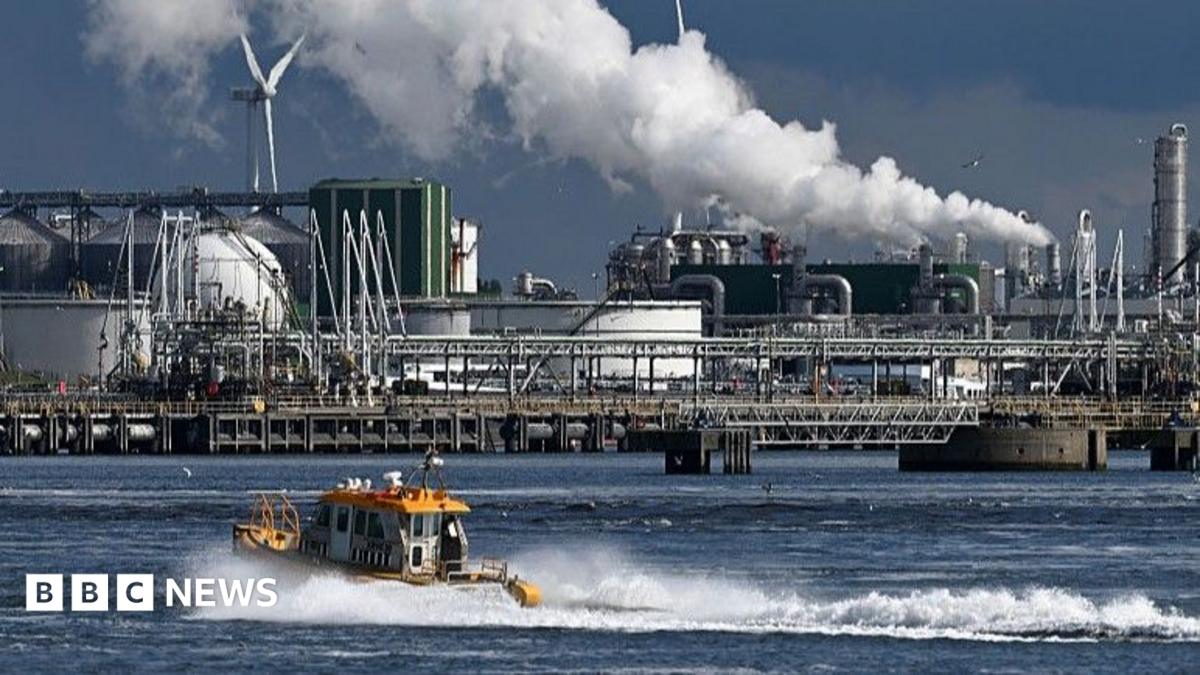
The Port of Rotterdam in the Netherlands is Europe's largest freight port. This was reported by Qazaqyia.kz citing BBC News.
The port houses five oil refineries, including Shell's largest in Europe, processing hundreds of thousands of barrels of crude oil daily. According to research by CE Delft, fossil fuels flowing through the port are linked to around 600 megatonnes of CO2 a year – many times more than the CO2 output of Schiphol, the Netherlands' biggest airport.
Environmental group Advocates for the Future has sued the Port of Rotterdam Authority, arguing it is not doing enough to phase out fossil-based energy. The port's industrial cluster emits about 29 million tonnes of CO2 annually – roughly half of the Netherlands' domestic emissions. Mark van Dijk, head of external relations at the Port Authority, admits it is "not good."
The Port Authority plans to cut its own direct and purchased energy emissions by 90% between 2019 and 2030. Plans include developing a hydrogen hub, providing onshore power for ships, and supporting alternative fuels like LNG, biofuels, and methanol. The Porthos project will capture and store CO2 in depleted gas fields.
However, many of the biggest emitters in the port answer to headquarters in the US or China. If rules become too tight, they can move – as Shell shifted its headquarters to the UK and Unilever left Rotterdam. Environmental consultant Bettina Kampman says the port's sphere of influence is limited.
Emeritus professor Harry Geerlings of Erasmus University Rotterdam has studied sustainable transport and ports for over three decades.