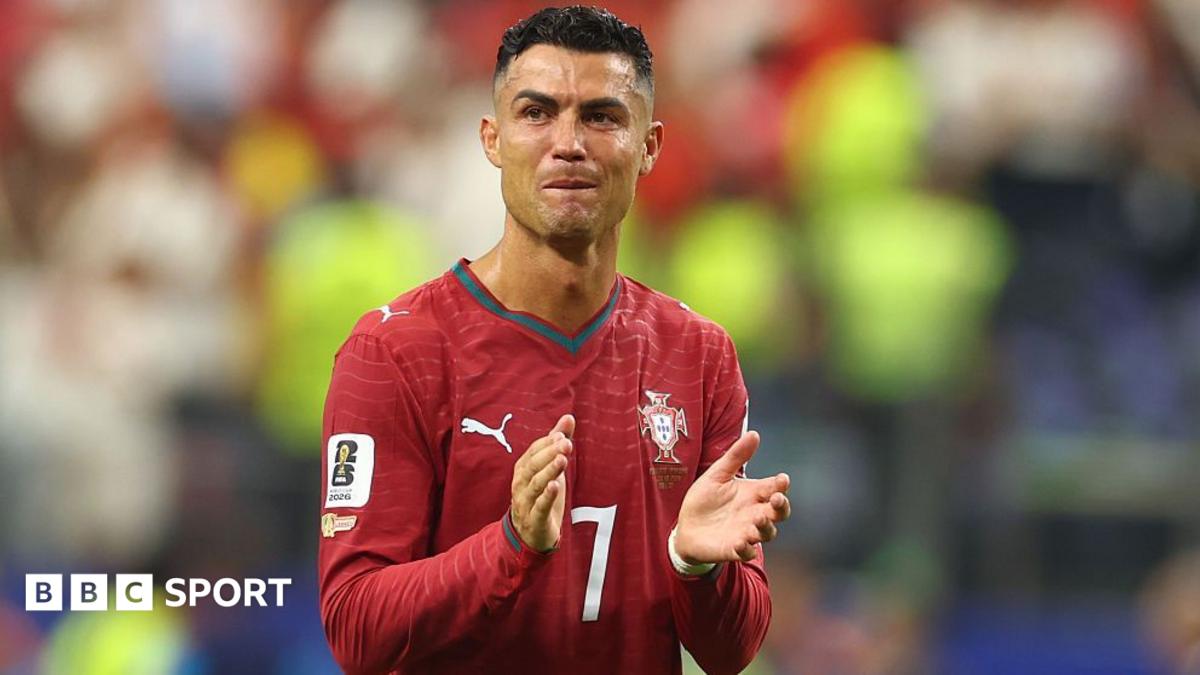
Cristiano Ronaldo has announced his international retirement after 23 years with Portugal. This was reported by Qazaqyia.kz citing BBC News.
The 41-year-old decided to retire after a fallout with coach Jorge Jesus, which was resolved with a sanction of 30 days, already served, and a fine of 255 euros. It was the punishment imposed on the Portuguese striker for leaving the team's training camp without permission. Jesus kept him on the bench for one match and said he did not plan to start him in the next, so Ronaldo went home.
His last appearance came on 24 September against Wales. He ends his international career with 146 goals in 234 games.
A message went around Portugal with a big thank you for everything, calling Ronaldo a global ambassador and an inspiration to millions. Even so, the way it ended leaves a bit of a bitter taste.
Was he going to be named in the next squad? Possibly, as Jesus said the door was open and the decision was Ronaldo's. What is clear is that he was no longer an automatic starter, and Cristiano has never handled that well.
So is this another hissy fit? Partly, yes. He reacted the way he always has when a coach questions his place. But the label hides how much he adapted over the years.
Such a pattern appears with almost every man who sat on the Portuguese bench - there were clashes, but also communion with managers and team-mates that help explain this ending.
When a young Ronaldo first joined the squad, he arrived at camp with his baseball cap on backwards, enormous sunglasses and headphones turned up so loud they could be heard from a distance.
He would not take the cap off to eat among veterans like Luis Figo and Rui Costa. Luiz Felipe Scolari saw an extraordinary player who was immature and obsessed with showing off. He reprimanded him in public, then told him privately that if he changed his attitude, he would one day captain Portugal.
The first great disappointment came early, and it came at home. At 19, Ronaldo played in the final of Euro 2004 at the Estadio da Luz in Lisbon, in front of a country that had convinced itself the trophy was already on its way.
A single headed goal by Angelos Charisteas was enough for unfancied Greece to win it by surprise. When the final whistle went, Ronaldo could not hold back the tears, and the image of the teenager crying on his own pitch travelled everywhere.
It was a painful way to learn what a final costs, and it left him with a hunger that never really went away.
Figo owned the number 7 at the time, so Ronaldo had to have 17. Figo helped him settle but had no intention of making it easy. When he left the national team in 2006, the shirt and the team became Ronaldo's.
In September 2005, before a qualifier in Russia, Scolari and Figo went to his room to tell him his father had died. Scolari offered to send him home. Ronaldo chose to play, asked his team-mates to behave as normal, and spent time in the dressing room doing ball tricks.
That was his way to cope with the expected but still hugely hurtful passing of his alcoholic dad. He later called Scolari "father". That way the national team had become the place that held him together.
Things went sour with Carlos Queiroz. After the 2010 World Cup exit against Spain, asked to explain a poor performance, Ronaldo told journalists to ask the coach. His influence in the camp had grown so large it changed routines and habits, which explains why the coach felt undermined.
The sociologist Joao Nuno Coelho offers the best lens on how Portugal sees him. In his analysis, the national team became a representation of Portuguese identity and of the country's need to be seen internationally.
In years of economic hardship and a crisis of confidence, a team that won admiration abroad was important beyond football.
Ronaldo stood at the centre of that need and created contradictory feelings. Some Portuguese questioned his individualism and his ego, and not everyone saw themselves in his personality.
Coelho explains criticising him became more difficult as time went by. The country wanted to be proud of him and sometimes felt uneasy at the same time.
The former international Jorge Andrade told me some supporters preferred figures like Figo, Eusebio, Paulo Futre or Rui Costa. Even so, Portugal was proud to have him. And with the titles, the doubts eased.
Under Fernando Santos in 2016, he changed. He accepted playing as a centre forward next to Nani - he had never taken a coach's instructions so naturally.