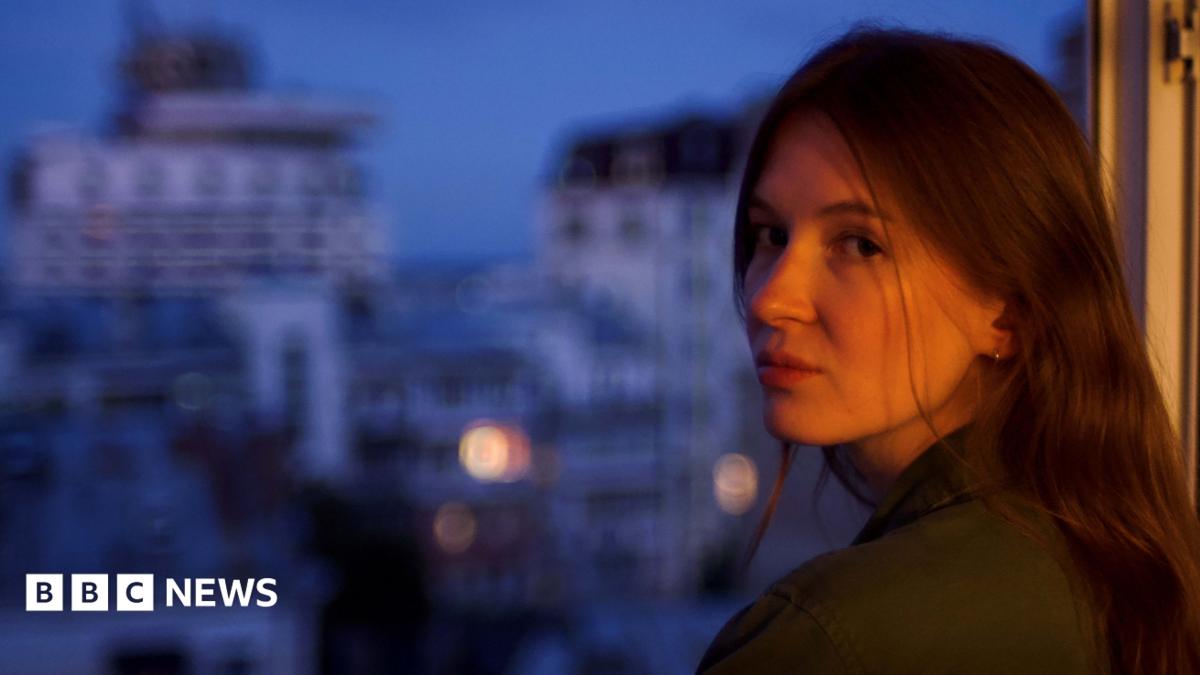
Since the start of Russia's full-scale invasion of Ukraine, Kyiv residents had grown accustomed to missile strikes. But in recent months, the intensity and frequency of attacks have sharply increased, forcing people to reconsider their sense of safety. This was reported by Qazaqyia.kz citing BBC News.
Daria, 27, could sleep through explosions in her Kyiv apartment even on nights of heavy bombardment before Russia's attacks intensified. Like many Ukrainians, she relied on the "two-wall rule": staying safe by keeping two walls between herself and the outside world.
Russia has scaled up the intensity of its attacks. According to official figures, in the first 10 days of July alone, dozens of ballistic missiles were launched in three major attacks, killing nearly 60 civilians. Similar large-scale attacks took place in August and September.
A BBC Verify analysis of government figures found Kyiv is now suffering more daily air raid alerts than at any time since Russia's full-scale invasion in 2022.
During an attack one night in May, Daria realised she no longer felt safe in her home. She and her boyfriend were in the corridor of their ninth-floor apartment, watching a boxing match, as explosions went off around them, the blast waves causing the windows to repeatedly slam open and shut. When the fight ended, "there was no longer anything to distract me," Daria says. "That's when I realised I was really scared."
At first, she thought she would start using a nearby bomb shelter during attacks. But in June, when a young mother was killed running to a shelter in Kyiv, Daria decided she needed to leave the city altogether. She returned to her family's country house, 30km (18.6 miles) away in Romankiv, and now spends a total of four hours a day commuting to and from Kyiv, where she works in the defence sector.
Residents in Kyiv who say they had got used to Russia's missile and drone strikes have told the BBC World Service the renewed intensity of the attacks is making them rethink how they live their lives.
Previously, Ukraine's air-defence network and military intelligence gave residents a degree of predictability. Large-scale attacks could often be detected in advance, allowing people to spend the night in shelters, leave the city or take other precautions. But since the summer, Russia has changed its tactics. It has relied less on aircraft, whose movements can be spotted ahead of time, and more on ballistic missiles that travel at tremendous speed and provide little warning. Air-raid alerts sometimes begin only moments before impact, or even simultaneously with the first explosions.
Daria can see her nearest shelter from the window of her apartment, which she still rents. Even so, it takes around 10 minutes to reach it. During a ballistic attack, she might have just four minutes' warning or less, she says. She decided to leave Kyiv in June after holidaying abroad this summer and seeing people living "normal" lives. Since then, she has only spent one night in Kyiv.
Yet, for many, leaving is not an option. Sixty-two-year-old Olha Vlasova lives on the seventh floor of a high-rise apartment block with her 98-year-old mother, Nadia Tsybina. Despite her age, Nadia remains intensely engaged with the world. From her bed she follows events in Ukraine and abroad, discussing everything from US President Donald Trump's policies, to anti-corruption protests in Kyiv, and the Epstein files. She's also learned that she can often tell, simply by listening, whether a Russian missile or drone has been intercepted or has reached its target. This summer, she says she has heard fewer interceptions. "It's upsetting when there's nothing to shoot them down with," Nadia says. "I can hear them firing with whatever they've got, rifles, machine guns."
With Nadia confined to her bed, she and Olha cannot go to a shelter, however serious an attack is. Instead, as soon as an air-raid siren sounds, Olha covers her mother with a blanket, pushes a mattress into their window frame, and then hides in a wardrobe which puts two walls between her and outside. Nadia places a pillow over her head to protect her face from flying glass.