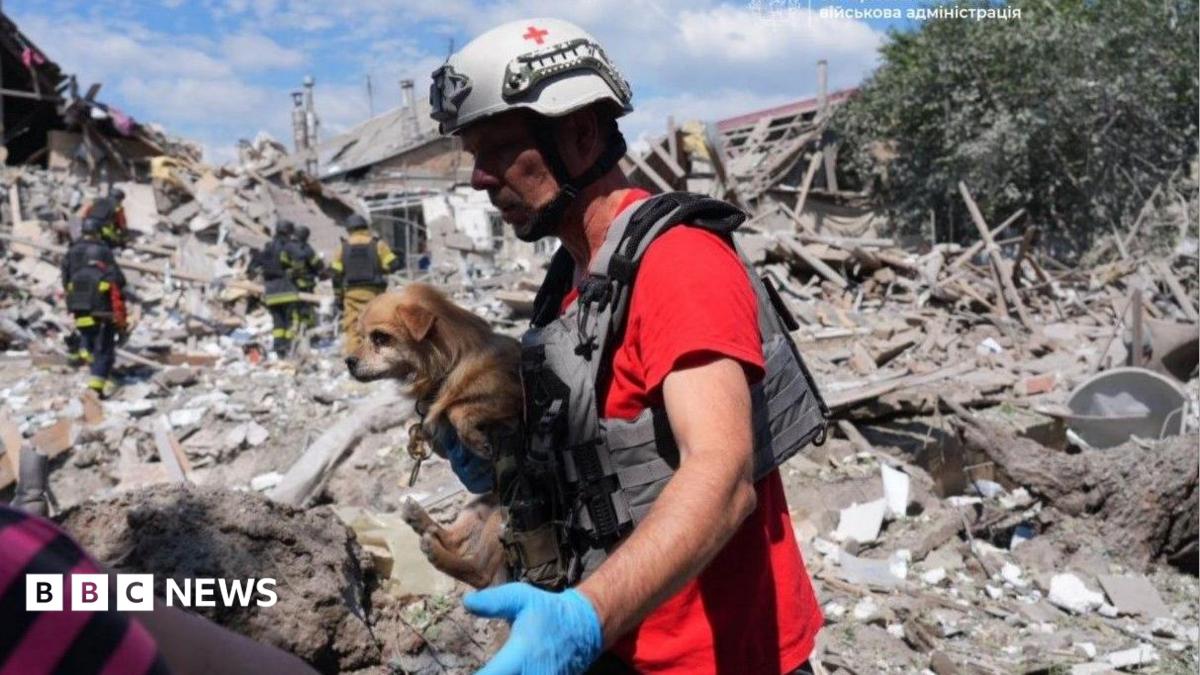
Russian attacks on the Ukrainian city of Zaporizhzhia have sharply intensified. This was reported by Qazaqyia.kz citing BBC News.
Anna Holovchenko was woken at five in the morning by glide bombs hitting the suburbs of her home city. Zaporizhzhia is just 24km from the front line but still home to some 750,000 people. An hour later, drones flew over her house in a second wave of attack as Ukrainian air defences tried to bring them down.
Numerous buses, petrol stations, schools, government offices and residential houses have been hit by Russian drones and bombs in recent weeks. Acting mayor Regina Kharchenko told the BBC that during one particularly intensive attack she "did not go to the shelter, but when it got too loud I took cover in the toilet".
A Shahed drone crashed near Anna's office with a big bang, and another drone struck a cable, taking down the internet. "That's just another ordinary day in Zaporizhzhia," she said.
The city is the administrative capital of Zaporizhzhia region, one of five regions Russia claims as its own. The Zaporizhzhia nuclear power plant, Europe's largest, is located almost 50km southwest of the city in Russian-occupied territory.
Following the relentless spate of Russian attacks, Zaporizhzhia city council met in an underground shelter to discuss the worsening situation. "The enemy has stepped up terror against civilians, municipal transport, privately-owned buses, cars, residential buildings and even children," Kharchenko told the meeting.
Plans have been made to build more shelters, put up anti-drone nets at vulnerable locations, and apply anti-shatter film to windows in schools and hospitals. Kharchenko said she sometimes sleeps on the floor in a corridor at home: "I live in an ordinary high-rise, on the seventh floor. I've got no personal bunker."
Ukrainian forces have pushed Russian forces back a few kilometres from the city, yet attacks have worsened because many strikes are now carried out using small but lethal FPV drones, which previously could not reach the city.
Sam Cranny-Evans from the Royal United Services Institute in London suggests several reasons: Russian forces use longer-range mothership drones to deliver smaller drones that scatter; they also use mesh networking technology, which is harder to jam and allows relaying signals from drone to drone.
Another possible factor is reduced Ukrainian electronic warfare activity and increased Russian focus on Zaporizhzhia. Local authorities say they intercepted 884 Russian drones in the last week of June alone.
While Russian troops have been forced to retreat south of Zaporizhzhia, they continue advancing elsewhere, albeit slowly. Successful Ukrainian strikes on Russian oil refineries and logistics have hampered their progress.
Hundreds of thousands of residents remain in the city. Anna says: "We've got food and fuel, why would I leave? Maybe I'm not the easily scared type." Although she has thought of leaving, she does not want Zaporizhzhia to become another destroyed city: "We're just trying to stay safe and we're doing all we can to survive until our victory."