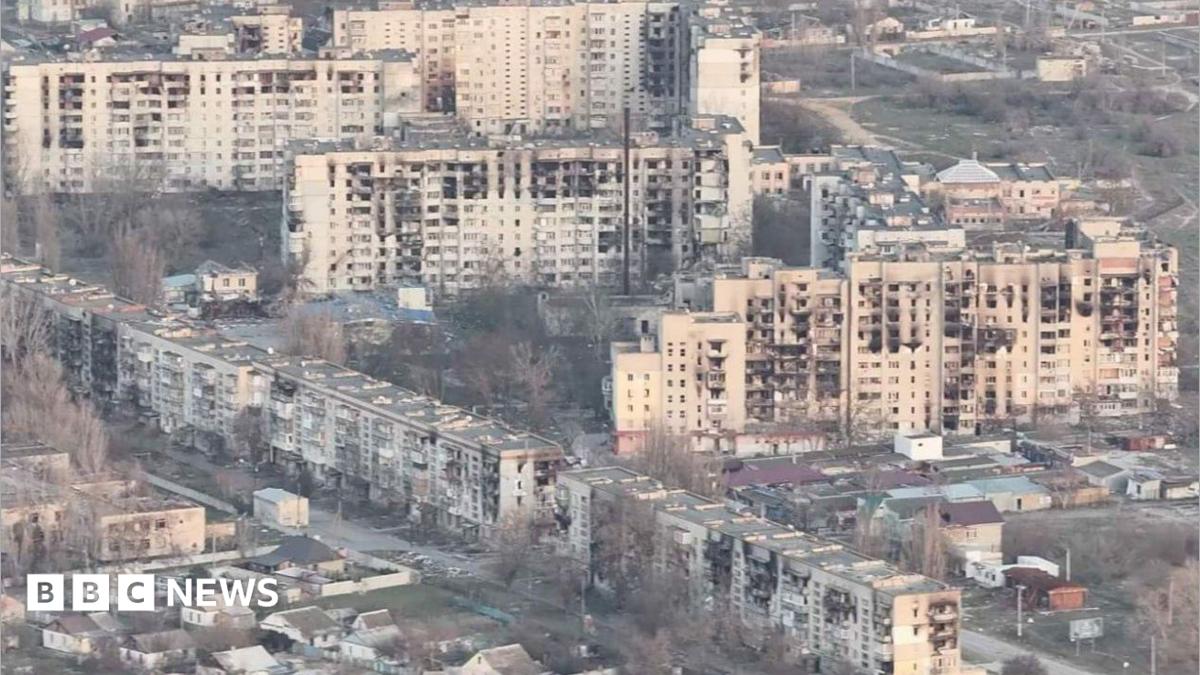
Residents of the Russian-occupied Ukrainian city of Oleshky are cut off from food and water and have been forced to eat garden weeds. This was reported by Qazaqyia.kz citing BBC News.
"Two more civilians died last night," says Halia, before her phone connection cuts off. She is trapped in the Russian-occupied Ukrainian city of Oleshky, which she says is "constantly shelled" and cut off from food and water.
Three days later she tells me the two who were killed were a husband and wife. She knew them well. They were bringing home a bag of food from the closest neighbouring town of Radensk, 23km (14 miles) away, but were unable to get home before a curfew imposed by Russian occupation authorities. They were then killed by a drone. Four separate sources have confirmed the deaths of two civilians carrying food on 20 September.
Halia does not want to share their names for fear she might be identified. Her name has been changed to protect her safety. Hers is just one of the many harrowing accounts the BBC has heard from residents in the front-line city in southern Kherson in recent days.
Occupied by Russia since 2022, Oleshky is trapped between the Dnipro River, which separates it from Ukrainian positions, and Russian forces. It is also one of the cities where thousands of people lost their homes after the collapse of Nova Khakova Dam in 2023, flooding buildings up to their rooftops. Ukraine and Nato accused Russia of blowing up the dam, while Russia blamed Ukraine.
Oleshky was home to 24,000 people before Russia's full-scale invasion. Now the Ukrainian government estimates that some 6,000 people remain in the city and its surrounding areas, including 200 children. Residents say children remaining in wider Oleshky are suffering from malnutrition, a lack of medical services, and are "degrading" without access to education.
Many have also told the BBC independently there is only one hospital partially operational, opening a few days a week to perform critical amputations. Ukraine has attempted to deliver supplies to the area but has not had success in recent months.
Earlier this week the Kremlin acknowledged that Oleshky faced "a critical situation" and "problems with supplies of food and medicine", but added that "Russia's military was working to resolve them" and blamed Kyiv. The local population is living under a "full blockade" by Russian forces, according to Ukraine's Foreign Minister Andriy Sybiha. Speaking at the UN General Assembly in New York on Tuesday, Sybiha called on the international community to pressure Russia into allowing humanitarian aid into the city.
Inside Oleshky, Halia faces a daily struggle to survive. "There is no food here in the city," she says, adding that the last food delivery was back in May. "I eat once a day, a dinner only," she says. "I make some plain bread, sometimes I can have it with a tomato, or with some honey, and a tea. That's it."
Many residents have turned to cooking garden weeds as they have run out of the vegetables they managed to grow over the summer, she explains. Which weeds are safe to eat and how to boil them has become a topic of discussion on local Telegram messaging chats, along with calls between residents to sell, swap or share pieces of food.
No shops are open any more in Oleshky, with residents unable to source either clothes or hygiene products. The city has had no electricity, gas or water since the Kakhovka dam was attacked three years ago. While some residents have risked travelling on foot along mined roads out of the city in search of supplies, it is now deemed too much of a danger.
Working out how many people have been killed in Oleshky is difficult.