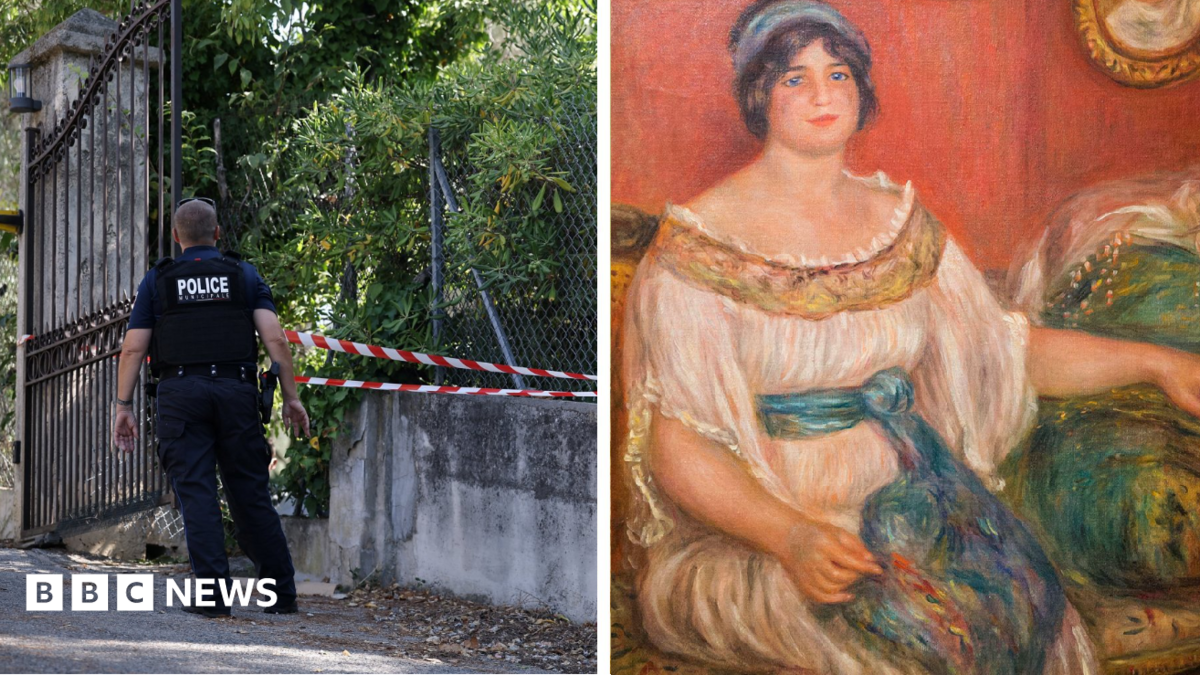
When thieves broke into a French museum earlier this week and stole four paintings by the impressionist artist Pierre-Auguste Renoir, worth millions of euros, not everyone was surprised. This was reported by Qazaqyia.kz citing BBC News.
Just last month, the European policing agency (Europol) had warned that museum thefts across Europe were growing increasingly brazen. And just days before the Renoir heist, internationally known art detective Arthur Brand predicted to the BBC that more high-profile burglaries were likely — particularly in the wake of the successful robbery at the Louvre in Paris last October.
The audacious crime in one of the world's most famous museums stunned France, and the stolen jewellery worth €88m (£75m) has still not been recovered, nearly a year on.
"We will see more of this," says Brand, "because if you are able to hit the Louvre, thieves all around the world are watching that, thinking, 'Wow' — and then they think, 'Don't we have a local museum with gold and silver?'"
Within hours of the Louvre burglary, thieves had raided coins from a smaller museum in France. Since then, criminals have stolen a diamond necklace in Vienna, Bronze Age artefacts in Spain, and art from two Italian museums — and that's only what the BBC has written about.
The heist at the Renoir Museum in Cagnes-sur-Mer is the latest, and detectives are still working to track down the remaining multi-million-pound paintings — two of which were quickly recovered after thieves dropped them in the museum garden.
Europol tells the BBC the number of museum theft cases reported to them across Europe began to increase about two years ago. Its recent report says both the methods and targets of thefts are changing — with a rise in more forceful tactics, and, as in the Louvre case, a focus on high-value items such as precious metals and gemstones.
Both Brand and Ibrahim Bulut, a museum security expert from a Belgian security consulting firm, believe many thefts that followed the Louvre burglary are copycats.
"Every museum in the world is stressing now," Brand says. "In every museum there have been meetings with the security officer or with the police."
The Association for Research into Crimes against Art (ARCA) says the recent thefts show "a repeated preference for small, portable, immediately accessible objects and for attacks designed to be completed in minutes".
Data provided to the BBC by ARCA shows recorded museum thefts in France spiked in 2024, and rose again slightly in 2025. However, numbers go up and down over time, with more thefts recorded in 2015 than a decade later.
These crimes threaten what many consider invaluable artefacts of historical and cultural value enjoyed by the public — although some people argue they steal "from the rich, who cares?" Brand says. Others point out the colonial history behind many treasures in European museums, with art historians highlighting the French crown jewels stolen from the Louvre contained emeralds, diamonds, sapphires and pearls which are not native to France.