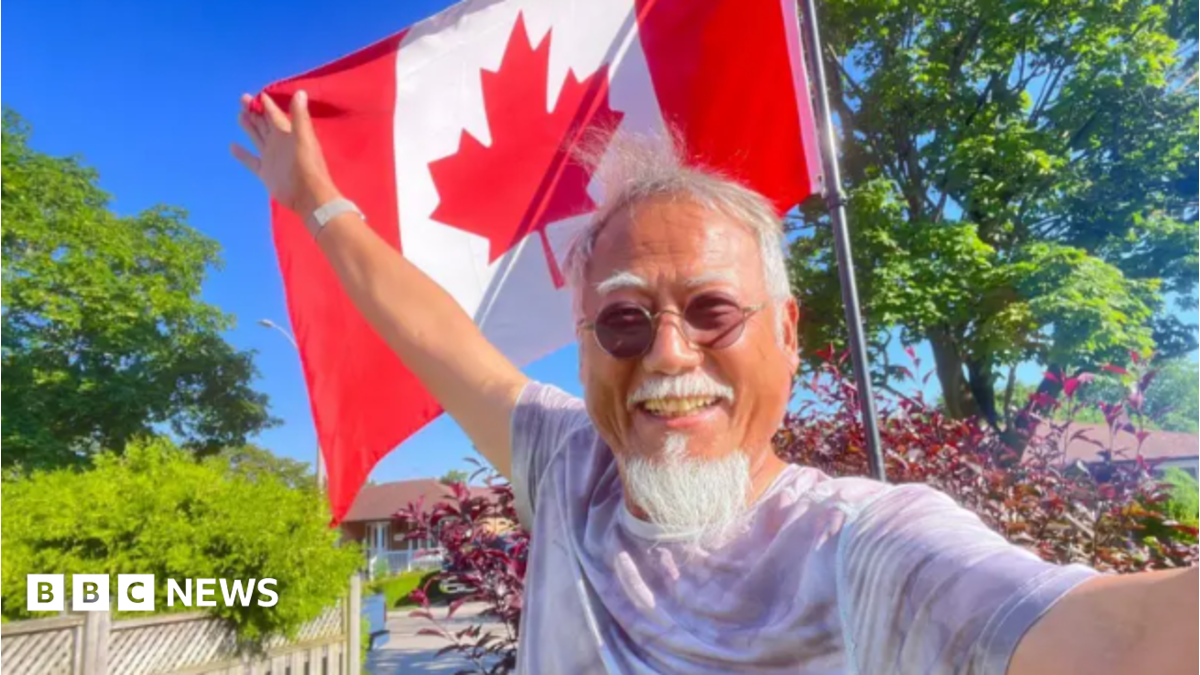
Chinese dissident Dong Guangping fled China on a rubber boat over 40 hours, reached South Korea, and later resettled in Canada. This was reported by Qazaqyia.kz citing BBC News.
Dong Guangping, 68, set out from China's eastern Shandong province, traveling more than 300km, and was rescued by the coast guard and fishermen in Korean waters on 27 May. He was briefly detained in South Korea but has since resettled in Canada, where his family had been living.
"I can never survive in China," Dong told BBC Chinese in a video call from Toronto. "If I didn't leave, I will never be at peace for the rest of my life. I had to show the Chinese Communist Party I was capable of leaving. They cannot stop me, they cannot control me."
A spokesperson for the Chinese Foreign Ministry told the BBC that the Chinese government "handles the entry and exit of its citizens in accordance with the law and that Chinese citizens must abide by the Constitution and the law."
Dong, a former police officer turned human rights activist, has been jailed in China several times for his activism. In 1999, he was fired from the police force after 13 years for signing a petition to commemorate the 10th anniversary of the Tiananmen crackdown. In 2001, he was imprisoned for three years for "inciting subversion of state power." He was jailed again in 2014 for participating in another Tiananmen commemoration event, according to Amnesty International.
Dong had fled China four times previously but was sent back each time. "But I have always held fast to one conviction: I must get out into the free world," he tells BBC Chinese.
In September 2015, he traveled to Bangkok with his wife and daughter, where they were granted refugee status by the UN and approved for resettlement in Canada. But days before they were scheduled to leave, Thai authorities deported Dong to China, where he was jailed for "inciting subversion" and "crossing the national border illegally." He was sentenced to three and a half years in jail.
When released in 2019, he tried to escape by swimming towards Kinmen, a Taiwanese island, but was picked up by Chinese fishermen who handed him back to police — and he was barred from leaving the country. In 2020, he fled China and entered Vietnam. He lived in hiding for two years in Hanoi, but was eventually deported back to China, where he was sentenced to jail for almost a year. In 2023, he was released from prison again.
These failed attempts only strengthened Dong's resolve. He came up with a bolder plan — to travel more than 300km across the Yellow Sea, then along the South Korean coast to get to Japan. "This is a very dangerous route, the risks are extremely high, I knew I'd be putting my life on the line," he said.
In May this year, with just a few hours of sailing practice, Dong started his journey in Weihai, Shandong, in a 3.3m long rubber dinghy equipped with an engine. Poor weather forced him to reroute towards South Korea. The long hours at sea left him dizzy and exhausted. He dozed off at one point and woke up to realize his boat had just bobbed past a large cargo ship. "I would have crashed into it if I stayed asleep for 20 more seconds," he said.
At about 20:30 local time on 25 May, he spotted a fishing boat and shouted: "Help me, help me! Call police, call police!" He was eventually pulled ashore in South Korea's Taean county. Dong was sent to a refugee centre in Incheon and later granted political asylum in Canada.
He is not the first Chinese dissident to flee across the sea to South Korea. In 2023, another Chinese activist Kwon Pyong fled to South Korea on a jet ski. He was initially detained on immigration charges but later resettled in the US.