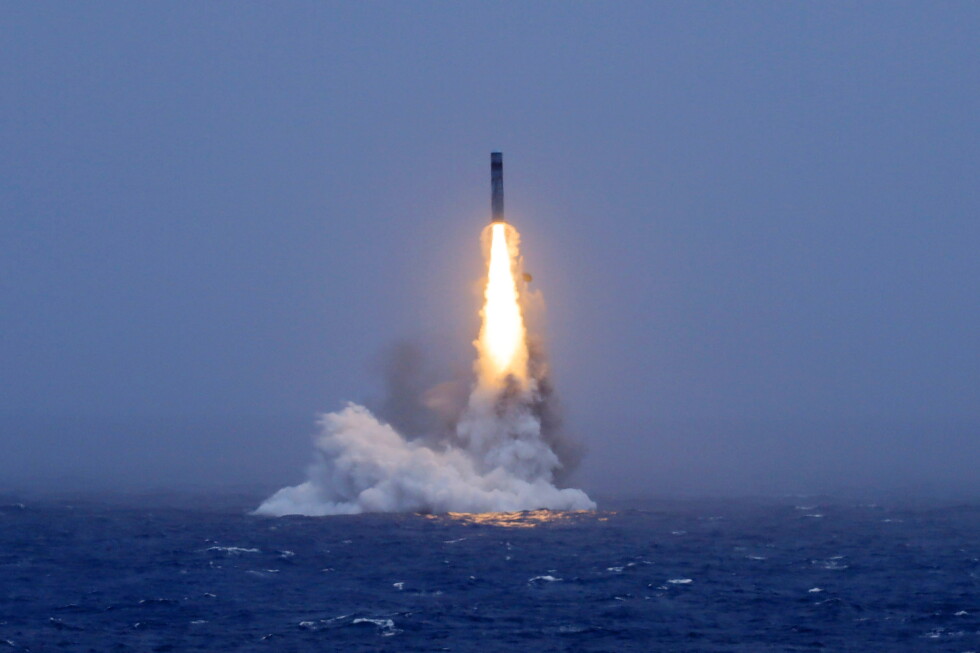
China's navy test-launched a long-range ballistic missile from a nuclear-powered submarine on Monday, July 6, 2026, a move that experts said showed Beijing's increasing skill and capability as part of its nuclear deterrence strategy. This was reported by Qazaqyia.kz citing Associated Press.
The move also drew protests from the U.S. as well as countries in Asia and the Pacific. It was the second time China had fired a ballistic missile into international waters in recent years. While it gave some countries in the region prior notice, some said it was not enough notice, and experts say the launch exacerbates tensions around increasing militarization in Asia.
What we know
China announced the missile test publicly on Monday only after the launch. In a brief statement, the official Xinhua News Agency said the launch was part of routine annual training, complied with international law and practice, and was not directed against any country or target. It didn't provide details about the type of missile.
The missile was carrying a dummy warhead, not a nuclear one. The act of launching in international waters was rare, although the U.S. has also done so with its own missile testing.
Xinhua published a photo of the missile on Tuesday without additional details. Experts say it could be either a JL-2 or a JL-3, both submarine-launched ballistic missiles, though most said the available imagery was not clear enough to tell.
The state-owned tabloid Global Times said it was "most likely" a JL-3 missile with a range exceeding 10,000 kilometers (6,200 miles). The JL-2 has a shorter range.
International reaction
The New Zealand government said the missile was launched into treaty waters in the South Pacific Nuclear Free Zone, violating the intention of the agreement. The zone was established by the 1986 Treaty of Rarotonga, which prohibits nuclear weapons throughout the region. China ratified the protocols in 1987, pledging not to test nuclear weapons within the zone or threaten to use them against signatories with territory in the region.
While China has told other countries to "avoid overinterpretation" in response to the criticism.