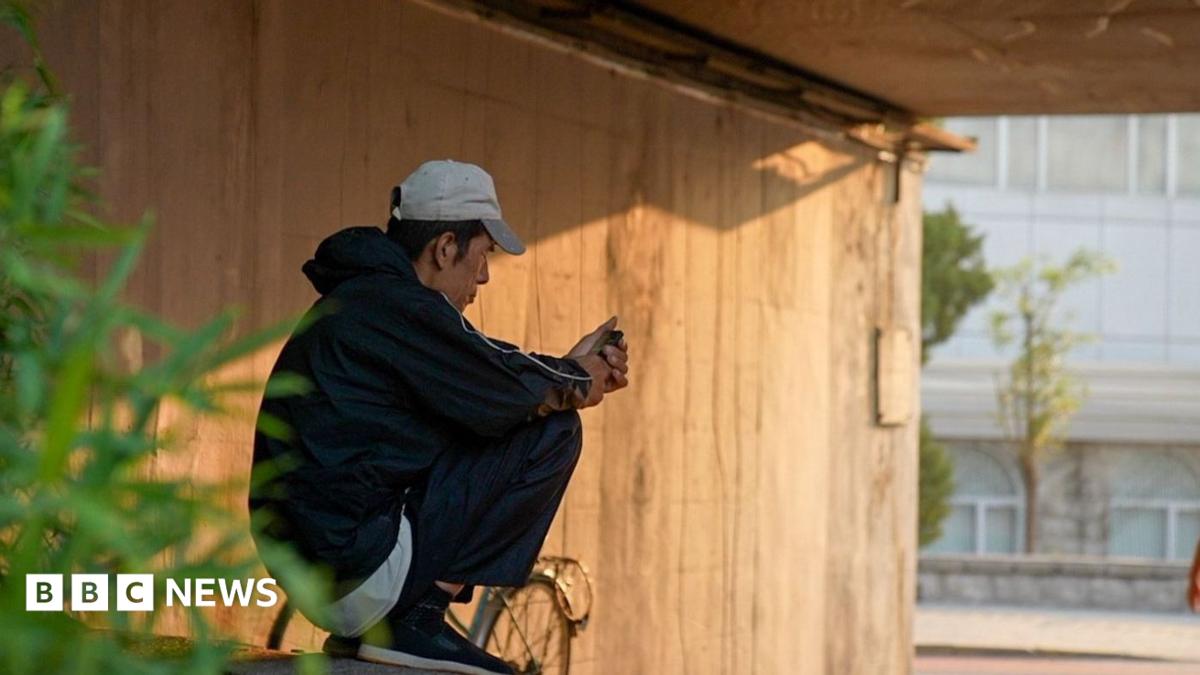
Yang, 91, who lives on the outskirts of China's bustling capital Beijing, says she was so lonely after her husband's death that she even considered voluntary euthanasia. This was reported by Qazaqyia.kz citing BBC News.
"The biggest difficulty really was the loneliness. Sometimes, if I wanted to talk to someone I'd talk to the TV," says Yang. Suffering from glaucoma and failing eyesight, she was unable to even do basic things like adjust the controls on her air conditioner.
Cases such as Yang's have become increasingly common in Chinese cities. Associate Professor Teresa Kuan from the Chinese University of Hong Kong says this is "exacerbated by the structure of society and the modes by which people interact". There are many causes of isolation in China. Most of it happens when rural migrants pursue economic opportunities, leaving behind close-knit support networks for urban centres where loneliness and uncertainty can be difficult to overcome, or when graduates uproot themselves chasing employment on the other side of the country.
But now a growing "loneliness industry" has emerged to try to fill these gaps in people's lives. Yang says her life has been transformed by one of these services — Wang Yingwei and his electric scooter delivery team — who started coming over twice a day with hot meals but whose help extends far beyond that.
"We see ourselves as community children," Yingwei told the BBC. "It means putting yourself in the shoes of older people and carefully considering their needs. For example, they may be drinking tap water which can be cloudy and contain a lot of lime. I can fix this problem with a filtered water tank. Such a small thing can make them much happier. Maybe they can't shower because their equipment is broken. I'll buy a part, replace it and their shower is fine." He added: "The elderly treat us like their children, and we treat them like our own parents."
Yingwei's services cost less than half the price of employing a caregiver. The former mobile phone salesman says he started his company to help seniors remain at home without having to move into retirement facilities. He was inspired to do this after his own father-in-law, who had developed Alzheimer's, had to go into a nursing home. Yingwei said he felt that the conditions there were so sub-standard he wanted to make sure others could stay out of institutions like this for as long as possible.
His small business currently employs four people but he says there is a possibility he will expand as demand grows. There is still a shortage of solid data on the size of this sector — which operators say has exploded in recent years — but securities company Sinolink valued it at around $7.4 billion in 2025. And this is only expected to grow given the trajectory of modern lifestyles.
Zheng Ruizhi, another client of Yingwei's who lives in Beijing's northern outskirts, welcomed him at the door with a big smile. "After retiring, I don't have much opportunity to hang out with others," the 75-year-old, whose son lives two hours away from her, told the BBC. She was recovering from a recent injury which she said was making everyday tasks more difficult.
But the arrival of Yingwei — who she calls her "dear boy" — lightened her mood. "I call you 'dear boy' because I am so fond of you. I genuinely like you from the bottom of my heart. I also admire and trust you. When you help me out, I don't have a single worry or fear," she told him.
Yet the services offered by those in this sector are not limited to home visits. Twenty-three-year-old Liu Yanyan, for instance, works as a "medical escort". She acts as a friendly face taking clients to see the doctor, or picking up their test results or medication from city hospitals, which can be intimidatingly large and bureaucratic.
"Some of my customers are people in their 20s who came to Beijing to build a career. They might not have friends here or feel awkward asking colleagues to accompany them because of the concept of social reciprocity in Chinese culture," she said. "If I accompanied you to a doctor's appointment for free, you might feel obligated to buy me a meal or a movie ticket afterwards." She said that, because of this, there are many people in modern Chinese society who tend to keep to themselves. "So, they hire someone like me to accompany them to the hospital. If they had to go alone, they could feel scared or anxious."