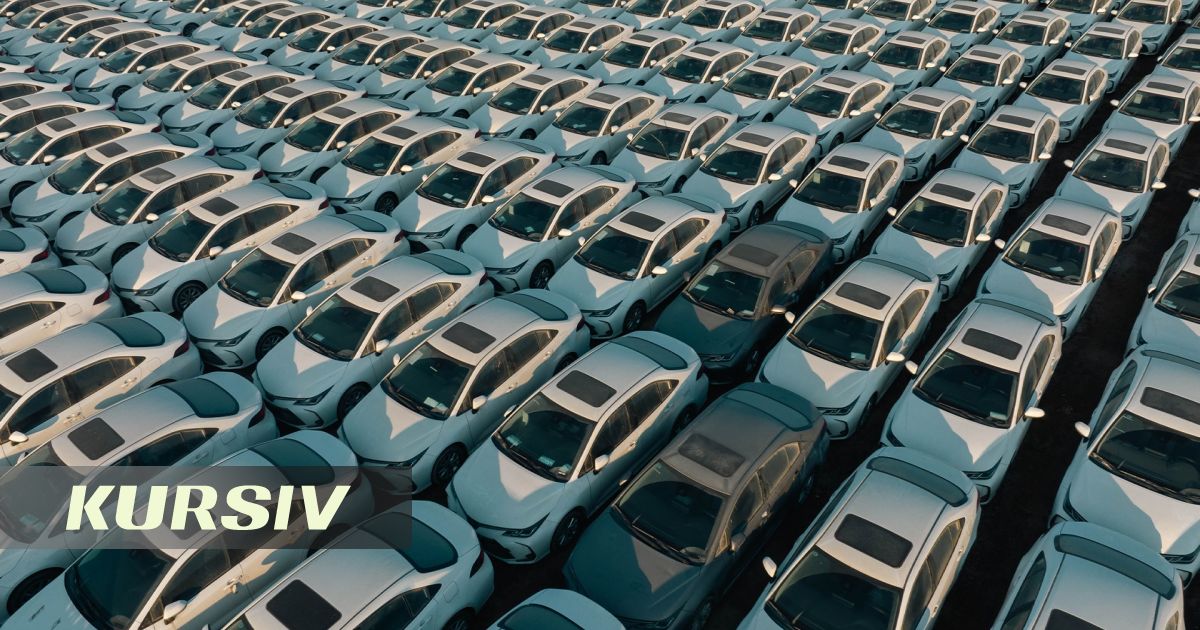
China's auto industry set a new record. In June 2026, the country exported over 1 million vehicles in a single month for the first time. This was reported by Qazaqyia.kz citing Carnewschina.
According to the China Association of Automobile Manufacturers (CAAM), China exported 1.037 million vehicles in June. This is an increase of 11.6% compared to May and 75.1% year-on-year.
In the first six months of 2026, overseas deliveries reached 5.096 million vehicles, up 65.3%.
At the beginning of the year, CAAM expected exports to grow by only 4.3% to 7.4 million vehicles for the full year 2026. However, current growth rates have significantly exceeded forecasts.
The main driver of growth was new energy vehicles (NEVs) – electric vehicles, plug-in hybrids, and extended-range models. In June, China shipped 523,000 such vehicles for export, 2.6 times more than a year earlier. For the first time in history, they accounted for more than half of the country's auto exports.
In the first half of the year, NEV exports reached 2.355 million vehicles, or nearly 46% of all overseas shipments.
Experts cite several reasons. First, China fully controls the production of batteries, electric motors, and other key electronics, allowing it to maintain low costs.
Second, Chinese brands have bet on technology. Fast charging, 800-volt architecture, advanced driver assistance systems, and rich features give them an edge over European and Japanese competitors.
Finally, demand is growing rapidly in emerging markets. The main buyers of Chinese cars are countries in Southeast Asia, the Middle East, and Russia.
Despite record figures, analysts believe growth rates could slow in the second half of the year. New trade restrictions from the European Union, including anti-subsidy investigations and carbon tariffs, are beginning to affect exports. The high base of 2025 may also have an impact.
Nevertheless, China remains the world's largest car exporter and continues to strengthen its position in the global market.
Earlier, Kursiv Avto reported that major German brands continue to lose customers in China amid the rise of local brands.