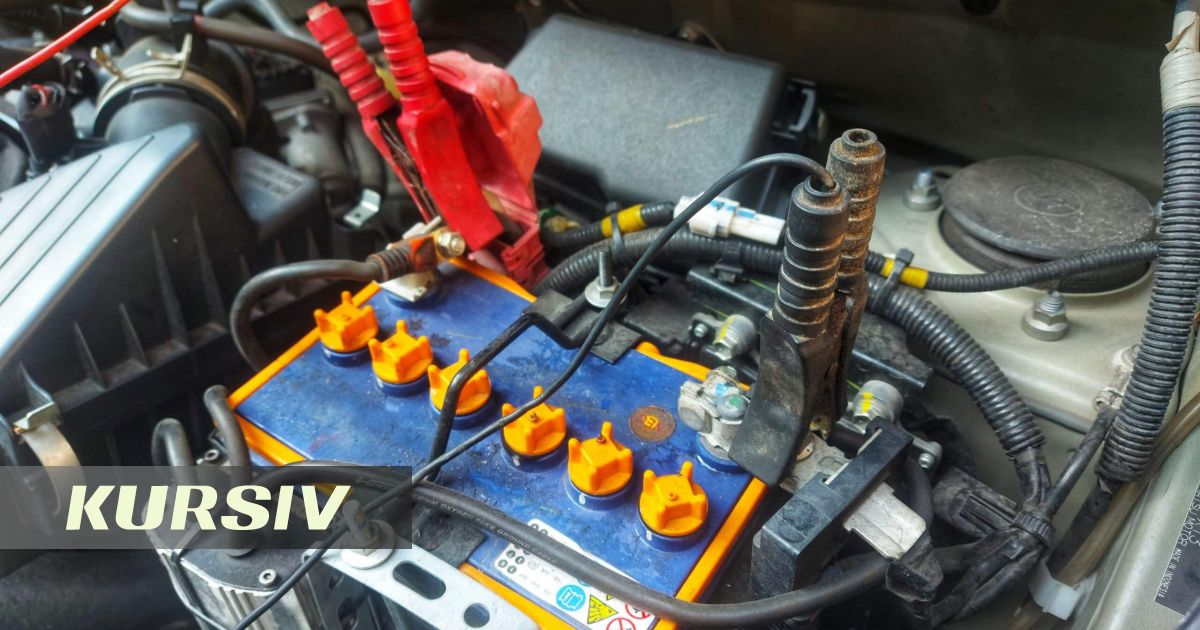
In winter, a car battery has to work under the harshest conditions. In the cold, its ability to deliver current decreases, while thickened engine oil, heaters and other consumers, on the contrary, increase the load when starting the engine. Therefore, a battery that was fine in summer can suddenly fail with the first serious frosts, writes Battery tender. This was reported by Qazaqyia.kz citing Kursiv Media.
The main enemies in winter are cold, short trips and the age of the battery. Each start makes the battery deliver a large current, and during a short trip the alternator may not have time to replenish the spent energy. Additional load is created by headlights, heated windows and seats, the climate system and the car's electronics.
Particular attention should be paid to a battery that is already several years old. As it ages, it loses capacity, so the first severe frost often becomes a kind of test of its condition.
First, you should inspect the battery itself. There should be no cracks, swelling or signs of leakage on the case. The battery must be securely fastened, and the terminals and wires must be tightly connected.
A white or greenish deposit on the terminals indicates corrosion. It increases resistance in the connection and can interfere with normal starting and charging.
The battery's condition can be checked with a multimeter. It is better to measure the voltage after the car has stood for several hours with the engine off. A fully charged battery usually shows about 12.6–12.8 V, and a value below 12.4 V already indicates the need to check the charge and condition of the battery. At the same time, voltage alone does not always show the real capacity – a load test is used for an accurate assessment.
Before work, the engine must be turned off. The terminals are disconnected in sequence: first the negative, then the positive. The deposit can be removed with a brush using a solution of baking soda and water, after which the surfaces must be washed and completely dried.
The battery is connected in the reverse order – first the positive terminal, then the negative. The connections must be reliable and not turn by hand.
Before starting, it is better to turn off the headlights, heaters, music and other powerful consumers. In a car with a manual transmission, you should press the clutch.
If the engine does not start in about five seconds, you should not continue cranking the starter. It is better to pause for about 30 seconds and try again. Several long starts in a row can completely drain the battery.
If the battery is discharged, the cars must not be connected in such a way that they touch each other. Both engines and electrical appliances must be turned off.
The red wire is connected to the positive terminal of the discharged battery, then to the positive terminal of the donor battery. The black wire is first connected to the donor's negative, and the second end – to a clean metal part of the engine or body of the car with the discharged battery.
After starting, the wires are removed in the reverse order. At the same time, a battery with cracks, swelling or signs of freezing must not be jump-started.
If the battery constantly discharges, holds a charge poorly or the car increasingly starts hard, it should be checked with a load test. Cracks, swelling of the case, electrolyte leakage or damage to individual cells are already grounds for replacement.
And most importantly: after jump-starting, the battery does not become fully charged. If the battery has discharged deeply, one trip may not be enough – it is better to additionally charge it with a suitable charger and check its condition.
Earlier, Kursiv Auto reported that brake pads give three signals that it is time to change them.