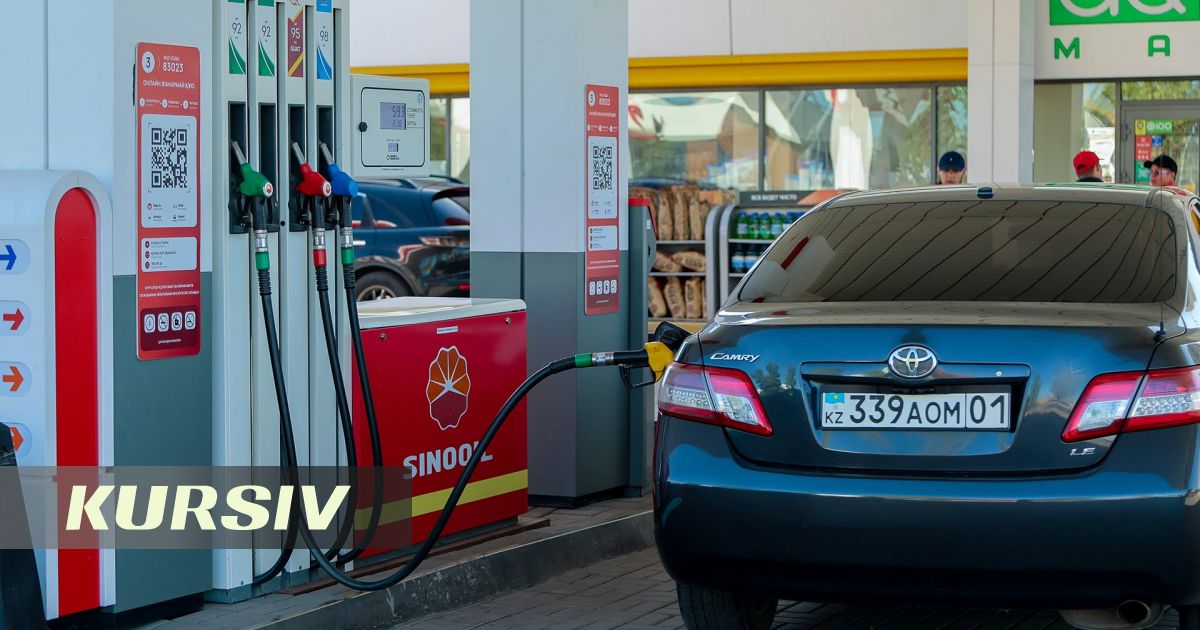
Kyrgyzstan doubled its production of gasoline and diesel fuel in January-September 2026 compared to the same period in 2025. This was reported by Qazaqyia.kz citing Kursiv Media.
According to Reuters, which cited data from the republic's national statistical committee bureau, gasoline production over the nine months of this year amounted to 209,500 tonnes, and diesel fuel to 206,900 tonnes.
At the same time, fuel oil production fell to 103,300 tonnes, or by 7% compared to last year. Kyrgyzstan receives more than 90% of its required petroleum products from Russia, which in July-September faced attacks by unmanned aerial vehicles on refineries. This led to a reduction in gasoline and diesel production, as well as shortages and requests to foreign partners for supplies of petroleum products to the Russian Federation.
Kyrgyzstan has seven mini-refineries, the largest of which are Junda, owned by China's Shanxi Coal Chemical Industry Group with a capacity of 800,000 tonnes of raw materials per year, and Kyrgyz Petroleum Company, owned by Kyrgyzneftegaz (500,000 tonnes per year). Kyrgyzstan purchases hydrocarbon raw materials and fuel oil for processing at its refineries, and in August 2026 it began purchasing Russian gas condensate in a volume of about 7,600 tonnes, which in September increased to 11,400 tonnes.
Kazakhstan's oil pipeline system operator KazTransOil (a subsidiary of KazMunayGas) in August for the first time carried out a transit of 35,000 tonnes of Russian oil to Kyrgyzstan. Oil exports via the Atasu-Alashankou pipeline rose in January-September to 983,000 tonnes, a quarter more than in the same period of 2025, KazTransOil reported.
In total, over the nine months of 2026, 14.8 million tonnes of oil were transported through the trunk pipeline system, 2% more than in the same period last year. The bulk of the volume traditionally fell on the transit of Russian oil through Kazakhstan to China. At the same time, exports of Kazakh oil proper to China increased by 26% at once.
KazMunayGas Chairman of the Board Askhat Khasenov earlier commented on reports that two large Kazakh refineries received quotas in the third quarter for gasoline exports to Russia but did not use them. According to him, ensuring the domestic market remains the company's priority.
On October 16, Reuters, citing data from the Situation-Analytical Center of the Fuel and Energy Complex (SAC FEC RK) and three industry sources, reported that the Atyrau and Pavlodar refineries received quotas from the Ministry of Energy in July-September for export to Russia of 17,500 tonnes of AI-92 gasoline each, but did not use them.
Russian authorities asked Kazakhstan to supply gasoline amid massive attacks on its refineries by unmanned aerial vehicles. In addition, the Russian Federation received petroleum products from other countries.
The Russian Federation asked Kazakhstan to supply it with about 50,000 tonnes of AI-92. In return, Russia promised to supply the republic with aviation fuel, which is scarce in Kazakhstan. There were no official requests from the Russian Federation, the Kazakh Ministry of Energy noted earlier, but later it stated that the exporter of gasoline to Russia would be the Kondensat refinery, which operates on Russian raw materials. In particular, Kondensat will supply 70% of its output to the Russian Federation.
The Kondensat refinery became the only Kazakh exporter of gasoline to Russia, supplying 8,700 tonnes of K-5 environmental class gasoline (Euro-5 analogue) in July, according to SAC FEC data. In August, the refinery supplied 13,900 tonnes of gasoline, and in September, 17,500 tonnes of gasoline. In addition, in August of this year, for the first time since March 2021, Kazakhstan supplied 4,500 tonnes of diesel fuel to the Russian Federation, with Kondensat also acting as the supplier. The plant also exported gasoline to Tajikistan and Uzbekistan in the third quarter, and diesel fuel to Kyrgyzstan.
The quota for gasoline export for Kondensat in September was 37,300 tonnes against 41,500 tonnes in August, and for diesel fuel, 18,800 tonnes against 6,600 tonnes a month earlier. The total quota for gasoline export for the Kondensat refinery in July-September was 100,300 tonnes, while actual exports were 42,500 tonnes.
According to traders, many railcars with fuel have accumulated on the access tracks to Kondensat, which complicates the shipment of petroleum products.