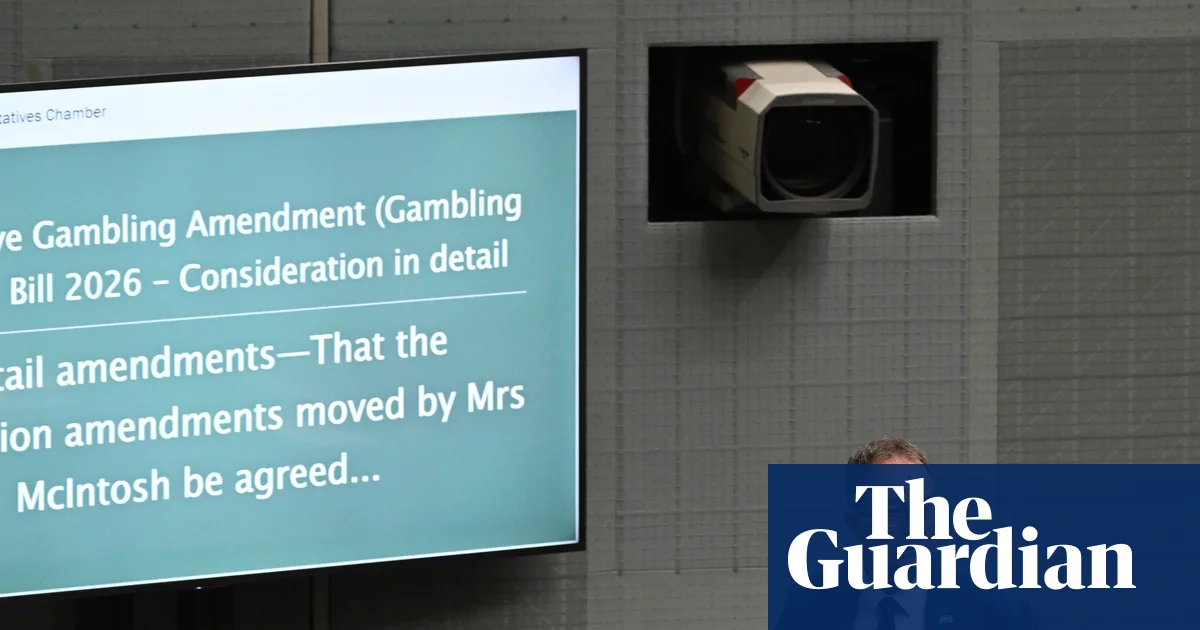
Liberal MP Andrew Wallace crossed the floor after the Coalition and Labor struck a deal to pass the contentious gambling reform bill. This was reported by Qazaqyia.kz citing The Guardian.
Two Coalition MPs crossed the floor after a deal between the major parties to pass Labor's new restrictions on betting advertising and inducements, which the MPs say are too "weak" and place "too much faith in the hands of the gambling companies".
Anthony Albanese and the communications minister, Anika Wells, secured the support of the opposition to pass the bill, with amendments including tweaks to ad timing rules and some restrictions on inducements.
The reforms are set to pass on Thursday, 1,149 days after late Labor MP Peta Murphy handed down her landmark report on gambling harms, which recommended a total ban on inducements and wagering ads.
Labor's final version of the bill, with amendments agreed by the Coalition, will not meet either of those recommendations. Instead, the communications regulator will set up a one-stop "opt-out register" – the details and design of which is yet to be made clear – to allow Australians to elect against receiving gambling ads, while inducements will only be limited in some circumstances.
The register could take up to 12 months to be set up, government sources said, conceding the system would be complex and unlikely to be ready by 1 January 2027. Albanese referred to the system as "AdStop" in parliament, likening it to self-exclusion register BetStop, but it's understood this will not be its official name.
Gambling industry sources questioned how the opt-out register would operate, how long it would take to set up, as well as privacy issues around handling of user data. Wagering companies – who will be obligated to pay for the register – also questioned how much it would cost.
The shadow communications minister, Sarah Henderson, said the register idea had come from the Coalition. She said the Coalition envisioned that "anyone seeking to serve gambling ads online will be required to sweep that register to make sure that if someone opts out on the register, that all publishers of gambling ads will comply with the law."
Wells said all inducement ads would be banned for any customer "identified as at risk of gambling-related harm", for 14 days after someone had signed up with a wagering service, and for three months after someone had deregistered from the self-exclusion register Betstop. Tuesday's amendments would also ban commissions on customer losses for gambling staff or affiliates.
"We have listened to the range of views across the community and the Parliament, which showed us the most toxic version of inducements – and we are taking action to address this," Wells said.
Kai Cantwell, CEO of peak body the Responsible Wagering Australia, described the changes as "unnecessary" and "complex". "If you push people away from the licensed, regulated market - by banning or limiting the promotions that let local operators compete, or by making Australian odds less competitive with new taxes and levies - you don't stop them punting," Cantwell said. "You push them offshore, into products with no consumer protections, no support, no Betstop, and no contribution to Australian sport and racing."
Other tweaks to the original bill include extending the "blackout period" on ads before live sport from five minutes to 15 minutes, the three-per-hour restriction on TV ads beginning at 5am instead of 6am, and restrictions on advertising during children's programming.
The changes will be monitored by the Australian Communications and Media Authority and subject to a statutory review after three years.
Labor's changes include previously-announced reforms like banning gambling ads on player jerseys and in stadiums, banning celebrities and players from promoting gambling, and a "triple lock" system for online ads requiring users to be over 18, logged-in and provided with an opt-out option.
Liberal backbencher Andrew Wallace joined colleague Pat Conaghan to cross the floor and vote against some of the amendments which he claimed were inadequate. Wallace said the parliament should have extended advertising blackout periods, and an opt-in approach for inducements. "These reforms don't go anywhere near enough to correcting those bad elements. We're putting too much faith in the hands of the gambling companies. And quite frankly, they have not demonstrated that they deserve that faith," he told ABC TV.
Conaghan, who was deputy chair of the Murphy-led review in 2023, said earlier: "I think we're being weak by not implementing those reports and I think we'd be supported by the majority of the public out there."
Guardian Australia understands at least two more Liberal senators – moderates Andrew McLachlan and Paul Scarr – may cross the floor when the bill reaches the upper house tomorrow.
Independent Zali Steggall complained during debate that crossbenchers had not been given any time to consider amendments. "Labor and the Coalition stitched up a deal on gambling laws then gave crossbench MPs just minutes to consider significant amendments before being expected to vote on them," she said in a statement with colleague Allegra Spender.
The Greens called the Labor-Coalition agreement "cowardly and careless", while David Pocock has also said it didn't go nearly far enough. Pocock called the reforms "a betrayal of all Australians," telling Afternoon Briefing he would be voting against the bills in the Senate. He derided the amendments as "tinkering" which didn't go nearly far enough.