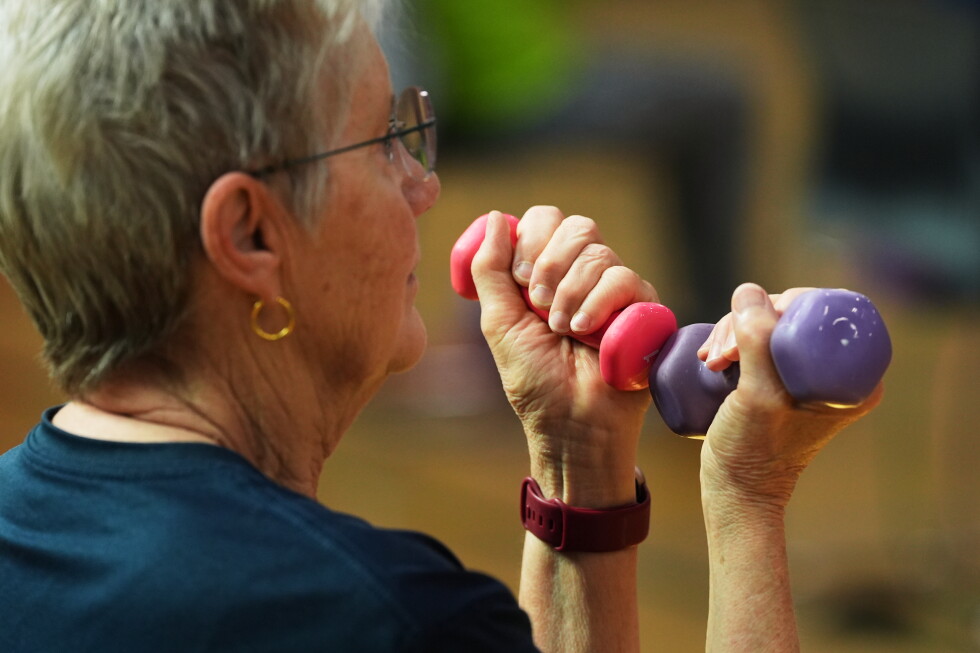
Hand grip strength, balance tests, and standing up from a seated position on the floor are often touted as measurements of healthy aging. This was reported by Qazaqyia.kz citing Associated Press.
They can provide valuable indications of your stamina and strength. They can estimate the risk of falls, which increase older adults' risk of death. And they're useful to doctors who work to address aging or people with injuries.
"A poor or declining result is a reason for a health professional to investigate why function is changing, rather than gauging how long someone will live," said Auriel Willette, an expert on brain aging at Rutgers University.
Sit-to-stand tests
"Sit-to-stand" tests come in several forms. The U.S. Centers for Disease Control and Prevention's 30-second chair-stand test is designed for patients older than 60, to see how many times they can stand up in that time period.
Another test, popularized on social media, asks someone to move from standing, to sitting cross-legged on the ground, and then back up to standing. Making your way down to the floor is worth 5 points, as is standing up, for a total score of 10. You lose a point for each support you use (such as a hand or knee) and half a point if you're unsteady. The score is zero if you're unable to sit or stand without external help.
Doctors said they haven't seen the test used with older U.S. adults, but researchers in Brazil published studies in 2020 and 2025 that concluded middle-aged people who scored higher were less likely to die within about a decade.
TUG test
Many American doctors use a test called "Timed Up and Go," or TUG. It requires the patient to get up from a chair, walk 10 feet (3 meters) and come back to their seat. That allows doctors to evaluate a person's balance, mobility and lower extremity strength all at once.
Dr. George Hennawi, who treats older adults at MedStar Health in Baltimore, said all the tests are meant to pinpoint specific weaknesses and narrow down their underlying cause, whether that's knee pain, slow reflexes, poor balance or feeling winded or dizzy because of cardiovascular issues.
"The key to react to it is to understand where did we not do well," he said.
Screening tools
Tests like the viral sit-to-stand one are what doctors call screening tools. They're helpful in narrowing down issues, but they don't provide enough information for a full diagnosis.
Other popular tests for a person's "physiological age," or how your body is aging, include tests of grip strength, walking speed, gait steadiness and balance. Such tests look at how hard your hand can squeeze something, whether you favor one side while walking, how long and well can you stand on one leg and how far forward can you reach without becoming unsteady.
Many doctors also use these challenges to understand a person's risk for "frailty," a medical condition that means the body is less able to handle strain from illness or injury.
Doctors sometimes use a 10-minute assessment called the Short Physical Performance Battery, which includes several tests including gait, balance and strength. It was developed by the National Institute on Aging and large clinical trials have shown it predicts mortality, disability and more.
At the University of California, Los Angeles' Multidisciplinary Falls Clinic, Dr. David Lee said it's important to look across multiple tests in combination. Grip strength, for example, is predictive of many different things, but it can be affected by arthritis, stroke or even