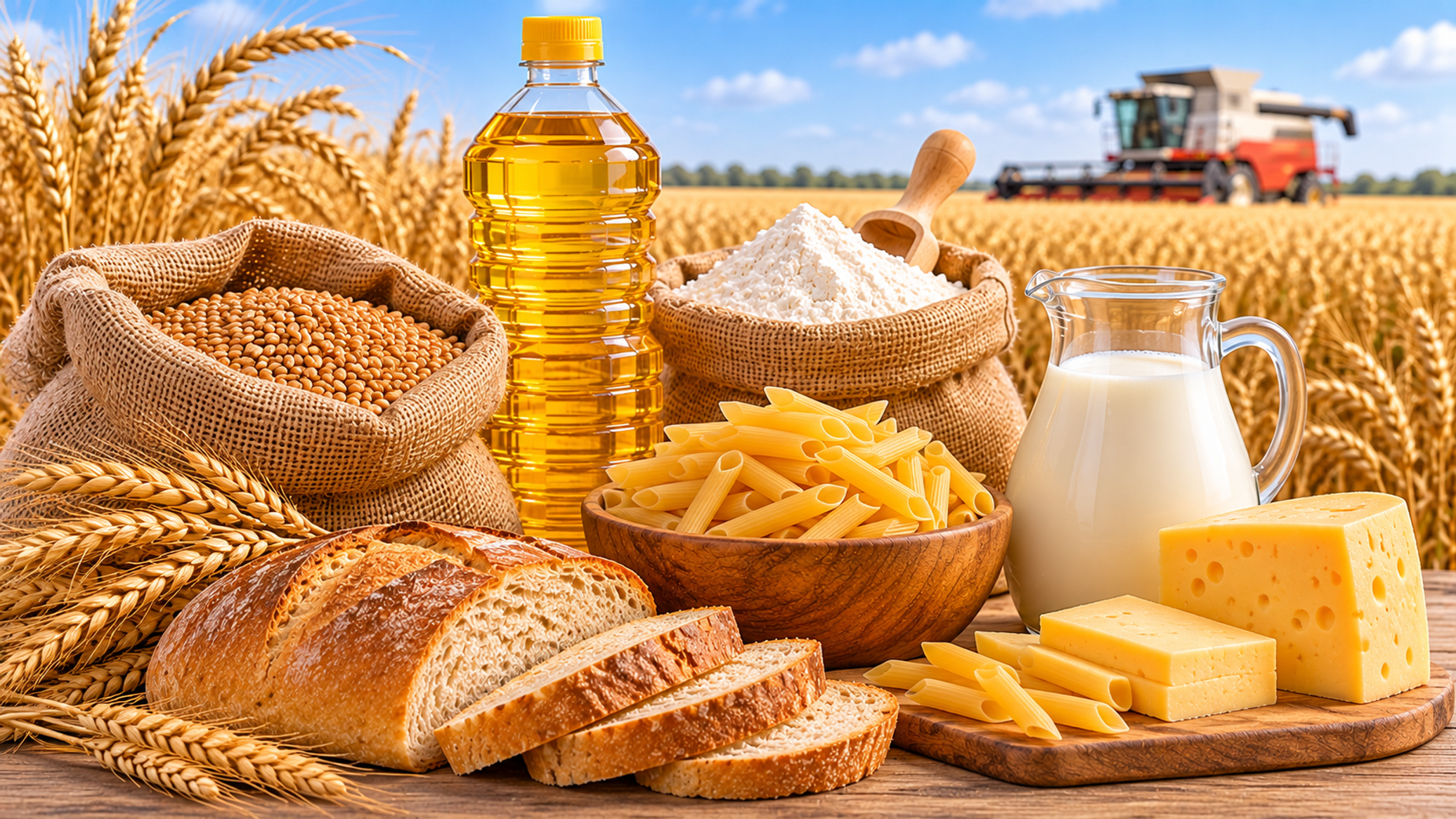
According to the results of the first eight months of 2026, exports of processed agricultural products amounted to $3.04 billion. This is 35.1% higher compared to the same period last year. This was reported by Qazaqyia.kz citing Sputnik Kazakhstan.
According to the Ministry of Agriculture, as a result, the share of processed products in the total value of agricultural exports reached 54.1%. Thus, more than half of the export revenue of the agricultural sector is generated by processed products.
"This indicates qualitative changes in the structure of domestic agricultural exports and the growing competitiveness of Kazakh products in foreign markets," the ministry reported.
Grain processing as a driver of export growth
One of the main drivers of export growth is the grain processing sector. In the 2025/2026 marketing year, exports of grain and flour reached a record 16 million tonnes in grain equivalent. Between January and August 2026, 1.38 million tonnes of wheat and wheat-rye flour were exported abroad. Their total value amounted to about $400 million. Compared to the same period in 2025, the physical volume of exports increased by 23%, while export revenue grew by 36%.
Oil and fat industry
Positive dynamics are also observed in the oil and fat industry. Exports of sunflower, safflower and cotton oils increased by 49%, from $453 million to $673 million. Exports of rapeseed and mustard oils increased 2.3-fold, from $40 million to $90 million.
Growth in other product categories
Significant growth was also recorded for a number of other product types. In particular, exports of feed flour in value terms increased by 61%, from $359 million to $578 million. In physical terms, supplies rose by 44% to 2.5 million tonnes.
Beef exports increased by 78%, from $92 million to $164 million. The physical volume of the product grew by 13%, from 26 thousand tonnes last year to 29 thousand tonnes.
In addition, exports of oil processing products – oilcake and meal – increased by 42%, from $79 million to $113 million. In physical terms, supplies rose by 39%, from 430 thousand tonnes to 597 thousand tonnes.