Kazakh startups Prometei and NCSpeech traveled to Startup Campus at Glovo's Barcelona headquarters with proposals for restaurant equipment procurement and earning from data collection for artificial intelligence. This was reported by Qazaqyia.kz citing Kursiv Media.
Glovo co-founder Sacha Michaud told Kursiv about cooperation opportunities, plans in Kazakhstan and obstacles on the path of local entrepreneurs to the global market.
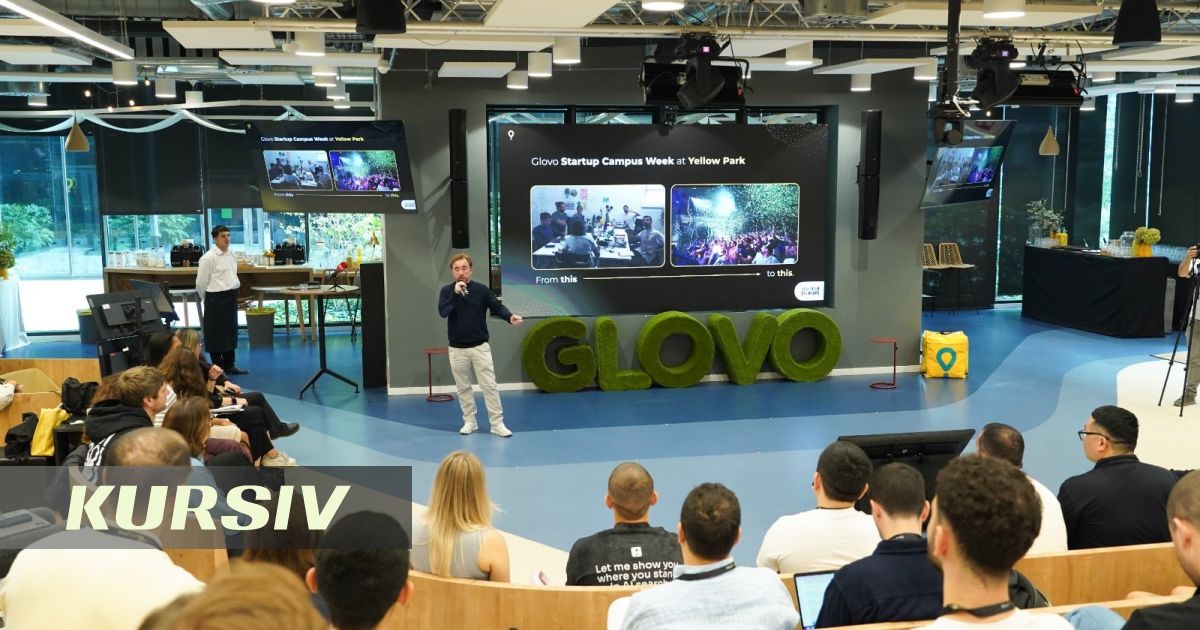
The program at the Yellow Park campus brings together startup founders, Glovo executives and mentors. Its goal is to help participants build connections and learn from the experience of building a large business. Michaud explained that participation does not imply mandatory commercial partnership, and many projects are not connected to Glovo's activities at all.
"I hope they return home with big ambitions and an understanding of how to build a global company from their city and their country – in this case Kazakhstan," Michaud said in an interview with Kursiv.
At the opening, he recalled that Glovo started with a team of five people. The first version of the app had no categories, menus or prices: the user wrote what needed to be bought or delivered. The courier paid for the purchase with a card and brought it to the customer. There were no partners paying commissions at that time.
Since 2015, Glovo has launched in more than 45 countries, and at the time of the speech, according to Michaud, it operated in 21. In some places the business had to be closed, in others sold. A turning point was the partnership with McDonald's in Spain: it helped attract the attention of major investors and expand cooperation with the chain.
Today Michaud links further growth to fast delivery of goods from local stores. According to him, this direction is developing at Glovo twice as fast as restaurant food delivery. The proposal from Kazakhstan's Prometei concerns another need of the same industry – supplying restaurants themselves.
Prometei founder and CEO Daulet Batyrbek describes the product as a single window for trading on more than ten platforms, including Kaspi, Wildberries, Ozon, Uzum and eBay. The entrepreneur places goods through one service, reducing time spent managing sales. According to Batyrbek, the company has already entered the Uzbek market.
According to Batyrbek, Prometei is an official partner of Alibaba Group in Kazakhstan and organizes the import of goods from China with the necessary documents. In the future, he wants to unite the entire trade cycle from purchasing from a manufacturer and obtaining financing to delivery to the buyer.
The team came to Barcelona with a proposal to launch a joint pilot with Glovo for restaurants. Establishments regularly need packaging, napkins and other consumables, and when opening or expanding – ovens, deep fryers and other equipment. Prometei proposes to take on such purchases and delivery to the destination city or country.
Another part of the proposal is, of course, the ability to pay for purchases in installments. Financing, according to Batyrbek, is provided by Kazakh partner banks. This could allow a restaurant to purchase expensive equipment by distributing payments over time. The possibility of launching the solution in Europe is also being discussed.
"The end result of the product, as I see it, is a single window: Kazakh entrepreneurs sell to the whole world," explained the founder of Prometei.
Batyrbek presented the idea to Glovo co-founder Oscar Pierre and expects to continue negotiations. He did not report any concluded agreement or timeline for launching the joint service.
The second Kazakh team, NCSpeech, has a different cooperation model. The startup collects and verifies data for training artificial intelligence. Its CEO and co-founder Tseren Andzhukaev said the team launched the project in early 2025, building on experience in developing voice technologies.
At first, NCSpeech created solutions for large customers who needed to work in their own closed infrastructure. Gradually it became clear that some clients want to develop models themselves but need quality data. Collecting it turned out to be one of the most expensive and labor-intensive parts of the work.
In Kazakhstan, people often mix Russian and Kazakh speech and use colloquial expressions. To recognize such dialogues, models need corresponding examples. The team also collected data and trained models for Malay, Vietnamese, Filipino and Indonesian languages.
NCSpeech proposes to obtain materials through apps that already have a large audience. The user completes a task, for example, records speech or takes photos, and receives a reward. The partner app gains an additional source of revenue, while the startup gets access to participants without large expenses for promoting a separate service.
According to Andzhukaev, NCSpeech already cooperates with inDrive, collecting data in Kazakhstan and Southeast Asia, and is starting work in Latin America. However, fulfilling orders requires participants from other countries as well. Here the team sees opportunities for partnership with Glovo.
NCSpeech has requests for data in Georgian, Armenian and the Moldovan variant of Romanian. The startup wants to collect them through Glovo. Discussions are going slower than the team would like. If an agreement cannot be reached, it will look for other options. "We need to move fast," Andzhukaev emphasized.
Among NCSpeech's projects is the collection of photographs of garbage containers for a system that determines when they are overflowing. Demand is also growing for videos of people's everyday work: cleaning, cooking, handling tools. Such recordings are needed to train robots. The company attracts individual participants and enterprises ready to record work processes.
The experience of both teams is connected to a question Michaud considers key for developing technology markets: where to find people capable of scaling a company. In Kazakhstan, by his assessment, there are still relatively few specialists with experience working inside large fast-growing projects. The second limitation is the availability of venture capital needed for international expansion.