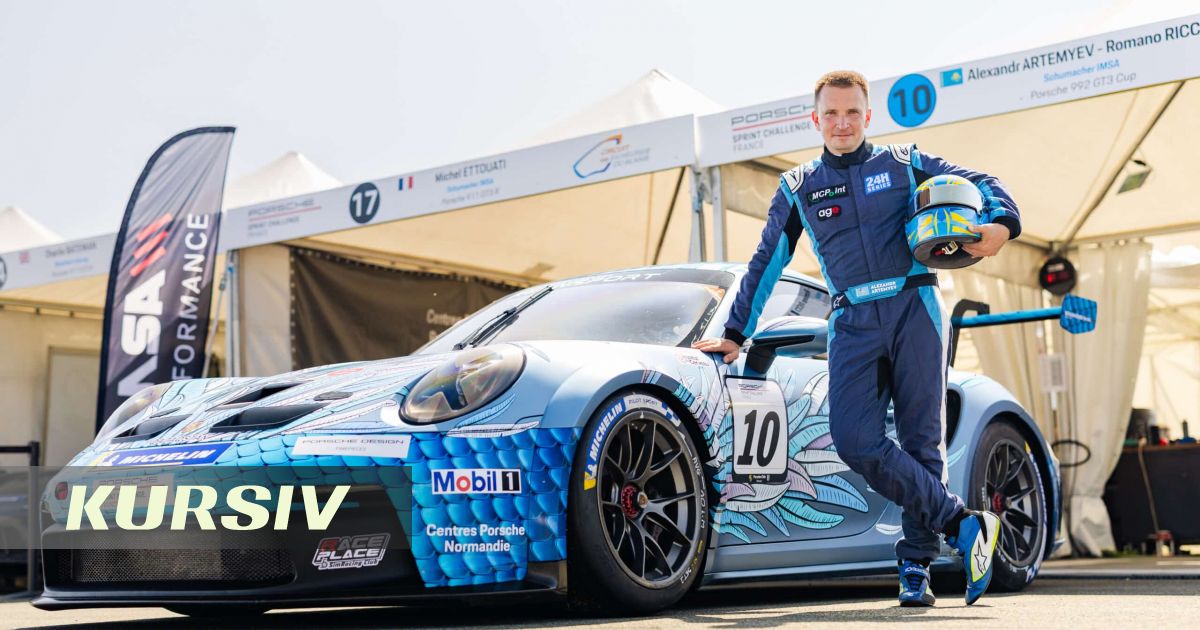
Kazakh driver Alexander Artemyev told Kuriv Avto how much it costs to compete in Europe, why businesses are reluctant to invest in motorsport, what surprises him about Chinese cars, and why fear behind the wheel can be more dangerous than speed. This was reported by Qazaqyia.kz citing Kursiv Media.
The seven-time champion of Kazakhstan started 2026 with a silver medal in the prestigious Michelin 24H Dubai marathon as part of Seblajoux Racing.
On June 20, the Kazakh competed in the six-hour race of the Nürburgring Langstrecken-Serie (NLS) championship for JUTA Racing in a BMW 330i in the VT2-RWD class. The main goal was to obtain Permit A, the highest license category required for participation in 24-hour marathons in powerful cars.
Due to errors by teammates, the team lost chances for a high result. One driver damaged the car, another made light contact with a Lamborghini and failed to meet the requirements for the license. Artemyev was the only one of the three drivers to complete the required eight clean laps and obtain Permit A.
The main obstacle for the Kazakh remains funding. According to him, simply starting is not enough to fight for top positions — tests, track study, and adaptation to the car and team are needed.
"If we talk about the GT3 class, participating in a full program and fighting for high positions requires a budget of at least 150,000 euros," the pilot notes.
At the same time, he already has all the necessary licenses for the 24 Hours of Nürburgring. The next step is additional mileage in European series.
On his social media, Alexander talks about how he earns money for racing.
Artemyev does not consider participation in Le Mans an unattainable goal. He already has an international license, marathon experience, and the necessary qualifications, and he has competed twice on the legendary track in the Porsche one-make cup.
"For my part, I have done the maximum possible for preparation. Now everything depends only on the ability to raise the necessary budget," the racer says.
With funding, he would like to combine appearances in the World Endurance Championship (WEC) and races at the Nürburgring.
According to Alexander, negotiations with Kazakh companies are ongoing, but real support is rarely achieved. Some honestly say they are not interested, others do not respond at all, and most often they offer barter.
"The time I spend creating advertising content is time I cannot dedicate to work and earning money for racing," Artemyev explains.
He is convinced that businesses only invest where they see marketing returns, and motorsport in Kazakhstan is not yet perceived as an effective promotion tool.
According to Alexander, basic training can be obtained in Kazakhstan, but for further growth, moving to Europe is almost inevitable, where competitions take place almost every weekend and competition is much higher.
"It is the constant wheel-to-wheel battle with the strongest opponents that allows drivers to reach the world level," he believes.
Artemyev's favorite car is the Porsche 911, although in everyday life he primarily sees a car as a means of transportation.
Speaking about the Chinese auto industry, he notes that some brands are already able to compete with "Europeans." As an example, the pilot cites Lynk & Co, which created one of the fastest cars in the TCR category. Moreover, Artemyev himself plans to switch to a "Chinese" car soon.
"Of course, I notice many small flaws that would be unacceptable for European manufacturers. But the difference in cost is so significant that it becomes a decisive factor," he says.
At the same time, the racer emphasizes that motorsport remains an extremely risky activity. During one of the recent races at the Nürburgring, due to abnormal heat, his car's fuel tank began to melt, and gasoline fell onto the hot exhaust system.
"Before each race, I ask myself: am I scared or not? If the answer is 'yes,' maybe it's better to stay home. In racing, fear should not control your decisions," the pilot says.
Artemyev considers the high cost of a career to be the main problem of domestic motorsport. Nevertheless, he is confident that the appearance of Kazakh pilots in Formula 1, WEC, or factory programs of global brands is only a matter of time.
"Honestly, I am even afraid to imagine my life without racing. For me, motorsport is the main source of motivation, a stimulus to constantly develop and move forward," the athlete concluded.
Earlier, President of the Astana Automobile and Motorcycle Sports Federation Anatoly Bondar told Kuriv Avto about the problems of organizing competitions in the capital.