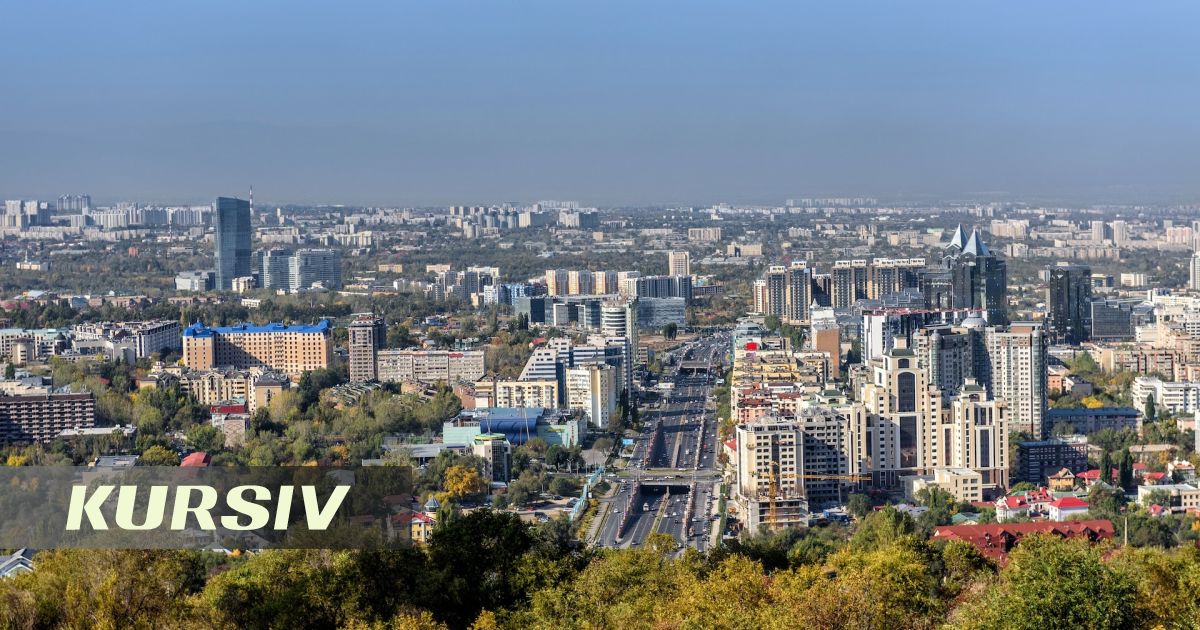
Pension withdrawal thresholds have nearly doubled – by 79%, significantly complicating the ability of Kazakhstani citizens to use their savings for housing purchases. Kursiv interviewed real estate market experts about whether demand for apartments will fall and whether price declines should be expected. This was reported by Qazaqyia.kz citing Kursiv Media.
International investment and real estate market expert Lev Tetin believes that raising pension thresholds will not significantly affect the housing market. According to him, the volume of pension savings used for partial repayment of mortgage loans has dropped to a minimum over the past year and a half. Those who wanted to use their pension savings to buy housing since 2021, when it was allowed to withdraw excess amounts for this purpose, have already brought their funds into the market.
In the last two years, according to the expert, this tool has become less effective, so changes in thresholds are unlikely to lead to a drop in housing demand.
"Today, the market share involving pension funds does not exceed 3.5–4%. At the peak in 2021–2022, about 65–68% of transactions involved pension funds. That is, the market has digested this money. I think these changes will have virtually no impact on either demand or the cost per square meter," the expert noted.
Tetin also assessed the impact of mortgages on housing sales and purchases overall. According to him, based on 2025 statistics, which are roughly comparable to data for the first five months of 2026, the total number of transactions was 449,000. Only 29% of these transactions were conducted using mortgage products, while in 71% of cases, buyers used their own funds – selling their old housing to buy new, saving money, etc. Of that third of the market dependent on mortgages, 73–75% of transactions were facilitated by Otbasy Bank. Thus, commercial mortgages also had little impact on the market.
According to the expert, the key influence on the housing market now is the purchasing power of the population, which is gradually stagnating. Also key is the dependence on imported construction materials (50–60%). Additionally, the new Tax Code affected construction work through VAT. As a result, supply is falling while demand is rising.
"If we talk about prices, we ended 2025 with an average increase in the cost per square meter of 16% across Kazakhstan. In some regions and cities, growth was higher or lower. For example, Astana grew by 22%, Almaty by 21%, and so on. If we talk about trends this year, over the first five months of 2026, growth was modest – from 2 to 3%. We will see greater dynamics in the second half of the year, and according to my forecasts, the increase in cost per square meter by the end of the year could repeat and reach 15% plus," Lev Tetin assessed market trends.
According to the expert, factors pushing prices up will include a decline in supply due to fewer new buildings. Meanwhile, demand continues to grow, and even current demand and the accumulated deficit of quality square meters are enough to push prices up.
An alternative opinion was expressed by the head of the Kazakhstan Real Estate Federation, Yermek Musrepov. According to him, after raising the sufficiency thresholds, the circle of citizens who can use their pension savings to improve housing conditions will shrink. This will be a sensitive factor for the market, as in recent years pension funds have been one of the key drivers of demand and speculative hype.
According to Musrepov, there is currently an objective cooling of the housing lending market. Demand for mortgages is declining for several reasons – high rates, reduced credit availability, and increased debt burden without comparable income growth. The situation is further complicated by the reduction of the maximum effective interest rate on mortgage loans from 25% to 20% (editor's note – this will actually affect only a limited number of borrowers).
"Against this backdrop, raising sufficiency thresholds will be another factor reducing demand. The most mass-market segments – economy and comfort-class apartments, where a significant portion of transactions were backed by mortgages and pension withdrawals – will feel the pressure first. Therefore, the risk of further demand decline is high. The market is gradually moving from a phase of overheating and speculative hype in past years to a phase of cooling and stagnation," Yermek Musrepov noted.
According to the federation head, in some years, the use of pension savings compensated for weak mortgage availability and insufficient income growth. Without this tool, there would have been significantly fewer transactions even in previous years. Pensions helped Kazakhstani citizens accumulate down payments, repay loans, and directly buy housing without credit. Musrepov notes that, in their assessment, the market's dependence on pension funds turned out to be much higher than many assumed.
Furthermore, the current restriction on using pension savings will affect prices, as the real estate market directly depends on the availability of financing. When mortgages shrink and the additional source of funds in the form of pension savings disappears, the number of actual buyers decreases.
The market is already showing signs of systemic cooling:
At the same time, housing supply remains high, especially in large cities. An imbalance arises: more properties become available, while fewer solvent buyers exist. Developers begin competing for buyers, leading to a gradual reduction in value through subsidies, installment plans, and bonus programs.
"According to our assessment, the market has already entered a phase of price correction. If current trends continue, the most vulnerable segments – primarily the secondary market and overvalued properties – could see price declines of up to 30% relative to peak values of recent years. It is important to understand: this is not about an instant collapse, but a gradual market correction amid reduced financing," Yermek Musrepov concluded.