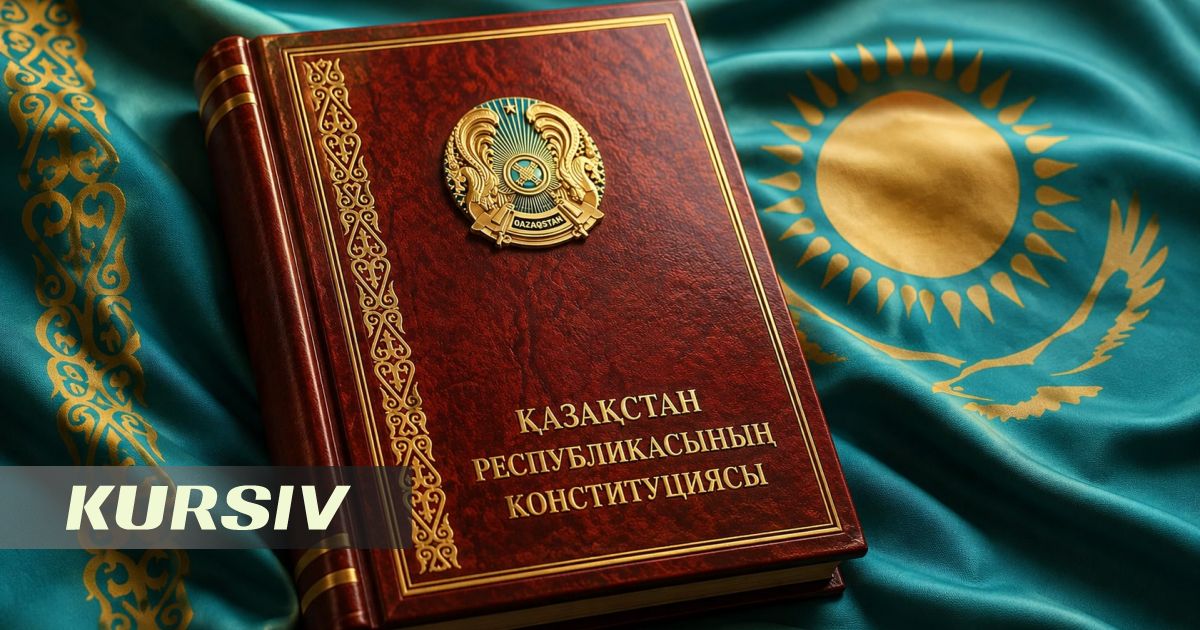
On July 1, 2026, a new Constitution officially came into force in Kazakhstan, adopted at a republican referendum on March 15, 2026. At the same time, the 1995 Constitution ceased to be in effect. This was reported by Qazaqyia.kz citing Kursiv Media.
The new Basic Law changes the system of government, redistributes powers between branches of government, and introduces new state institutions.
Change of parliament
One of the main changes is the abandonment of a bicameral parliament. Instead of the Senate and Majilis, Kazakhstan will have a unicameral Kurultai consisting of 145 deputies. The powers of the parliament formed under the 1995 Constitution have been terminated. The President must call elections to the new representative body within a month after the Constitution comes into force.
Return of the vice-president position
The Constitution reinstates the position of vice-president. He will be first in line of succession to the head of state and will act as president in case of early termination of his powers or inability to perform his functions.
Requirements for presidential candidates
Requirements for presidential candidates have also changed. Now a candidate for the highest state post must have at least five years of experience in public service or in elected state positions, including as a deputy or akim.
Expansion of presidential powers
The new Constitution expands the powers of the head of state. The President gets the right to directly appoint heads of a number of key state bodies, including the chairmen of the Supreme Court, Constitutional Court, Central Election Commission, National Security Committee, and other structures.
New bodies
The Basic Law provides for the creation of new bodies. Among them is the Khalyk Kenesi (People's Council), which will become the highest advisory body representing the interests of society. It also enshrines the development of the digital platform "Khalyk Kenesi", through which citizens can participate in discussing draft laws and propose their own legislative initiatives.
Protection of private life
The Constitution strengthens guarantees for the protection of private life. Now illegal collection, use, and storage of personal digital data are prohibited. In addition, law enforcement agencies are obliged to explain to a detainee his rights directly upon detention, including the right to remain silent and to use the assistance of a lawyer. This norm is similar to the Miranda rule.
Ban on dual citizenship
The new Constitution enshrines a final ban on dual citizenship. Obtaining a second passport by a citizen of Kazakhstan is not allowed.
Education and science
For the first time at the constitutional level, education, science, innovation, and human capital development are enshrined as strategic directions of state policy.
Environmental obligations
The Basic Law obliges citizens to treat the environment and natural resources with care. It also clarifies that the exercise of human rights and freedoms should not threaten public health, public order, and morality.
Removal of the first president's status
The norm on the status of the first president Nursultan Nazarbayev as the founder of independent Kazakhstan has been removed from the Constitution.
Constitution Day
Now Constitution Day will be celebrated annually on March 15 — the day of the republican referendum at which the new Basic Law was adopted. August 30 is no longer Constitution Day and loses its status as a holiday.