In Kazakhstan, crime decreased by 10%, or 4,919 offenses, in the first half of 2026. This was reported by Qazaqyia.kz citing Polisia.kz.
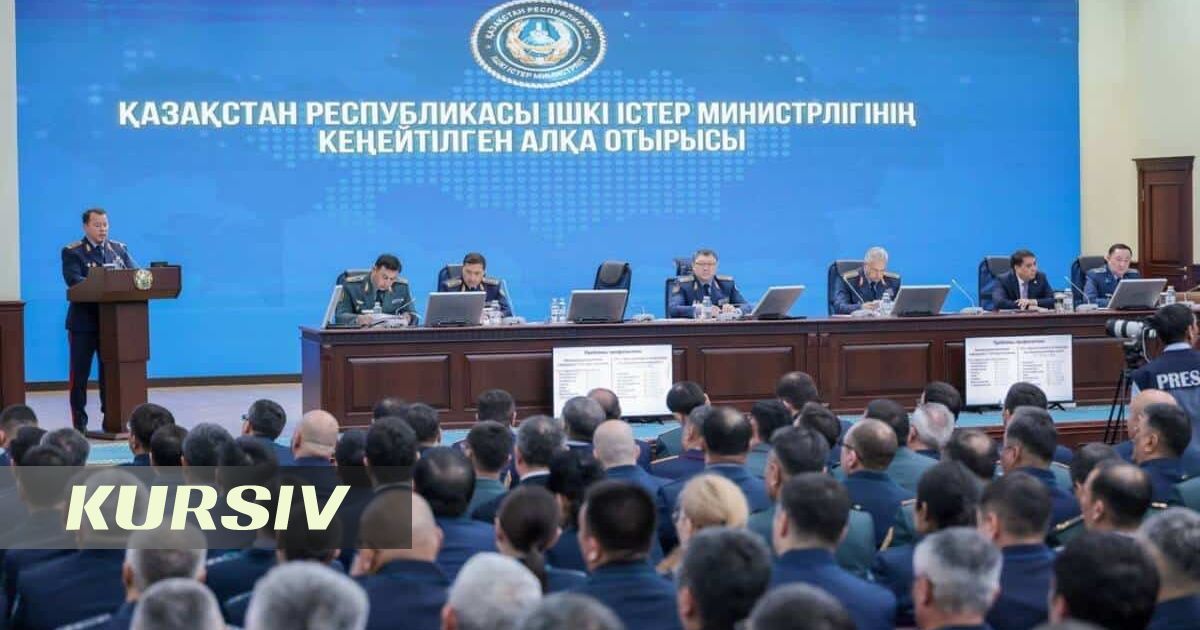
The results of the operational and service activities of internal affairs bodies for the first half of the year were summed up at a meeting of the Ministry of Internal Affairs board. Key tasks for the upcoming period were also identified.
Opening the meeting, Minister of Internal Affairs Yerzhan Sadenov noted that on July 1, the new Constitution of Kazakhstan came into force, enshrining the principle of "Law and Order" at the constitutional level.
"As the Head of State emphasized, this principle should become the foundation for the activities of state bodies and society as a whole. For internal affairs bodies, this means unconditional compliance and enforcement of legality, formation of a culture of law-abiding behavior, strengthening prevention, and uncompromising fight against crime. These areas remain the basis for building a Just Kazakhstan," Sadenov said.
According to the Ministry of Internal Affairs, crime decreased in all major categories in the first half of the year. The detection rate also improved, and the effectiveness of operational search and investigative work increased.
Thanks to preventive measures, the number of crimes committed by previously convicted persons, minors, those under the influence of alcohol, as well as in public places and in the sphere of family and domestic relations, decreased.
One of the results of systematic preventive work, the Ministry of Internal Affairs noted, was a reduction in property crime. The number of thefts decreased by 16.4%, and livestock thefts by 15.8%. The department noted that combating livestock theft remains a priority, as for many rural residents, the safety of livestock is directly linked to the stability of their household and family well-being.
The minister emphasized that positive dynamics should not become a reason for complacency. According to him, it should be a stimulus for further improving the efficiency of internal affairs bodies.
The meeting also assessed the work of individual territorial units and services where shortcomings persist. Their heads were tasked with ensuring personal responsibility for results, promptly eliminating identified gaps, and improving management efficiency.
Sadenov named digital transformation of internal affairs bodies as one of the key priorities for the second half of the year. Within the framework of the course set by the president, who declared 2026 the Year of Digitalization and Artificial Intelligence, tasks were set to expand the use of AI, develop intelligent video analytics, unmanned technologies, scale up operational control centers, and fully transition patrol officers to smart badges.
On issues of combating organized crime, the head of the Ministry of Internal Affairs demanded strengthening measures to curb criminal influence on the economy. Since the beginning of the year, 38 criminal cases have been registered, including those of a transnational nature. More than 160 representatives of the criminal environment are being brought to criminal responsibility.
Protecting the rights of victims remains one of the priorities of investigative work. At the end of the half-year, compensation for damages in the amount of more than 34 billion tenge was ensured in criminal cases.
Special attention at the meeting was paid to online fraud. Over six months, the number of such crimes decreased by 7%. Victims were returned 4.8 billion tenge, an illegal withdrawal of another 2.6 billion tenge was prevented, and 150 million fraudulent calls were blocked. The minister instructed to improve the quality of investigations, ensure prompt blocking of criminal accounts, and identify all organizers of fraudulent schemes.
In the field of combating drug crime, more than 1,880 drug crimes were suppressed, six organized criminal groups, including one transnational, were eliminated. Nine organizers and 29 active participants were detained. More than half a ton of synthetic drugs were prevented from entering illegal circulation.
Sadenov demanded to intensify the identification of drug laboratories, suppression of illegal channels for the supply of precursors, blocking of financial flows of the drug business, and strengthen preventive work among young people.
The minister separately focused on the work within the framework of the "Taza Kazakhstan" campaign. According to him, this is primarily respect for the law, public order, and personal responsibility of every citizen, and the cleanliness of streets and the environment is part of this culture.
Since the beginning of the year, within the framework of this work, more than 213,000 administrative offenses have been suppressed and 1,397 spontaneous dumps have been identified. Based on police materials, 952 unauthorized dumps were eliminated. For violation of sanitary-epidemiological and environmental requirements, 351 officials were brought to administrative responsibility, including 102 akims and 249 representatives of the housing and communal services sector.
One of the priority areas remains road safety. In the first half of the year, the number of road accidents decreased by 4%, deaths by 20%, and injuries by 7%. The minister demanded to strengthen accident prevention, suppress gross traffic violations, and more actively use digital technologies to identify malicious violators.
The board also considered the implementation of new requirements for the operation of rental electric scooters. Sadenov instructed to ensure control over compliance by kick-sharing companies with established requirements and conduct explanatory work with the population.
The Ministry of Internal Affairs also discussed the implementation of the law "On Amnesty," initiated by the head of state and adopted in connection with the entry into force of the new Constitution. The minister emphasized that the application of the act should be accompanied by an effective system of prevention, resocialization, and employment of released citizens. Heads of territorial units were instructed to ensure the implementation of administrative amnesty, including automatic write-off of fines falling under the law.
The work of the penal enforcement system was also assessed. Sadenov pointed out existing shortcomings and demanded strict compliance with the regime, strengthening of service discipline, and elimination of violations of legality.