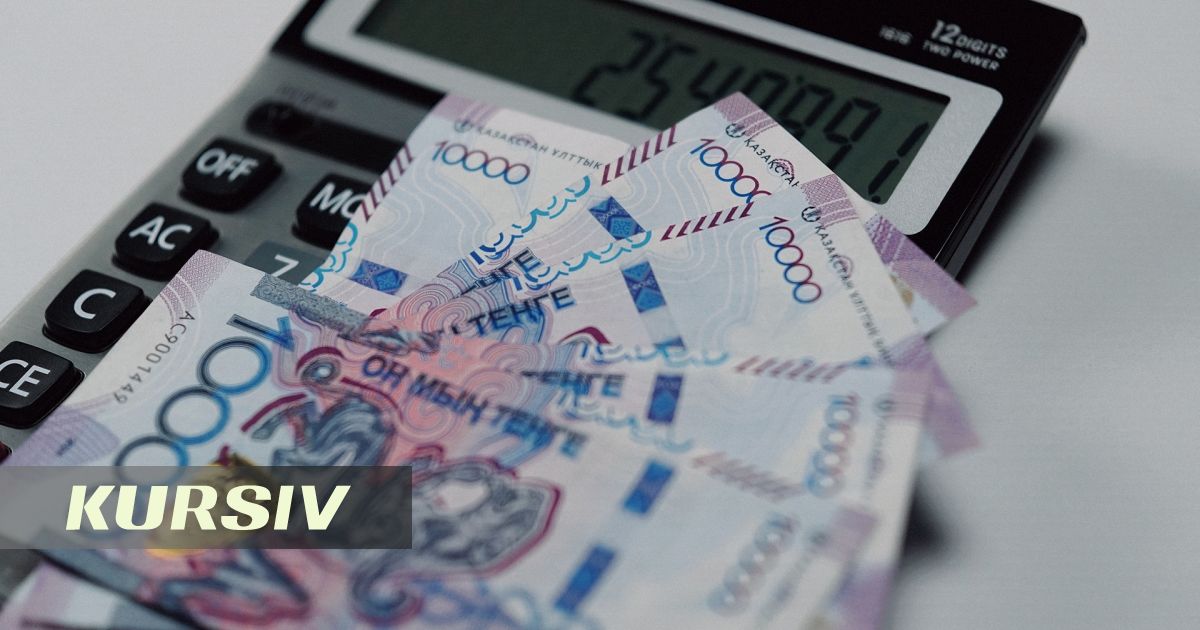
Kazakhstanis who cannot pay banks, microfinance organizations and other creditors can use one of three procedures provided by law. However, one cannot declare oneself bankrupt solely because of an overdue loan. To do so, certain requirements must be met, the Almaty State Revenue Department reported. This was reported by Qazaqyia.kz citing Kursiv Media.
The department explained the differences between out-of-court and court bankruptcy, who can retain the status of a solvent citizen, and what restrictions await debtors after debts are written off.
Out-of-court bankruptcy
Out-of-court bankruptcy is intended for citizens with debts to banks, microfinance and collection organizations. This option allows the procedure to be completed without going to court, but not all debtors can use it.
One of the main conditions concerns the amount of debt. The total amount of obligations must not exceed 1,600 monthly calculation indices (MCI). In addition, the applicant must not have registered property, including real estate and other assets held in joint ownership.
There are also requirements regarding overdue periods. The debt must remain unpaid for 12 consecutive months, and before filing an application, the citizen must undergo a debt settlement procedure with the creditor.
Another restriction applies to those who have already been declared bankrupt. The procedure can be used again no earlier than seven years later.
An application for out-of-court bankruptcy can be submitted through the eGov.kz portal, the eGov Mobile application or Public Service Centers. However, submitting documents does not guarantee a positive decision: compliance with the conditions established by law is checked first.
Court bankruptcy
If the debt exceeds 1,600 MCI, court bankruptcy becomes one of the options provided by law. This procedure is also applied in other cases established by legislation.
Unlike the out-of-court procedure, court bankruptcy can address obligations to a wider range of creditors. This concerns not only banks and microfinance organizations but also, for example, tax debt.
At the same time, court bankruptcy can result in the loss of property. To repay the debtor's obligations, the law provides for the possibility of selling it, so before going to court it is important to assess the possible consequences.
The procedure also involves additional costs. In particular, the citizen must take into account the state fee and payment for the services of a financial manager.
Restoring solvency
For Kazakhstanis who continue to receive a stable income, there is another mechanism – restoring solvency. It is intended for people who are able to gradually repay debt but need changes to the terms of settlements with creditors.
The main difference of this procedure is that the citizen does not receive bankrupt status. Instead of writing off debts through bankruptcy, repayment is provided under a special plan.
Such a plan is approved by the court and can be valid for up to five years. During this time, the debtor must settle with creditors in accordance with the established schedule.
The Almaty State Revenue Department notes that restoring solvency can become an alternative to bankruptcy for people with regular incomes. It allows debt to be settled without obtaining bankrupt status and the restrictions associated with it.
Consequences of bankruptcy
Being declared bankrupt does not pass without consequences for a citizen's financial life. Even after the procedure is completed, the legislation provides for restrictions that will apply for several years.
In particular, for five years after bankruptcy, a citizen will not be able to obtain new bank loans and microloans. This must be taken into account by those who plan to take out a loan for a major purchase or other expenses in the coming years.
Repeat bankruptcy is allowed only after seven years. In addition, for three years the state monitors the financial condition of the person who has undergone the procedure.
Thus, bankruptcy should not be viewed as a simple way to renounce credit obligations. It helps resolve a debt problem in cases provided by law, but at the same time limits access to new loans.
The Almaty State Revenue Department advises first of all to assess the amount of debt, the presence of property and the possibility of further payments. These circumstances determine which of the mechanisms provided by law suits a particular debtor.
If the debt amount does not exceed 1,600 MCI and other conditions are met, out-of-court bankruptcy can be considered. With larger obligations or other grounds provided by law, the issue is resolved through court.
Citizens with stable income should separately assess the possibility of restoring solvency. This option allows debt repayment to be distributed over a period of up to five years and avoids obtaining bankrupt status.
A judge told Kazakhstanis how to pay off debts without bankruptcy: read here.