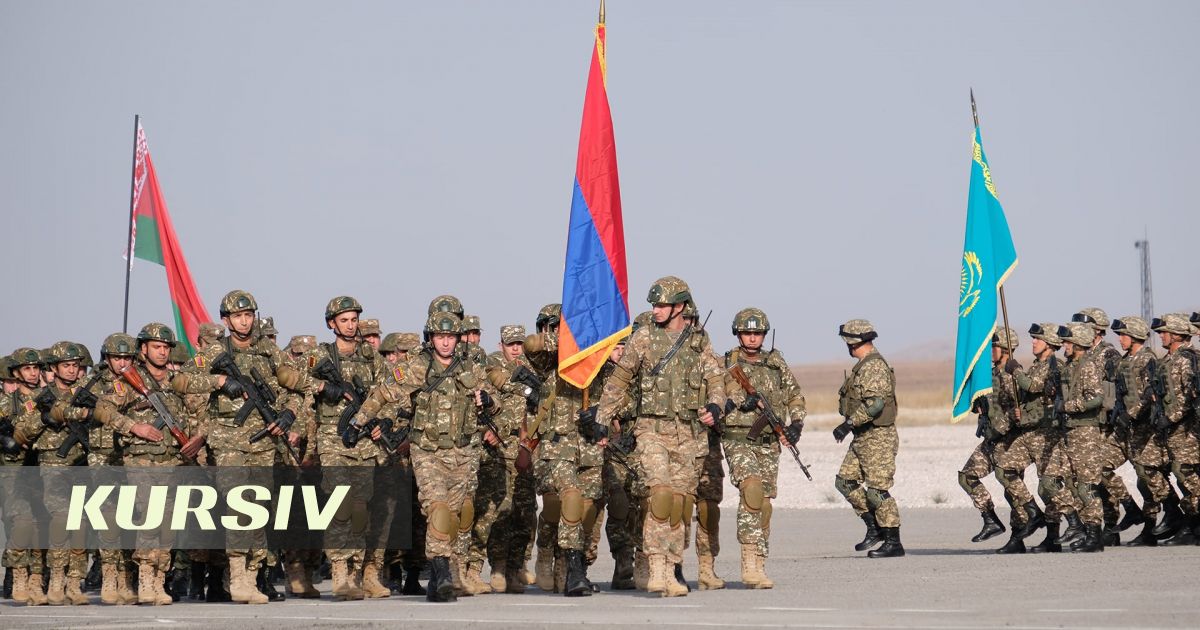
The Majilis ratified amendments to agreements of the Collective Security Treaty Organization (CSTO) member states. The draft law regulates the status of collective security force formations, as well as rules for joint transportation of troops, military products, and property. This was reported by Qazaqyia.kz citing Kursiv Media.
According to Kazakh Deputy Defense Minister Askar Mustabekov, the changes are being made to protocols signed in November 2024. The amendments aim to detail the conditions for temporary stay of military contingents on the territories of participating countries and accelerate logistics in crisis situations. For this purpose, terms such as transit, aerodrome technical support, air navigation services, and air navigation data were officially introduced into the conceptual framework of the agreements.
One of the key innovations concerns the organization's speed of response to security threats. The new rules significantly reduce bureaucratic procedures during emergency troop deployments.
"The cases when formations can be sent to the territory of a receiving state have been detailed and clearly separated. In case of emergency response, the deadlines for submitting applications for military transport have been reduced from three days to one day after the decision of the Collective Security Council," the deputy minister explained.
The ratified document details the financial obligations of the parties during transit. According to the new rules, if the troop deployment occurs by an official decision of the Collective Security Council to perform designated tasks, the receiving or transit party assumes the main costs.
In particular, at all airfields, the reception and dispatch of state aviation aircraft, their security, aerodrome technical support, provision of parking spaces, as well as air navigation services for flights are provided free of charge.
However, refueling of aircraft with aviation fuel, lubricants, special gases, and liquids is not included in the free package. These services will be provided by the transit or receiving party on a paid basis — based on separate bilateral agreements and commercial arrangements.