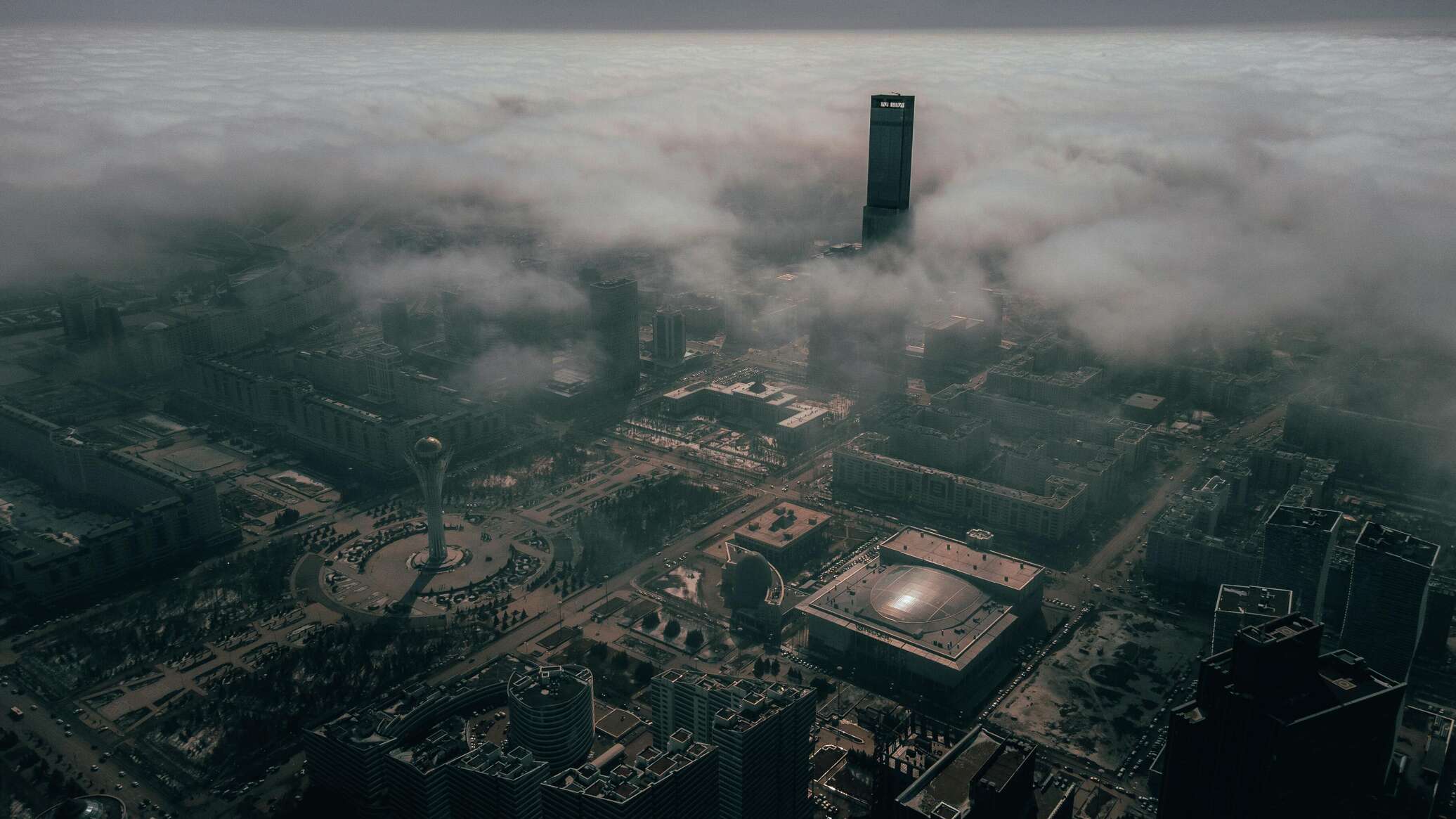
Kazakhstan was included in the list of 30 countries with the most unfavorable indicators of air pollution by fine particulate matter in 2025. This was reported by Qazaqyia.kz citing Sputnik Kazakhstan.
Kazakhstan's position in the ranking
According to the ranking by the international organization IQ Air, Kazakhstan placed 29th. The most polluted air in the world is in Pakistan. The PM2.5 concentration in the country was 67.3 µg per cubic meter.
The following countries come next:
- 01Bangladesh – 66.1 µg/m³
- 02Tajikistan – 57.3 µg/m³
- 03Chad – 53.6 µg/m³
- 04Democratic Republic of the Congo – 50.2 µg/m³
Indicators in Kazakhstan
In Kazakhstan, the PM2.5 concentration was 23.4 µg/m³. This is approximately 4.7 times higher than the 5 µg/m³ level recommended by the World Health Organization.
Among Central Asian countries, Kazakhstan's indicator is relatively lower, but the situation in the country has significantly worsened over the year. According to IQ Air data, in 2025 the PM2.5 level in Kazakhstan increased by 55% – from 15.1 µg/m³ in 2024 to 23.4 µg/m³. Since 2021, Kazakhstan had been gradually reducing this indicator.
Situation in industrial cities
The most difficult situation is observed in large industrial cities. In Karaganda, the PM2.5 concentration decreased from 104.8 µg/m³ in 2024 to 72.6 µg/m³ last year, but this is still a very high level. In Almaty, Astana, Ust-Kamenogorsk and Temirtau, the amount of pollutants in the air also exceeds WHO norms several times over.
Comparison across Central Asia
In Central Asia, higher indicators than Kazakhstan were recorded in Uzbekistan and Tajikistan. In Uzbekistan, the PM2.5 concentration was 38.1 µg/m³, in Tajikistan – 57.3 µg/m³. No data has been published for Turkmenistan.
Economic losses and recommendations
World Bank experts note that economic losses from air pollution in Central Asia reach 3-5% of the region's GDP. The main sources of pollution are transport, coal burning and industrial emissions.
Experts recommend converting coal-fired thermal power plants in Almaty and Astana to gas, tightening emission requirements, converting the private sector to gas and redirecting heavy truck transit to routes bypassing cities.