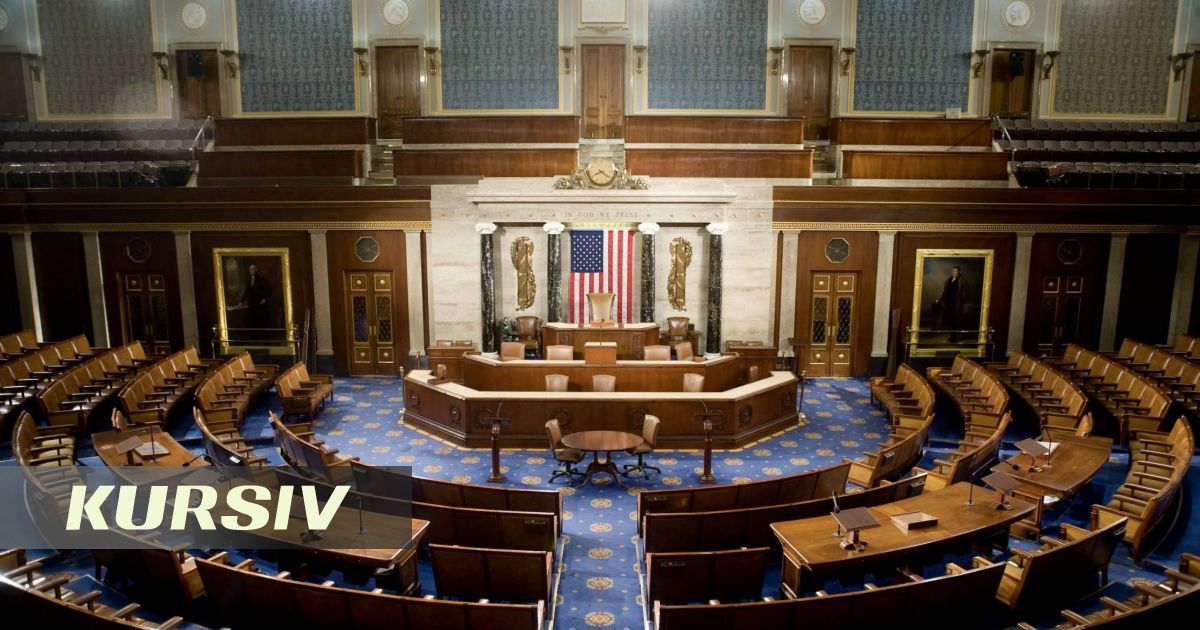
Kazakhstan's growing role in global supply chains was discussed during nearly four-hour hearings of the US House Committee on Ways and Means held on September 2. This was reported by Qazaqyia.kz citing Kursiv Media.
Key Topics of the Hearing
According to The Times of Central Asia, the hearing titled "Strategic Partnerships to Ensure Access to Critical Resources and Supply Chain Reliability" covered a wide range of issues, including the development of the US mining industry, raw material processing capacities, cooperation with Africa, and trade policy. Kazakhstan emerged as one of the most frequently cited country examples.
The discussion took place a week after a Congressional delegation visit to Kazakhstan led by Committee Chairman Jason Smith.
Kazakhstan's Role and Significance
During the discussion, Kazakhstan was presented as an already active and reliable participant in US supply chains. Smith noted that Kazakhstan accounts for more than a quarter of all US uranium imports.
Former US Ambassador John Herbst, senior director of the Atlantic Council's Eurasia Center, described Kazakhstan as the world's largest uranium producer, the country with the second-largest manganese reserves, and one of the leading titanium producers. He also noted that the US currently accounts for only about 2.1 percent of mineral exports from Central Asia.
In his view, such a small share opens significant opportunities for expanding the presence of American companies in the region, which is actively seeking to attract investment and technology, as well as diversify its economic ties, reducing dependence on Russia and China.
Kazakhstan's importance was also linked to its central position on the Trans-Caspian International Transport Route, known as the Middle Corridor. Hearing participants described this route as an increasingly important link between Central Asia and Western markets.
The Jackson-Vanik Amendment Issue
For Kazakhstan, the key policy issue of the hearing was the Jackson-Vanik amendment.
Three of the five invited experts directly supported lifting the restrictions under the Jackson-Vanik amendment for Kazakhstan and other Central Asian states meeting the established criteria. Another expert urged Congress to consider such a possibility. This position was also supported by representatives of both parties.
Smith stated that his recent meetings in Central Asia showed that regional partners view this Soviet-era measure as an obstacle to deepening economic ties.
Herbst urged Congress to lift the remaining Jackson-Vanik restrictions on Kazakhstan and other Central Asian countries.
Daniel Runde, senior adviser (non-resident) at the Center for Strategic and International Studies, urged Congress to grant Kazakhstan permanent normal trade relations status. He stressed that Central Asian countries should not be forced to choose between Washington, Moscow, and Beijing. He called the Jackson-Vanik amendment an outdated mechanism for regulating relations with countries that have been independent states for 35 years and have long fulfilled the amendment's original requirements regarding freedom of emigration. In his view, its repeal would demonstrate US readiness to build a modern partnership with the region.
Demonstrating bipartisan support, at least six committee members called for lifting the existing restrictions.
Congresswoman Carol Miller called the amendment an outdated measure that holds back American investors.
Congressman Jimmy Panetta presented the most detailed argumentation in support of Kazakhstan. As the author of the bill "To Modernize Trade Relations Between the United States and Kazakhstan," he characterized the removal of restrictions as a step that does not require significant costs but could bring substantial economic, strategic, and diplomatic benefits to both countries. He also noted that the Jackson-Vanik amendment continues to apply to Kazakhstan, despite the country having consistently fulfilled its requirements regarding freedom of emigration since the 1990s.
Panetta also highlighted Kazakhstan's membership in the World Trade Organization and the reforms carried out under President Kassym-Jomart Tokayev, including transformations in the judicial and law enforcement systems, as well as the introduction of a single seven-year presidential term. He presented Kazakhstan as a state that, despite constraints due to its geographical location, seeks closer ties with the US.
Congressman Tom Suozzi, one of the first co-sponsors of the bill "To Modernize Trade Relations Between the United States and Kazakhstan," also supported the initiative from the Democratic Party. He described Kazakhstan as a country that, despite close economic ties with Russia and China, seeks rapprochement with the US. In support of his position, he cited ongoing reforms in the country, religious openness, and his own impressions from visiting Kazakhstan.
Congresswoman Claudia Tenney, who co-sponsored the bill "To Modernize Trade Relations Between the United States and Kazakhstan," also supported lifting the restrictions. Congressman Blake Moore noted that granting permanent normal trade relations status would allow Central Asian countries to expand their range of economic opportunities. Congressman Don Beyer, despite broader criticism of the Administration's trade policy, called the removal of Jackson-Vanik restrictions on the region's countries a justified initiative.
Following the hearings, Kazakhstan was presented as a state whose significance goes far beyond its role as a raw material supplier. The country was characterized as a leading Central Asian state, an important participant in ensuring US energy security, a key link in Trans-Caspian transport routes, and a partner seeking greater economic independence and deeper cooperation.