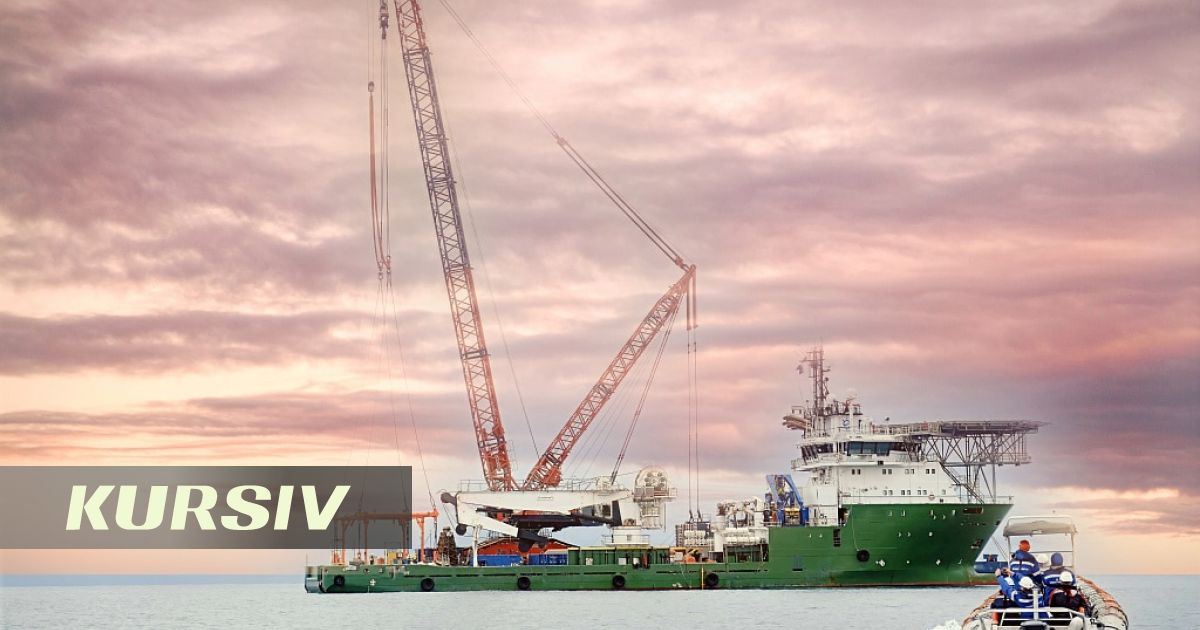
Ukraine attacked the multi-purpose support vessel Nefrit, which, according to Bloomberg, was involved in repair work at the Caspian Pipeline Consortium (CPC) marine terminal in the Black Sea. The terminal is crucial for Kazakhstan's oil exports. This was reported by Qazaqyia.kz citing Kursiv Media.
A source familiar with the situation told Bloomberg that Nefrit had almost completed work on one of the offshore berths and was due to start replacing equipment on another. After the attack, the timing of the planned work was called into question, creating uncertainty about CPC's further oil loading operations.
CPC declined to comment on the activities of contractors when asked by Bloomberg whether the vessel had worked at the consortium's marine terminal.
Ukraine's Navy said that on September 3, a sea drone attacked Nefrit near the Russian port of Sochi. According to the Ukrainian side, a powerful explosion occurred near the vessel and smoke was recorded.
The Ukrainian Navy described Nefrit as a vessel involved in oil and gas operations, maintenance of offshore facilities, transportation of cargo and personnel, and underwater technical works. The Ukrainian side said the vessel's activities supported the Russian economy and war financing.
CPC operations have repeatedly been affected by attacks in the Black Sea in recent months. According to Bloomberg, a series of strikes on tankers heading to the terminal had previously led to a noticeable reduction in oil exports and could affect production volumes in Kazakhstan in 2026.
More than two-thirds of Kazakhstan's export oil is transported through the CPC pipeline system. The consortium's marine terminal is equipped with three offshore berths that allow tankers to be loaded at a distance from the shore. Usually, two berths are used for loading, and a third serves as a reserve.
One of the berths was damaged in an attack in November 2025. According to Bloomberg, it was replaced in 2026 and was being tested. In late August, Kazakhstan's Energy Ministry expected all three CPC berths to be operational in September.
Earlier, CPC, in response to a request from Kursiv, said that the consortium planned to replace two offshore berths, CPC-1 and CPC-2, which had been in operation since 2001, in 2026.
To install them, 12 new anchor caissons were prepared at the marine terminal back in 2025. They were delivered to Novorossiysk on three specialized vessels and installed on the seabed at depths of up to 60 meters.
Each such anchor is a steel structure measuring 30 by 10 by 7 meters. After concreting, the caisson's mass increases from about 200 to 400 tons. A mounting barge with a crane capacity of 1,350 tons, a support vessel, divers, and a remotely operated underwater vehicle were used for their installation.
Earlier, Kursiv reported that Ukraine, after talks with US representatives, had committed not to strike CPC infrastructure and tankers heading to its terminal if they are not linked to Russia, are not under Ukrainian sanctions, and do not carry Russian oil. Prior to that, consortium facilities and vessels carrying Kazakh oil had been repeatedly attacked, causing CPC to temporarily suspend oil intake and loading.