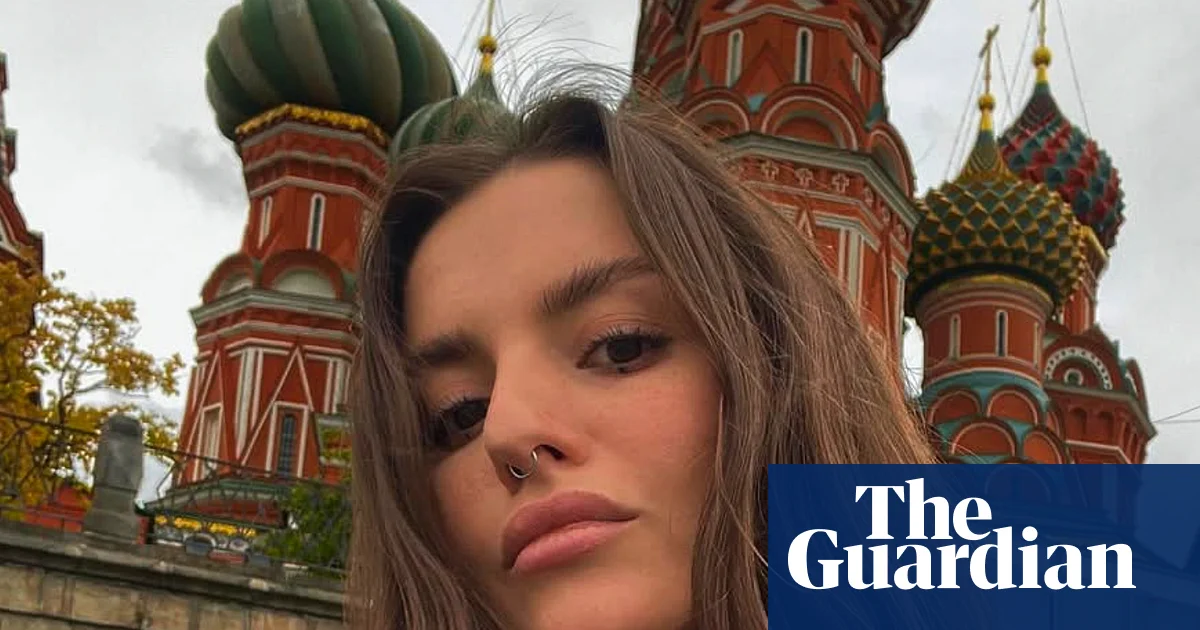
Rita Flores, a 29-year-old Russian artist, activist and former member of the Pussy Riot collective, has said she was recruited and handled for three years by officers from Russia’s FSB security service, a cooperation she only broke when she fled the country last month. This was reported by Qazaqyia.kz citing The Guardian.
Flores made details of her collaboration public in a video discussion with her lawyer, Dmitry Zakhvatov, published just days after she left Russia at the end of August. She explained she was coming clean in the hope that others in a similar situation might feel emboldened to break their ties with the FSB.
Now, in her first media interview since leaving Russia, she gave further detail on how she was recruited and run by the FSB. “For the first time in years, I feel calm. All this time I was dreaming about getting out and being able to talk about it all,” she said. The Guardian could not corroborate the details of Flores’s account, but there have been numerous cases of the FSB infiltrating opposition groups over the past few years.
Flores, also known as Margarita Konovalova, has been associated with Pussy Riot since 2020, when she was detained after a performance near the Kremlin. She had served several short stints in jail and been subjected to surveillance and house searches on numerous occasions, which intensified after the domestic crackdown that followed the full-scale invasion of Ukraine in February 2022.
She was recruited after one of these police searches in February 2023, when two men stayed behind and introduced themselves as FSB officers, she said. They threatened to open a criminal case, under wartime censorship laws, over an Instagram post she had made criticising Russian killings in Ukraine. They also suggested they could arrange for her mother to be killed if she did not sign cooperation papers.
“I believed them. I believed they could do everything they said they would … My fear was too great. I was so worried for my family and also for myself,” she said. As a reward for signing, she was given a one-off cash payment of 30,000 or 40,000 roubles (£266 or £355), she said.
Her first tasks were to gather information about other opposition-minded artists in the same circles as her and report back to the FSB. The two FSB officers who recruited her became her regular handlers, she said, organising frequent meetings and largely sticking to a classic good-cop, bad-cop routine. She saw the senior officer only occasionally, a crude man in his late forties who introduced himself by a series of different names. In the end, Flores began calling him “the Jacket”, based on the shiny black suit he liked to wear. The junior officer, named Ivan, became her primary handler, and he often tried to be friendly and helpful, leaving direct threats to the Jacket.
“Whenever I met with Ivan and the Jacket together, Ivan was silent. The Jacket would be rude, threatening; he’d insult me as a woman. He was the devil incarnate. Then just me and Ivan would meet, and Ivan would be nice, friendly,” she recalled. “He liked to say, ‘The FSB will re-educate you, I will re-educate you, you’ll have a nice and calm life, and you’ll love Russia, have children and be an obedient wife,’” she said.
Flores said she was not supposed to tell anyone about her recruitment, but immediately told “about 20 people”, putting it down to the fact she is a “massive gossip”.
Still, she stopped short of telling the people from the art world she was meant to report on, instead claiming that she initiated conflicts with them on pretexts, designed to push them away from her and prevent them sharing sensitive information. Her two handlers kept up the psychological pressure by repeating their threats, and even the friendlier Ivan on occasion made it clear that the consequences for crossing him would be severe, she claimed.
“He tried to befriend me, but he could also be threatening. He’d calmly say, ‘they’ll kill your mother and you won’t be able to prove anything’ or ‘if you go abroad they’ll find you immediately and kill you,’ and then he would giggle, like it was all a joke. The Jacket, on the other hand, never joked. His threats were more direct.”
In time, there were fewer targets to inform on, as most of the protest-minded artists left the country. She described life in wartime Moscow as an exercise in cognitive dissonance. “Moscow is booming; restaurants, bars and clubs are opening and there are a huge number of events. But those people who understand things have empty eyes and speak empty words,” she said.