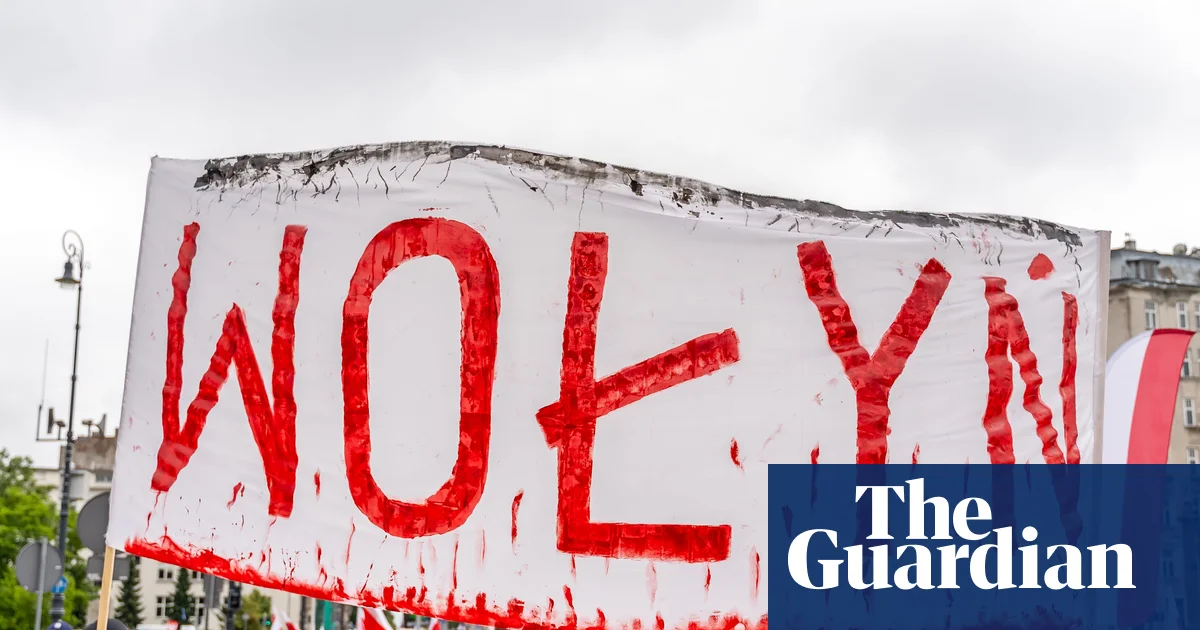
In the aftermath of Russia's attack on Ukraine in February 2022, Polish-Ukrainian solidarity emerged as one of the most heartwarming subplots of the Kremlin's brutal war. Millions of Poles mobilized to help Ukrainian refugees with food, shelter and support. This was reported by Qazaqyia.kz citing The Guardian.
Four years later, that outpouring of generosity is a distant memory as the two countries are locked in a bitter dispute over history. The dispute revolves around the Ukrainian Insurgent Army (UPA), one branch of which was responsible for the massacre of about 100,000 Poles in 1943 in Volyn. Ukrainian President Volodymyr Zelenskyy decided to name a military unit after "heroes of the UPA" despite Polish protests.
In Ukraine, the UPA is mainly remembered for its fight against Soviet rule, while its involvement in the massacre of Poles and Jews is minimized. Some Ukrainians point to discriminatory policies by Polish authorities. However, in Poland the killings are called a genocide. Poland's nationalist president, Karol Nawrocki, said: "Praising genocide or turning a blind eye is an invitation to commit further genocide."
In June, Nawrocki stripped Zelenskyy of a Polish state award. This led to Ukrainian officials returning their own Polish decorations and an angry response from Ukraine's elite. Kyrylo Budanov, Zelenskyy's chief of staff, wrote: "No one will ever again dictate to Ukrainians which heroes to honor." Zelenskyy, elected in 2019 as an inclusive figure, is now playing with nationalism. Former Polish ambassador Bartosz Cichocki said: "Suddenly, a guy who knows perfectly well how damaging honoring the UPA is has started playing with this nationalism."
Nawrocki has eagerly latched on to the scandal, boosting his trust ratings to 55%. Ukrainian historian Yaroslav Hrytsak said: "Poland has a memory warrior in power, who uses memory as an instrument for partisan fights." Prime Minister Donald Tusk's coalition government has tried a conciliatory tone but is infuriated by the UPA announcement. Tusk announced a "wall of memory" and suggested Ukraine has no place in the EU until it confronts its history.